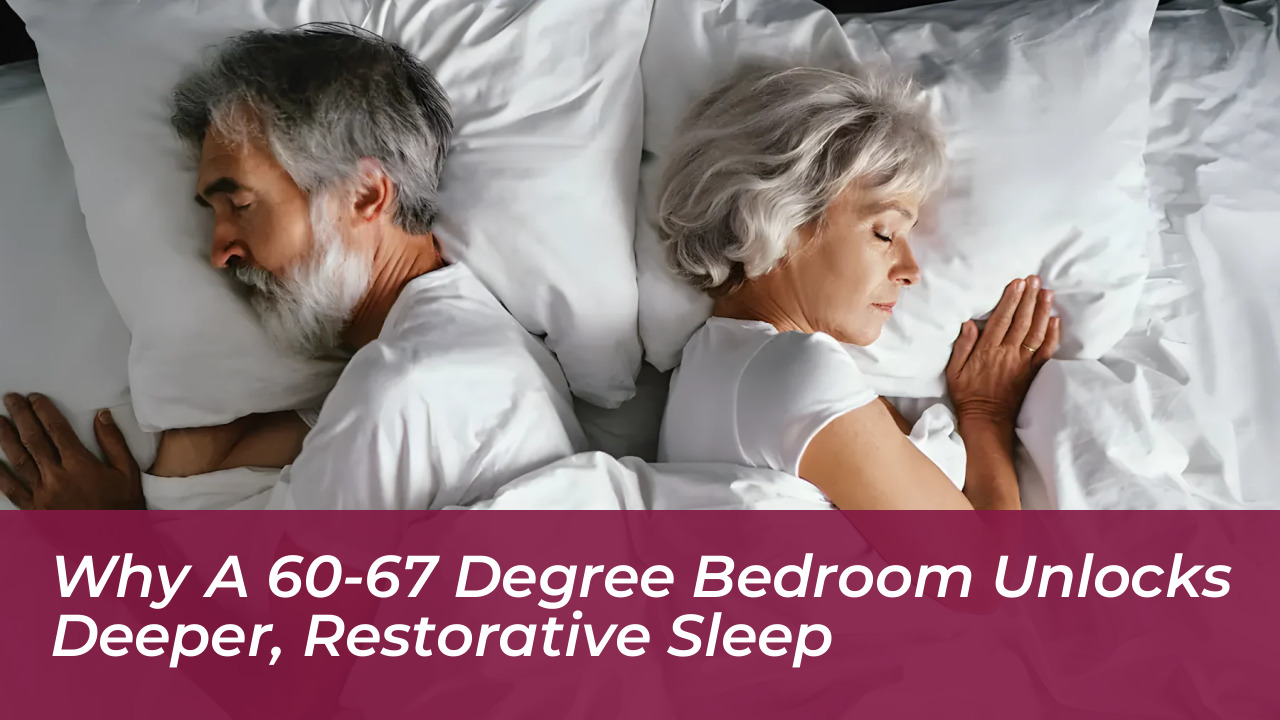
Setting your thermostat between 60 and 67 degrees Fahrenheit creates the ideal sleep temperature for uninterrupted rest. Medical specialists confirm that your core body temperature must decrease to activate your body’s natural sleep cycle, making a cooler bedroom essential for preventing night sweats and restless tossing and turning. When the bedroom stays too warm, the biological mechanisms that signal your brain to rest are disrupted, undermining overall health and daytime energy.
Due to high traffic on this story, please verify you are not a bot to instantly unlock the remaining content. Takes only 5 seconds!
Verify & Continue ReadingAchieving uninterrupted rest requires aligning your sleeping environment with your internal circadian rhythm. “When your body is too hot at night, you do not sleep well. You sweat, toss and turn more and feel less comfortable,” notes Dr. Brian Chen, MD, a sleep specialist at the Cleveland Clinic.
The Biology of Core Cooling: Why 60°F to 67°F Works
Many people assume a warm bedroom provides the coziest setting for slumber. However, scientific evidence contradicts this assumption. Your body naturally initiates heat loss in the evening to prepare for rest, and an ambient room temperature between 60°F and 67°F (approximately 15.5°C to 19.4°C) facilitates this cooling transition.
If the ambient air exceeds this range, your cardiovascular and thermoregulatory systems must work overtime to release trapped heat. This physiological stress disrupts deep sleep stages, leading to micro-awakenings throughout the night. Research published in medical journals highlights that even mild ambient warmth can compress slow-wave sleep and rapid eye movement (REM) cycles, leaving individuals feeling groggy despite spending enough hours in bed.
How Temperature Impacts Specific Sleep Stages
Sleep is not a uniform state; it cycles through light sleep, slow-wave deep sleep (N3), and rapid eye movement (REM) sleep. Each stage responds differently to environmental conditions:
- Light Sleep (N1 and N2): Elevated temperatures during transitional phases trigger microarousals that fragment rest without fully waking the sleeper.
- Slow-Wave Sleep (N3): This physically restorative stage involves growth hormone release and brain waste clearance via the glymphatic system. Warm rooms significantly compress N3 duration.
- REM Sleep: During REM, the body suspends thermoregulatory responses like sweating and shivering, making it highly vulnerable to ambient heat fluctuations.
Practical Steps to Optimize Bedroom Climate
Optimizing your nighttime climate involves more than adjusting wall controls. Minor behavioral adjustments before bedtime reinforce thermoregulation across every season:
- Adjust the thermostat: Lower settings to the 60°F to 67°F window roughly 30 to 60 minutes before lying down.
- Run a fan: Circulate still air to lower ambient skin temperature and improve airflow across your bedding.
- Choose light bedding: Swap dense, synthetic comforters for breathable layers like cotton, linen, or bamboo that release body heat.
- Cut evening stimulants: Avoid caffeine and sugary foods before bedtime, as both trigger metabolic heat production and elevate resting heart rate.
How Much Sleep Do You Really Need by Age?
Achieving the right room temperature is only half the battle; getting adequate sleep duration determines daily recovery. Guidance published by health institutions highlights that sleep requirements fluctuate across different stages of life.
| Age Group | Recommended Nightly Sleep |
|---|---|
| 1 to 2 Years | 11 to 14 Hours |
| 3 to 5 Years | 10 to 13 Hours (with naps) |
| 6 to 12 Years | 9 to 12 Hours |
| 12 to 18 Years | 8 to 10 Hours |
| 18 to 60 Years | At least 7 Hours |
| 61 to 64 Years | 7 to 9 Hours |
| 65+ Years | 8 Hours |
Building an Environment That Defeats Insomnia
Meeting nightly sleep targets requires systematic adjustments to your everyday lifestyle and physical surroundings. Sleep scientists emphasize behavioral and environmental modifications as the primary approach for chronic restlessness.
“Changes that favor sleep in your environment and in your daily habits are usually the best way to treat and manage insomnia,” notes research from Harvard University.
To support your body’s natural sleep cycle alongside a cool bedroom temperature, establish these habits consistently:
- Maintain a fixed sleep schedule: Wake up and go to sleep at identical times daily, including weekends.
- Optimize sleepwear: Wear comfortable, breathable garments and rest on a supportive, airflow-friendly mattress.
- Black out the room: Eliminate all sources of intrusive noise and bright lights from digital devices.
- Cut evening alcohol: Eliminate alcoholic beverages before bed to preserve restorative sleep cycles.
- Exercise daily: Engage in regular physical activity to help normalize your circadian rhythm.
Regulating your bedroom climate between 60°F and 67°F provides a reliable foundation for deeper, uninterrupted sleep. Check your thermostat tonight and observe how a cooler bedroom alters your waking energy.
Frequently Asked Questions
What is the best bedroom temperature for sleep?
Most experts recommend keeping your bedroom between 60°F and 67°F (15.5°C to 19.4°C). This specific range supports your body’s natural core temperature drop, helping you fall asleep faster and stay in deep restorative sleep longer.
Why does a cool room help you fall asleep?
Your internal circadian clock naturally lowers your core body temperature at night by dilating blood vessels in your hands and feet to release heat. A cool room provides an environment where this heat can easily escape, signaling your brain that it is time for rest.
Can a bedroom be too cold for sleep?
Yes. If a room is excessively cold, your body will constrict blood vessels to conserve heat, causing physical tension and restlessness. The goal is a comfortable coolness, not a freezing environment.
How does bedding affect sleep temperature?
Heavy synthetic comforters trap body heat and humidity, creating a microclimate that overrides even a cool room. Breathable natural materials like cotton, linen, and bamboo promote airflow and wick moisture away from the skin.
Should older adults sleep in cooler rooms?
Not necessarily. Older adults often produce less metabolic heat and have reduced circulatory responses, meaning they frequently prefer slightly warmer bedroom temperatures to maintain thermal comfort throughout the night.