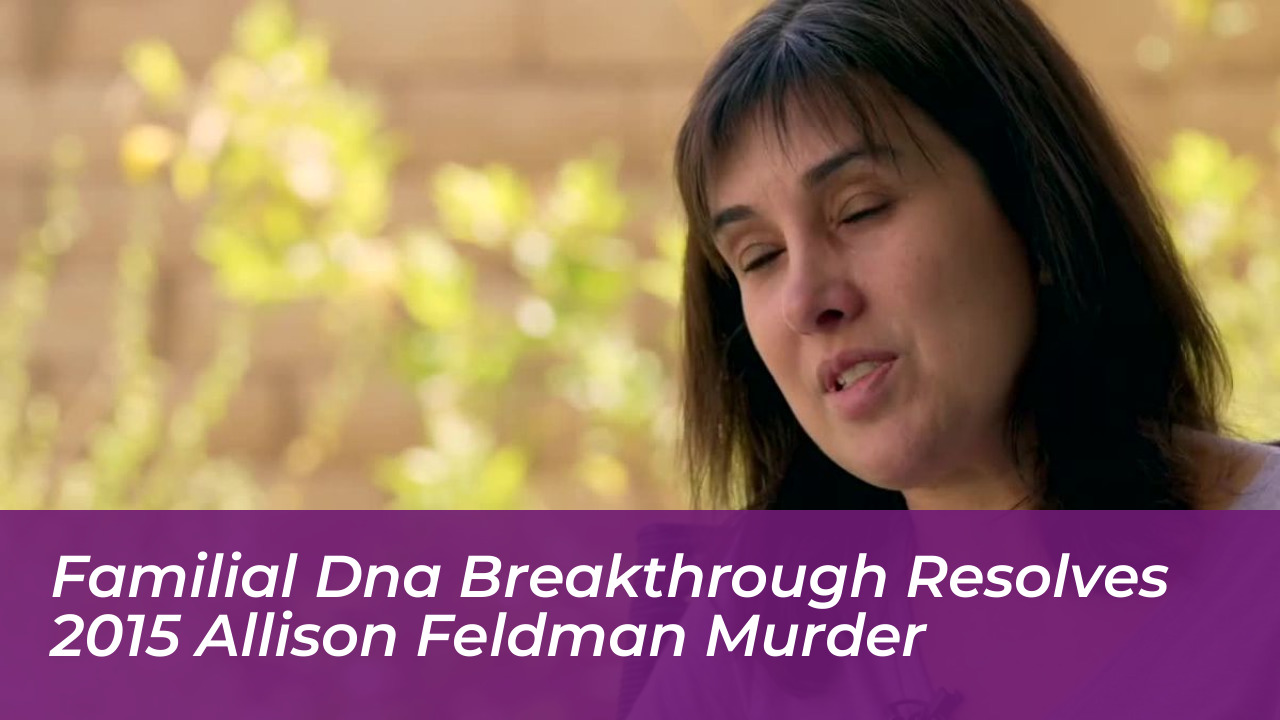
A breakthrough in familial DNA technology enabled Scottsdale investigators to solve the February 2015 murder of 31-year-old medical sales professional Allison Feldman inside her Arizona home. This led to the conviction of Ian Mitcham on April 9, 2026. The verdict concluded a decade-long quest for justice that fundamentally changed how forensic genetics are utilized in the state.
The Discovery and Investigation of a Brutal Crime
Allison Feldman returned to her Scottsdale home on Tuesday, February 17, 2015, after running routine errands. When the 31-year-old failed to contact family members or her boyfriend the following day, her father, Harley Feldman, grew concerned and requested a welfare check from the Scottsdale Police Department. Simultaneously, Feldman’s boyfriend, Alex Stone, went to the residence and discovered her body on the floor.
Authorities determined that Feldman died from strangulation and severe blunt force trauma. Investigators noted evidence of a violent physical struggle and discovered that the perpetrator had attempted to cleanse the crime scene with household chemicals, potentially bleach. A distinct male DNA profile recovered from a stain on the floor provided the primary physical clue, but an initial search of local and national law enforcement databases yielded no matches. Alex Stone, along with neighbors, coworkers, and acquaintances, were systematically cleared after their voluntary DNA samples failed to match the crime scene evidence.
The Historic Integration of Familial DNA in Arizona
With the case stalling, Feldman’s family actively pushed for innovative investigative avenues. During a trip abroad in 2016, family members met a former Arizona state senator who suggested utilizing familial DNA profiling-a technique designed to search for close genetic relatives rather than exact matches. This advocacy prompted state officials to review relevant protocols, marking the first time familial DNA was authorized to help solve a criminal case in Arizona history.
Running the crime scene profile through the expanded familial database produced a close genetic match to a man named Mark Mitcham. However, Mark Mitcham possessed a verified alibi, as he was incarcerated at the time of the homicide for child crimes. Investigators then focused on his three brothers, identifying Ian Mitcham, whose blood was already on file following a January 2015 driving under the influence (DUI) arrest six weeks prior to the murder.
Legal Challenges Over Fourth Amendment Rights
The path to trial involved intense legal battles regarding Fourth Amendment protections. Scottsdale police had retained Ian Mitcham’s 2015 blood sample despite a destruction notice, and detectives used it to generate a DNA profile without securing a fresh search warrant.
In December 2022, Maricopa County Superior Court Judge Whitehead ordered the suppression of the DNA evidence. He ruled that the warrantless testing violated Mitcham’s constitutional rights. However, the Arizona Court of Appeals and subsequent higher court reviews reversed the decision. The courts ruled that while a warrantless search occurred, the evidence was ultimately admissible because police would have inevitably obtained Mitcham’s DNA lawfully due to subsequent felony convictions requiring DNA collection.
Trial Verdict and Continuing Legal Proceedings
The trial commenced in late 2025 and spanned nearly five months in Maricopa County. Prosecutors presented comprehensive forensic data, bank records, and circumstantial evidence detailing Mitcham’s proximity to the crime. Defense attorneys argued that investigators rushed to judgment and pointed toward alternative individuals who had been investigated and cleared.
On April 9, 2026, a Maricopa County jury found Ian Mitcham guilty of first-degree murder and second-degree burglary. While the jury deadlocked on the death penalty during the initial sentencing phase, Mitcham received a prison sentence for the burglary charges, and the Maricopa County Attorney’s Office prepared to retry the penalty phase. Mitcham also filed an appeal contesting the conviction, while Harley Feldman passed away shortly after the verdict following years of relentless public advocacy for his daughter.
Frequently Asked Questions
What breakthrough solved the 2015 murder of Allison Feldman?
The case was resolved using familial DNA technology, a forensic technique that identifies close genetic relatives of an unknown DNA profile when exact database matches are unavailable.
When was Ian Mitcham convicted of the crime?
A Maricopa County jury found Ian Mitcham guilty of first-degree murder and second-degree burglary on April 9, 2026, over eleven years after the initial homicide.
Why was the DNA evidence challenged in court?
Defense attorneys argued that police violated Ian Mitcham’s Fourth Amendment rights by testing a blood sample collected during a 2015 DUI stop without obtaining a new search warrant. Ultimately, appellate courts ruled the evidence admissible under the inevitable discovery doctrine.
Who was Allison Feldman?
Allison Feldman was a 31-year-old medical sales professional specializing in wound and burn care products. She was actively involved in community initiatives, including volunteering at camps for burn victims.
How many cases has familial DNA helped solve in Arizona?
Following the pioneering use of familial DNA in the Feldman investigation, law enforcement agencies across Arizona have successfully utilized the method to help solve dozens of previously cold criminal cases.