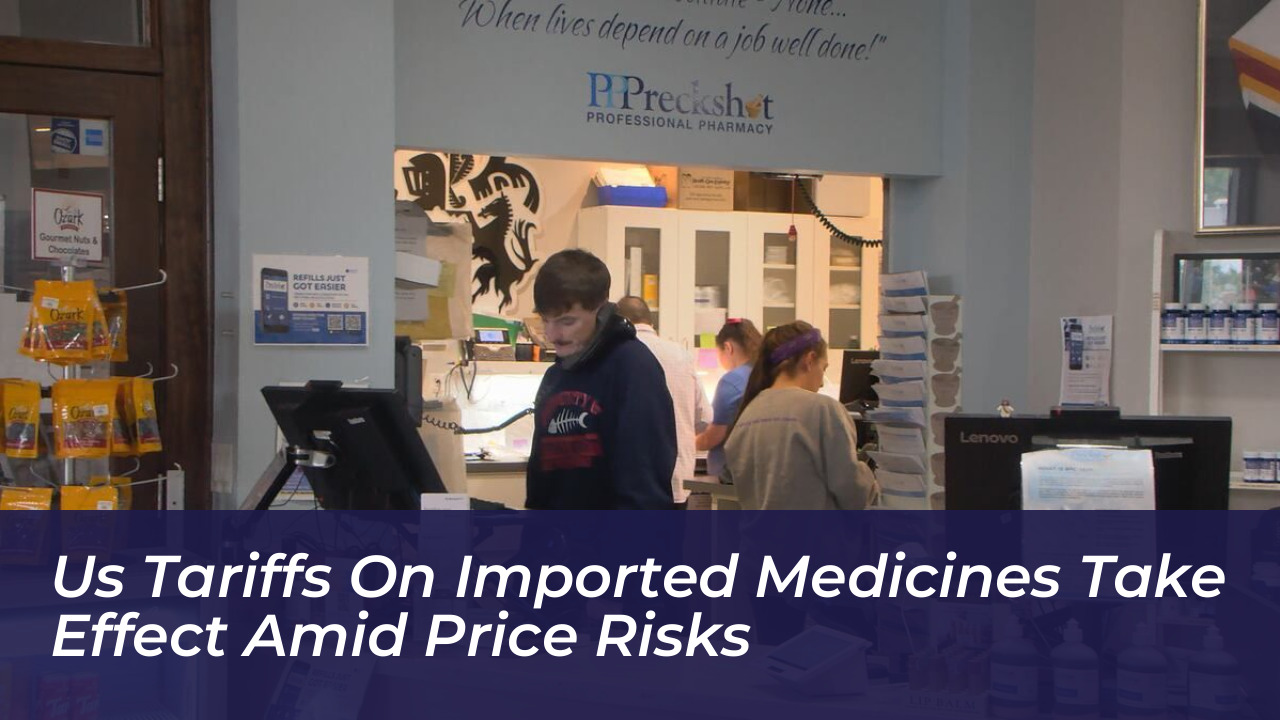
A new 100 percent US tariff on select imported patented pharmaceutical products took effect on Tuesday, raising widespread concerns among health industry experts and local pharmacists over potential price increases and supply shortages for patients. The trade policy primarily impacts smaller and midsize drug manufacturers that lack the financial resources to shift production to the United States. While major pharmaceutical firms secured exemptions through Most Favored Nation agreements, analysts warn that smaller innovators face severe financial strain under the heavy levies.
Imported patented drugs from trade partners like the European Union, South Korea, Japan, and Switzerland face a reduced 15 percent tariff, whereas United Kingdom imports remain exempt. Companies promising to increase domestic production will pay a 20 percent tariff, leaving a concentrated segment of non-exempt drugmakers subject to the full 100 percent tax rate. This complex, tiered structure follows President Donald Trump’s Proclamation invoking Section 232 of the Trade Expansion Act of 1962.
The Tiered Tariff Structure
The implementation of these trade measures establishes a multi-layered framework designed to encourage domestic drug manufacturing while penalizing reliance on foreign production facilities. Under the guidelines issued by the administration, the duties apply specifically to pharmaceutical articles subject to valid, unexpired U.S. patents listed in the FDA’s Orange Book or Purple Book, as well as active pharmaceutical ingredients and key starting materials.
- Standard Rate: A 100 percent tariff applies to non-exempt patented pharmaceutical products and active ingredients.
- Reduced Partner Rates: Imports originating from Japan, European Union member states, South Korea, Switzerland, and Liechtenstein are assessed at a 15 percent rate.
- Onshoring Incentives: Companies operating under an approved domestic manufacturing expansion plan face a 20 percent tariff until April 2, 2030.
- Exemptions: Generic medicines, biosimilars, designated orphan drugs, nuclear medicines, and plasma-derived therapies are currently excluded from the Section 232 tariffs.
Impact on Supply Chains and Patient Prices
The pharmaceutical industry remains deeply divided over whether the tariffs will achieve their stated goal of reshoring manufacturing infrastructure. Proponents argue that raising the cost of foreign-made medical goods will incentivize domestic investments, safeguard national security, and rebuild local industrial capacity. Conversely, critics and industry associations warn that building complex, highly regulated pharmaceutical manufacturing plants requires years of planning and capital, meaning tariffs will act primarily as an immediate tax burden rather than a quick fix for supply chain vulnerabilities.
“A 100-200% tariff on a product with single-digit margins is a market-exit notice,” noted independent pharmaceutical consultant Salil Kallianpur, highlighting the acute vulnerability of commodity and specialty drug suppliers.
Independent analysts point out that while brand-name pharmaceutical manufacturers often maintain profit margins wide enough to absorb or navigate new trade expenses, smaller innovators and specialized suppliers have far less financial flexibility. If operational costs surge past viable thresholds, manufacturers may pass expenses onto consumers through higher prescription prices or discontinue certain product lines entirely, risking critical patient access issues.
Exemptions and Strategic Corporate Responses
As the new trade policy takes effect, pharmaceutical supply chain participants are rapidly auditing their portfolios to classify imported ingredients and determine eligibility for specialized exemptions. Companies with developmental candidates, animal health products, or specific medical countermeasures are evaluating safe harbors under existing federal provisions. Meanwhile, major life sciences firms continue to monitor ongoing bilateral negotiations and Department of Commerce announcements regarding compliance pathways for onshoring commitments and alternative pricing structures.
With further administrative reviews and 90-day congressional update requirements mandated by the initial proclamation, the long-term outlook for international drug commerce into the United States remains fluid. Stakeholders across the healthcare sector must closely track regulatory updates as federal agencies evaluate whether to eventually expand similar tariff frameworks into generic drug and biosimilar markets.
Frequently Asked Questions
What prompted the implementation of the new pharmaceutical tariffs?
The tariffs were initiated following a federal investigation under Section 232 of the Trade Expansion Act of 1962, with the primary objective of protecting national security, reducing foreign supply chain dependence, and incentivizing domestic pharmaceutical manufacturing within the United States.
Are all imported prescription drugs subject to the 100 percent tax?
No. The policy includes a tiered structure. Generic drugs, biosimilars, orphan-designated drugs, specific specialty treatments, and products from certain allied trade partners qualify for exemptions or reduced tariff rates ranging from 15 percent to 20 percent.
How do the tariffs affect generic drug manufacturers?
At present, generic pharmaceuticals and biosimilars are explicitly excluded from the Section 232 tariffs. However, regulatory authorities are required to review the marketplace within one year to determine if the tariff framework should eventually expand to cover generic products.
Can drugmakers avoid the tariffs by building U.S. facilities?
Yes. Companies that submit and receive approval for formal onshoring plans from the Secretary of Commerce are eligible for a reduced 20 percent tariff rate while they build out domestic production infrastructure.