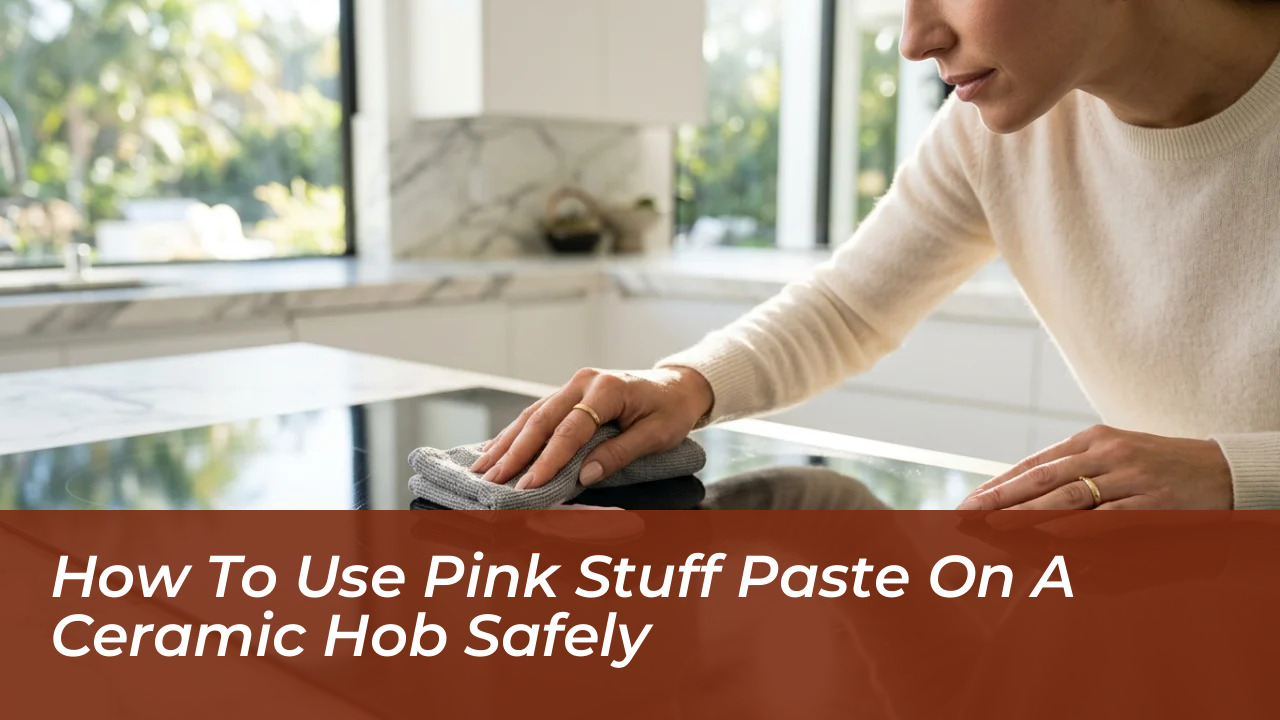
Applying Pink Stuff paste on a ceramic hob surface lifts stubborn grease rings and baked-on food without scouring the tempered glass. You just need to control your friction and applicator tools. The popular cleaning paste relies on finely ground quartz particles suspended in soap and vegetable oil. This delivers an abrasive action that requires a gentle touch on delicate glass surfaces. Ceramic cooktops withstand intense thermal changes during cooking. However, their glossy finish remains prone to optical dulling under coarse mechanical friction. When stubborn residue from boiling pasta water or sizzling oils polymerizes onto the heat zones, standard dish soap often fails to break the bond. This leads many homeowners to reach for heavier abrasive compounds without a clear technique in place. Mastering this method protects your kitchen appliance investment while saving hours of scrubbing.
Why Ceramic Surfaces Require a Controlled Abrasive Technique
Glass-ceramic blend cooktops feature an engineered, non-porous finish designed for efficient heat conduction and smooth pan handling. While the material is dense and resilient against direct downward weight, dragging coarse grit across the surface creates hairline scratches that catch interior kitchen lighting.
Pink Stuff paste works through mechanical friction alongside mild surfactants. The fine particulate suspension cuts through mineral scaling and grease film rapidly, acting like a superfine polishing compound rather than a chemical dissolver. If you bear down too hard, those fine particles can scour away the glossy factory seal.
Cooktop surfaces demand lubricated, low-pressure circular motions when using mild polishing pastes. Aggressive dry scrubbing remains the leading cause of permanent glass hazing. Water serves as your primary safety barrier during application. Keeping your cloth slightly damp prevents the quartz base from drying out into dry grit, preserving the reflective clarity of the glass.
Step-by-Step: Cleaning Burnt Residue Safely
Rushing the cleaning process while heat remains in the burners risks baking cleaning agents into the ceramic matrix. Always verify that all surface heat indicators have fully switched off before introducing moisture or pastes.
Pre-Cleaning Prep and Surface Safety
- Cool the Appliance: Ensure the cooktop is cold to the touch. Applying damp paste to a warm element causes rapid evaporation, leaving a chalky film that is tough to buff away.
- Wipe Away Loose Crumbs: Run a dry microfiber cloth over the entire surface to eliminate coarse, gritty food particles that could act as accidental gouging tools.
- Dampen Your Applicator: Wet a clean, plush microfiber towel or a soft, non-scratch cellulose sponge with lukewarm tap water, then squeeze out the excess moisture.
Application and Buffing Process
- Apply a Pea-Sized Dab: Scoop a tiny amount of Pink Stuff paste directly onto your damp cloth rather than dumping it straight onto the cooktop.
- Buff in Small Circles: Work the paste over the targeted scorched zones using very light, circular motions. Let the microscopic abrasives do the work without pushing down on the glass.
- Rinse Clean: Take a second clean cloth soaked in fresh warm water and thoroughly wipe off all pink residue. Leaving leftover surfactants creates streaky clouds during future heating cycles.
- Buff to a Gloss: Finish with a completely dry waffle-weave glass towel to eliminate moisture spots and reveal a crystal-clear reflection.
Mistakes to Avoid on Glass-Ceramic Stovetops
The difference between a pristine stovetop and a cloudy cooktop comes down to material selection and tool handling. Many cleaning mishaps occur when users pair abrasive pastes with aggressive scouring pads or wire wool.
Steel wool strips the engineered coating instantly, causing irreparable dulling across the active burner halos. Always verify that sponges are labeled non-scratch before they touch the glass. Similarly, using paste for everyday light dusting is unnecessary. Reserve the paste for dense carbon deposits, burnt milk rings, and stubborn mineral halos that regular glass cleaners cannot dissolve.
Comparison of Hob Cleaning Approaches
- Damp microfiber with light paste application: Removes baked grease rings while keeping the glass glossy.
- Steel wool or heavy-duty scouring pads: Cuts through food quickly but leaves permanent micro-scratches.
- Applying dry compound directly to hot burners: Dries instantly, burns surfactants, and causes stubborn hazing.
- Thorough warm-water rinse and dry microfiber buff: Eliminates powdery film and prevents smoke during cooking.
Keeping your cooktop looking showroom fresh does not require intense muscle power. You just need the right moisture balance and a light hand. By respecting the engineered limits of your glass-ceramic cooktop, you can enjoy the cleaning power of Pink Stuff paste without risking the integrity of your appliance.