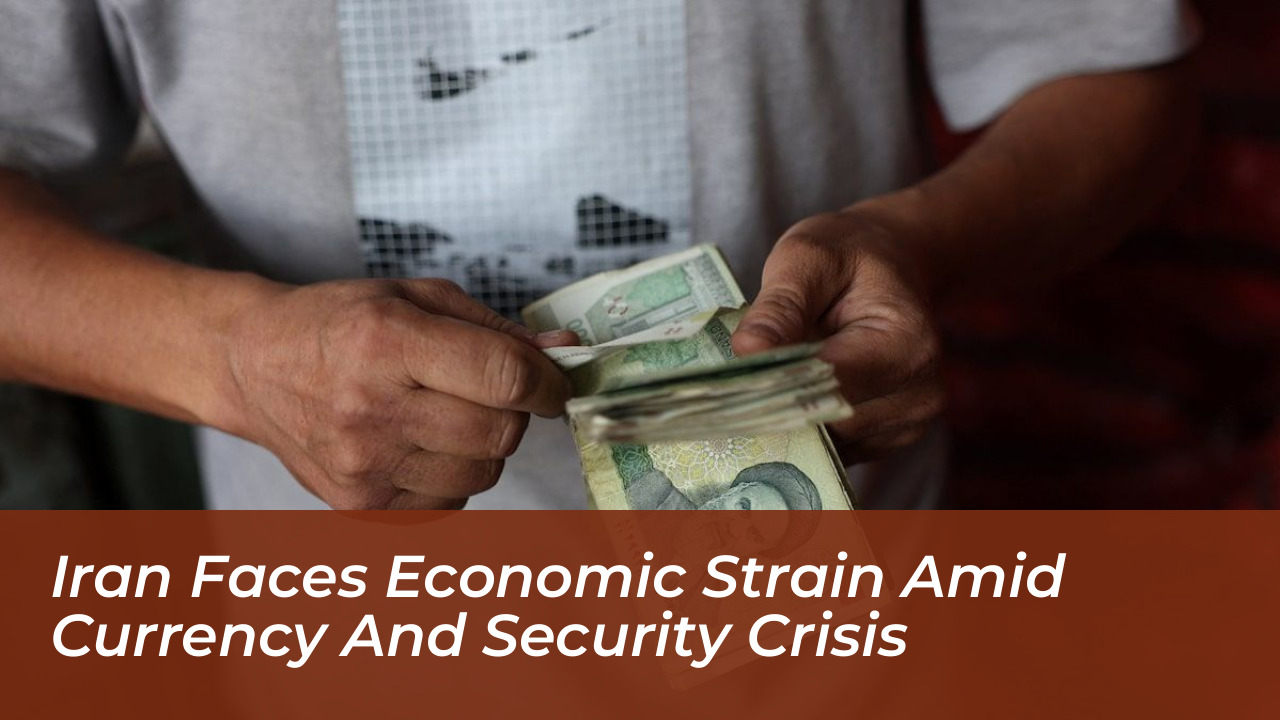
Iran is enduring severe economic pressure as its national currency, the rial, has plummeted to historic lows while the central bank attempts to stabilize markets through major cash injections. Amid ongoing U.S. sanctions, a crippling naval blockade, and soaring inflation exceeding 70%, ordinary citizens face mounting difficulties affording basic necessities. Concurrently, intensifying domestic protests have met with harsh security crackdowns across multiple provinces.
The free-market exchange rate recently traded around 2.688 million rials per U.S. dollar, reflecting an aggressive downward spiral driven by diminished oil revenues and economic isolation. According to data from financial monitors and international tracking services, the rial’s depreciation has severely eroded household purchasing power, fueling widespread discontent and prompting sharp policy debates within Tehran’s political establishment.
Economic Free Fall and Squeezed Oil Revenues
The core of Iran’s financial crisis stems from a near-total collapse of its primary export engine. A stringent U.S. naval blockade has restricted crude shipments from the Persian Gulf, reducing oil exports to virtually zero during recent months-a historic low point not seen since the 1979 Islamic revolution.
With oil sales traditionally accounting for roughly a third of Iran’s state budget and funding vital institutions, the loss of hard currency has triggered a severe cash crunch. Although a limited reserve of oil remains afloat in maritime tankers, shipping analysts estimate these supplies will exhaust soon. Meanwhile, Iranian President Masoud Pezeshkian has publicly complained that billions of dollars in export revenues remain frozen in foreign accounts, notably in China, leaving Tehran unable to clear international transactions or import essential goods effectively.
Soaring Inflation and Household Hardship
The rapid devaluation of the currency has directly accelerated domestic inflation, with official figures reporting year-on-year consumer price increases approaching 90%. Food and beverage costs have surged even faster, disproportionately burdening lower-income households that allocate most of their income to basic nourishment.
Labor markets and industrial sectors are facing compounding contractions. In manufacturing and transport hubs such as Isfahan’s Amir Kabir industrial district, diminished cargo movement, high equipment replacement costs, and scarce raw materials have depressed commercial activity. Mechanics, machinists, and salaried professionals report shrinking profit margins, unpaid wages, and widespread layoffs, forcing many workers to seek secondary or informal employment just to survive.
Political Schisms and Policy Debates
The compounding economic crisis has exacerbated ideological schisms within Iran’s ruling elite. Reformist officials have pointed to external pressures, psychological market factors, and stringent international sanctions as the primary drivers of inflation. In response, the Central Bank announced plans to inject up to $2 billion in cash banknotes into the market to calm exchange volatility.
Conversely, hardline lawmakers and conservative commentators have criticized the government’s monetary strategy, arguing that domestic mismanagement and flawed economic policies are worsening the crisis. Figures such as lawmaker Hossein Samsami accused financial authorities of following detrimental exchange policies, while other factions demand stricter state controls over exporters to force the repatriation of foreign currency earnings.
Security Crackdowns and Public Unrest
As living standards deteriorate, socio-economic grievances have frequently boiled over into demonstrations. Retirees, labor unions, and citizens across cities like Shush, Isfahan, and Kermanshah have staged coordinated rallies, frequently linking economic desperation directly to state foreign policies and military expenditures.
Security forces have responded with heightened surveillance and aggressive interventions. Human rights reports and witness testimonies from northern provinces detail instances of extreme violence and live gunfire used against civilian crowds during protests, resulting in multiple casualties. Concurrently, authorities have intensified digital censorship, confiscating thousands of satellite internet terminals and cracking down on academic dissent and independent labor activism to maintain state control.
Diplomatic Isolation and Regional Tensions
Externally, Tehran remains locked in deep geopolitical friction. The resumption of economic warfare by Washington, combined with regional diplomatic realignments and high-profile visits involving Israeli and Gulf state officials, has heightened security alerts within Iran.
Iranian officials have issued sharp warnings to neighboring countries regarding regional security cooperation and hosting foreign military assets. As diplomatic channels remain deadlocked and economic sanctions tighten further, the immediate outlook for Iran’s economy remains deeply uncertain, with markets watching closely to see whether domestic pressure will spark renewed nationwide unrest.