Leaders of the Group of Seven (G7) nations agreed on Friday to release up to 100 million barrels of emergency crude oil and diesel products over the next four months. The coordinated drawdown aims to stabilize soaring global energy supplies following severe market disruptions caused by ongoing conflicts involving Iran and Ukraine, as well as mounting pressure from Washington.
French President Emmanuel Macron convened an emergency video call with leaders from the U.S., UK, Germany, Italy, Canada, and Japan following a sharp surge in global petroleum costs. Under the finalized proposal, G7 members will release 50 million barrels of diesel and 50 million barrels of crude oil into the international market.

International Energy Agency (IEA) officials will coordinate the phased distribution. G7 members and their partners have committed to front-loading a substantial portion of the diesel release within the first 20 days, with ministers scheduled to discuss potential additional releases as necessary.
Drivers Behind the Emergency Release
The coordinated intervention follows intense diplomatic maneuvering triggered by U.S. concerns over domestic fuel costs ahead of the November midterm elections. U.S. President Donald Trump had threatened to ban U.S. diesel exports unless European allies tapped their own strategic stockpiles to help cool the global market.
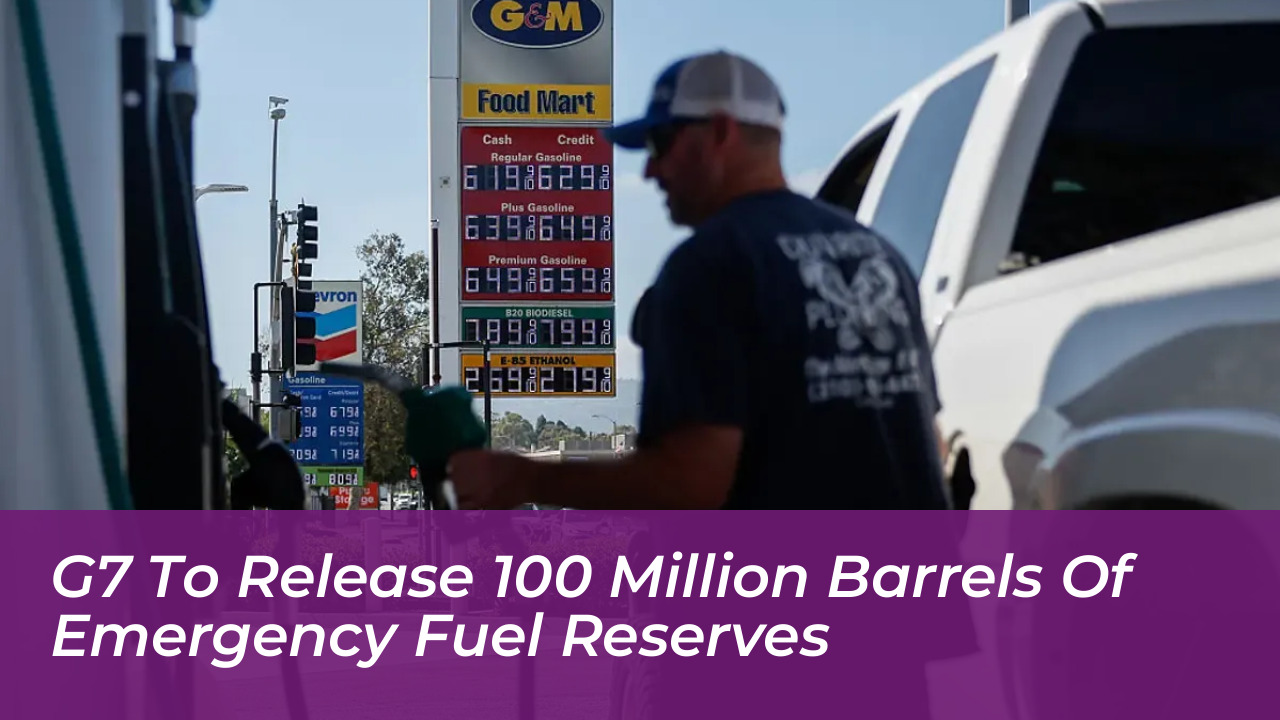
Heavy buying from overseas markets had pushed U.S. diesel exports to a record 1.9 million barrels a week in early August, depleting domestic distillate stockpiles to their lowest seasonal levels since 1996. Consequently, U.S. highway diesel climbed to a historic high of $6.529 per gallon, while average pump prices rose above $5.85 a gallon.
In Europe and the UK, the crisis pushed energy costs to unprecedented levels. In the UK, average diesel at forecourts reached a record high of £2 a litre on Friday, raising the cost of filling an average family car to £110-nearly £32 more than before the war in the Middle East.
Global Supply Chain Disruptions
Global energy markets have faced extreme volatility due to overlapping geopolitical conflicts. In the Middle East, shipping traffic through the Strait of Hormuz dropped to single digits daily last month, down from a pre-war average of 140 transits, after Iran closed the waterway following U.S. and Israeli military strikes in February.
The waterway closure severely limited output from regional refineries as well as facilities in China, which relies heavily on Gulf crude. Simultaneously, continuous military strikes by Ukraine on Russian refineries have driven Russia’s fuel output down to 20-year lows, choking international supply chains.
Despite the emergency measure, energy analysts remain cautious about the long-term outlook. Brent crude oil prices hovered around $102 per barrel on Friday, remaining significantly higher than pre-war levels of approximately $72.
Walt Chancellor of Macquarie Group noted that relying on emergency reserves addresses immediate panic rather than the core structural deficit. Experts emphasize that restoring stable energy flows through the Strait of Hormuz remains the primary requirement for true market normalization.
Key Details of the G7 Energy Agreement
- Total Volume: 100 million barrels total, split evenly between 50 million barrels of diesel and 50 million barrels of crude oil.
- Timeline: Phased release executed over a four-month period, with heavy front-loaded distributions in the first 20 days.
- Coordination: Managed alongside the International Energy Agency (IEA) with commitments from G7 members to refrain from imposing export bans.
- Market Context: Prompted by soaring prices, with Brent crude near $102 per barrel and U.S. diesel reaching record highs of $6.529 per gallon.