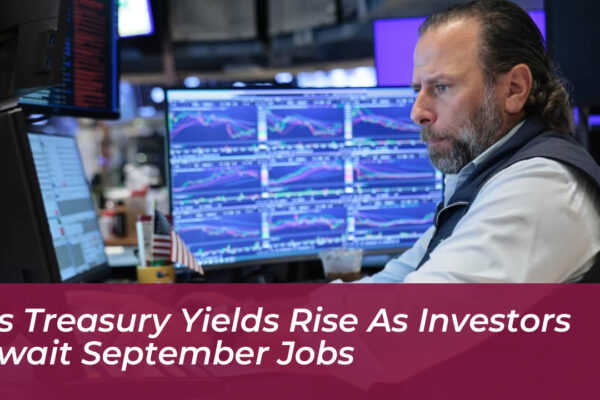



U.S. Treasury yields reached their highest levels since 2002 on October 3, 2026. This was driven by persistent inflation concerns, escalating government spending pressures, and shifting Federal Reserve rate expectations that continue to weigh on global fixed-income markets. The U.S. 30-year Treasury yield surged intraday to 5.62% before settling at 5.592% to extend a six-day rally, while the benchmark 10-year yield touched 5.34%. Long-term bond yields rose sharply as institutional investors re-evaluated sovereign debt sustainability, widening budget deficits, and persistent energy price risks.
Macroeconomic Drivers Behind the Sovereign Debt Surge
The upward march of government bond returns dictates the cost of capital across every pillar of domestic and global commerce. Financial analysts, macroeconomics experts, and institutional strategists point to a confluence of structural and cyclical catalysts that have reshaped the supply-and-demand dynamics of the global bond market.
- Persistent Inflationary Pressures: Core consumer metrics, including the personal consumption expenditures (PCE) price index, have remained sticky. This prompts bondholders to demand higher nominal yields to offset purchasing power devaluation.
- Geopolitical Shocks and Energy Volatility: Renewed Middle East hostilities and shipping corridor disruptions have driven crude oil prices higher. This acts as an immediate warning flare for future inflation spikes and triggers fixed-income sell-offs.
- Hawkish Federal Reserve Guidance: Despite market hopes for an aggressive easing cycle, central bank leadership has consistently signaled a higher-for-longer policy stance, keeping short-term debt instruments anchored at restrictive levels.
- Massive Sovereign Debt Issuance: Continuous, large-scale auctions of Treasury bills, notes, and bonds are required to fund growing fiscal deficits, flooding the market faster than private and institutional demand can easily absorb.
Market Performance and Volatility Gauges
The strain across fixed-income markets has triggered substantial volatility. The ICE BofA MOVE Index, a popular gauge of Treasury market volatility often dubbed the “VIX for bonds,” jumped significantly during the autumn trading sessions, reflecting profound uncertainty over future interest rate fluctuations. Meanwhile, equity markets have largely resisted rising borrowing costs due to strong corporate earnings linked to artificial intelligence infrastructure spending, according to Jefferies global equity strategist Chris Wood in his Greed & Fear newsletter.
However, rate-sensitive areas of the broader economy are facing immediate headwinds. The yield on the 10-year Treasury note serves as a key guide for mortgage rates. Higher sovereign debt benchmarks translate directly into increased financing costs for prospective homebuyers, commercial real estate developers, and corporate borrowers carrying floating-rate debt.
Historical Context and Future Outlook
Putting current fixed-income conditions into proper perspective requires looking back through economic history. The ultra-low yield environment experienced during the 2010s-characterized by quantitative easing and zero-interest-rate policies-was a historical anomaly rather than a permanent baseline. Today’s environment represents a return to historical normality after more than a decade of artificial suppression. This forces investors and corporations to relearn how to operate in a positive real-interest ecosystem.

“The appetite for Treasurys is still there and it’s just a matter of – at what yield,” said Jim Barnes, director of fixed income at Bryn Mawr Trust. “The 10-year at close to 5% and the 30-year at multi-decade highs will attract more buyers for risk-free Treasurys.”
As financial markets continue to adapt to this high-yield regime, disciplined portfolio management, shorter-duration positioning, and a clear understanding of macroeconomic signals remain essential tools for long-term financial resilience.