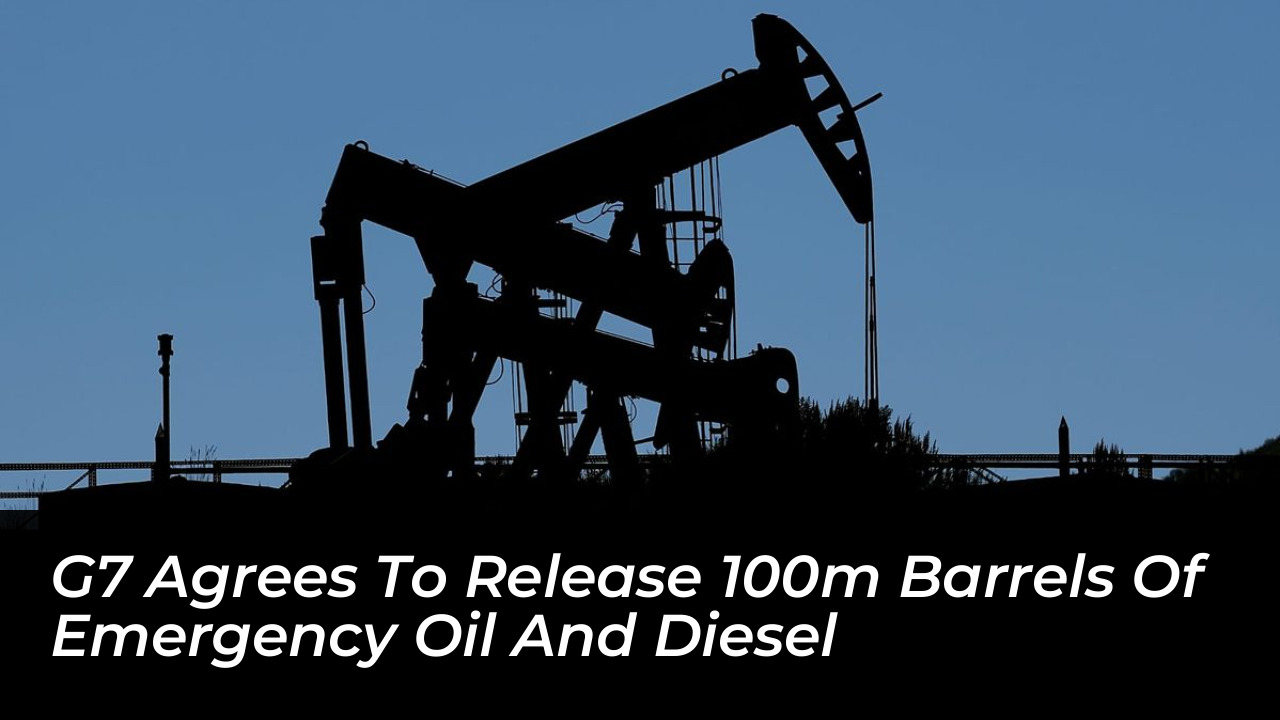



Leaders from the Group of 7 (G7) nations agreed on Friday to release 100 million barrels of diesel and crude oil from strategic reserves over the coming four months. The coordinated drawdown follows intense pressure from the United States to ease a severe supply crisis driven by Middle East conflicts, restricted shipping through the Strait of Hormuz, and ongoing attacks on energy infrastructure in Russia and Ukraine.
According to the International Energy Agency (IEA), member countries have already released 325 million barrels of oil and derivatives from strategic stockpiles out of the 400 million barrels promised during a previous commitment in March. The updated release plan includes a frontloaded, substantial diesel release within the first 20 days to stabilize immediate energy supplies and curb record-high prices affecting consumers globally.
Origins of the Supply Squeeze and U.S. Pressure
The emergency virtual meeting was convened by French President Emmanuel Macron, who currently holds the G7 rotating presidency. The talks were prompted by a dramatic global surge in diesel prices and a direct threat from U.S. President Donald Trump to ban U.S. diesel exports unless European nations tapped their own emergency stockpiles to cool international markets.
Europe produces roughly 70 percent of the diesel it consumes from domestic refineries but relies heavily on imports to make up the shortfall. In August, the U.S. exported a record high of 1.9 million barrels of refined product a week to overseas buyers as slumping global refining capacity squeezed supplies across Europe and Asia. However, these record exports caused U.S. distillate stockpiles to fall to their lowest seasonal levels since 1996, pushing domestic pump prices above $5.85 a gallon.
Faced with mounting domestic political pressure ahead of the November U.S. midterm elections, the White House signaled it would halt outbound shipments if European allies failed to act. Following overnight discussions, however, the Trump administration confirmed that no ban on diesel exports between G7 partner nations would be implemented, averting a potential trade war.
"We have all committed together to releasing these strategic reserves in the proportions I mentioned, with a focus on diesel, and we are all committed to ensuring there are no export bans, and President Trump, in particular, was very clear on this point," said French President Emmanuel Macron.
Structure of the G7 Emergency Release Plan
Under the finalized agreement, G7 members-consisting of the United States, France, Germany, Italy, the United Kingdom, Canada, and Japan-will distribute 50 million barrels of diesel and 50 million barrels of crude oil into the global market. Diesel and related fuels represent approximately 28 percent of global oil demand and have faced acute shortages due to reduced international refinery throughput.

Key elements of the coordinated action plan include:
- A total release of 100 million barrels over a four-month period, monitored closely by the International Energy Agency.
- A frontloaded injection of a substantial volume of diesel within the first 20 days to target immediate retail price spikes.
- A collective pledge by all member states to maintain open trade channels and avoid placing export restrictions on energy products.
- Commitments from energy ministers to evaluate the necessity of additional diesel releases if market volatility persists.
Market Reactions and Economic Impacts
Global energy markets reacted immediately to the announcement. Brent crude oil, which was trading just above $100 a barrel prior to Friday’s talks-up significantly from about $72 before the Iran conflict began-initially dipped to around $98 a barrel before stabilizing above $102 by the close of the trading session.
At the consumer level, the crisis has strained household budgets and commercial logistics worldwide. In the United Kingdom, average diesel prices at forecourts climbed to a record high of £2 a litre on Friday, pushing the cost of filling an average family car to £110. Similar cost-of-living pressures have rippled across the eurozone and North America, impacting agriculture, freight transport, and public transit systems.
Energy analysts remain divided on whether a 100-million-barrel drawdown will resolve structural supply deficits. Speaking to market media, Macquarie Group’s Walt Chancellor noted that the underlying dilemma extends beyond refined product logistics. "The core issue the US faces is not a diesel problem. Nor is it a refined product problem… It is a global energy problem," Chancellor stated, emphasizing that long-term stabilization requires restoring normal shipping lanes through the Strait of Hormuz and reviving offline refinery capacity.
As the IEA steps up its monitoring and coordination role over the coming weeks, G7 capitals will look to see whether the frontloaded fuel supplies successfully cool wholesale markets ahead of the upcoming winter heating season.