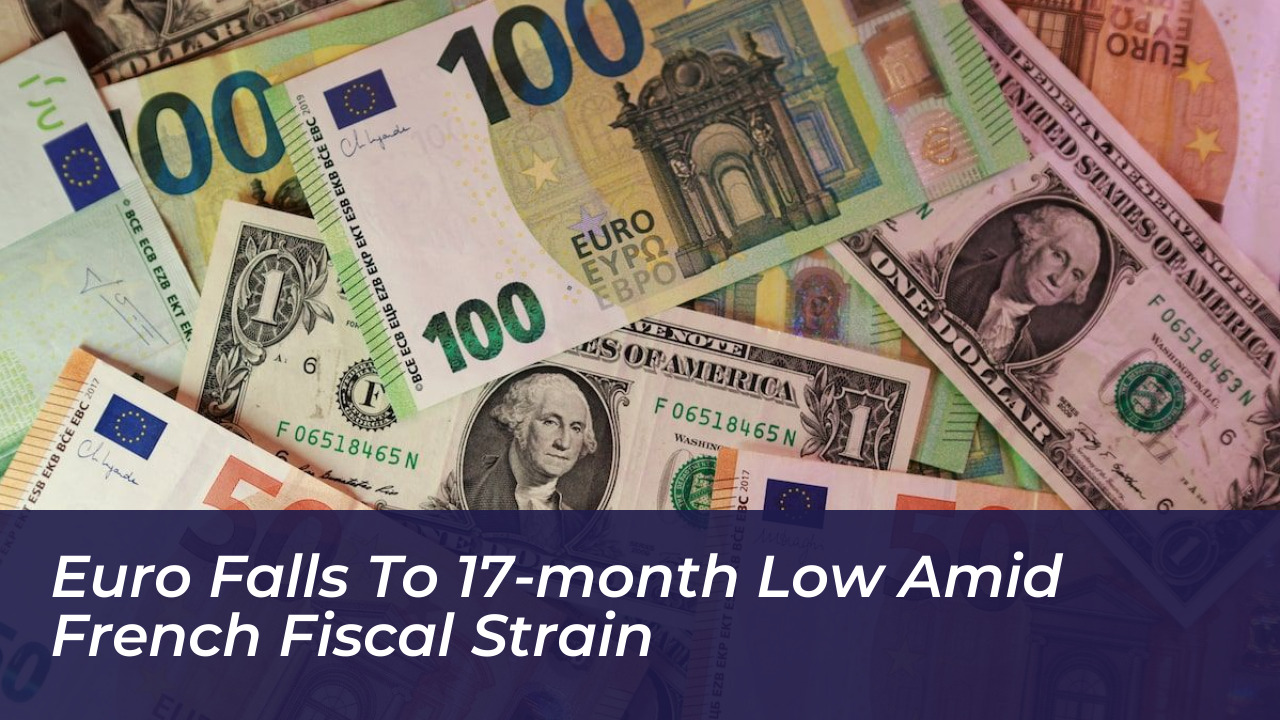



The euro fell to a 17-month low of $1.1161 during Asian trading hours. Escalating political instability and debt concerns in France triggered broader anxiety across European financial markets. By late session trading, the shared currency traded down 0.68% at $1.1176, extending a month-long downward trend.
Market pressures quickly expanded beyond the primary currency pair. The euro dropped 0.5% against the Swiss franc and declined 0.39% against the British pound amid ongoing concerns regarding French government debt. According to data from Bloomberg, hedge funds were active sellers during the Asian session, and the currency’s breach of key price levels prompted additional options-related transactions.
French Debt Pressures Spark Regional Anxiety
France has emerged as a central point of concern for European assets following a sharp repricing of its government debt. The yield premium that investors demand on French 10-year bonds over comparable German debt finished the week at 140 basis points, widening by 34 basis points across five sessions. Market data indicates this was the largest weekly increase in 17 years.
Investors have grown increasingly unsettled by France’s ability to bring its budget deficit under control while deep political divisions complicate consensus on spending measures. Economists note that while the French government presented a draft outline for its 2027 budget-aiming to reduce the public deficit from 5.4% of GDP to 5% next year-analysts remain skeptical that the country will meet its fiscal targets even if the plan passes.
“The deficit would remain too high to stabilise the debt ratio, while ageing-related expenditure and interest payments would continue to rise. The next government will therefore have to make further difficult choices,” strategists at ING noted regarding the French budget proposal.
Broader Political Instability Across the Euro Zone
Compounding the regional outlook, political uncertainty is spreading beyond France. Reports indicate that Spanish officials are preparing for the possibility of a snap election as protests over the country’s housing crisis reach a boiling point. Spain and France are confronting a simultaneous rise in inflation, interest rates, and government borrowing costs, combined with persistently weak economic growth and fragmented bond markets.
Analysts at Barclays pointed out that French fiscal and political developments continue to cloud the broader euro area outlook. With fundamentals remaining weak, regional assets face sustained capital flight as investors reassess sovereign risk across the currency bloc.
U.S. Dollar Strength and Global Market Impacts
Conditions in the United States have further reinforced the currency movement. The dollar index advanced 0.47% to 102.37, despite softer September employment figures that reduced immediate expectations for a Federal Reserve interest rate hike at its October meeting. Traders currently price in a 78% probability that rates will remain unchanged, up from 36% the prior week.

Meanwhile, demand shifted toward German sovereign bonds as investors fled French debt, widening the divergence between the eurozone’s largest sovereign bond markets. Financial experts warn that if pressure on government debt persists, the consequences could extend past domestic borrowing costs, permanently altering investor appetite for European assets and the euro itself.
Frequently Asked Questions
Why did the euro drop to a 17-month low?
The euro fell to $1.1161, its lowest level since May 2025, driven by escalating fiscal strain, mounting national debt, and political instability in France, which spilled over into wider European currency markets.
How much did French bond yields widen?
The yield premium demanded on French 10-year bonds over German debt widened by 34 basis points in five sessions to finish at 140 basis points, marking the largest weekly increase in 17 years.
What are the main targets of France’s proposed 2027 budget?
The draft budget outline aims to reduce the French public deficit from 5.4% of gross domestic product (GDP) down to 5% next year, though economists doubt these targets will be met.
How did other European currencies perform against the euro?
Amid the broader market sell-off, the euro dropped approximately 0.5% against the Swiss franc and declined 0.39% against the British pound.
What role did the U.S. dollar play in this market movement?
The U.S. dollar index advanced 0.47% to 102.37, supported by sustained high interest rates and safe-haven demand, despite weaker-than-expected domestic employment data.