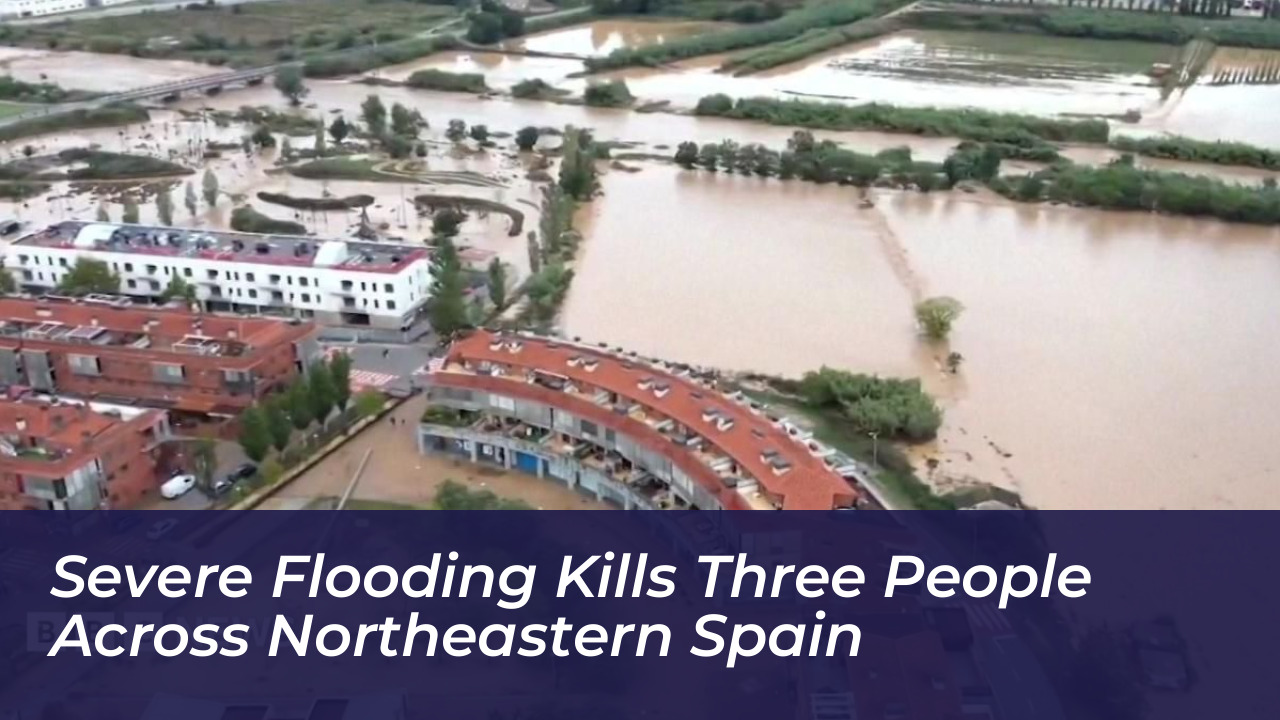



Torrential rainfall and severe flash floods across northeastern and southeastern Spain have left at least three people dead and another missing. This prompted widespread emergency rescue operations and urgent shelter-in-place warnings from regional authorities. In Catalonia, the severe weather claimed two lives and left one person missing, according to local officials, while emergency crews responded to more than 1,500 assistance calls.
The destructive weather system triggered overflowing rivers, including the Ridaura and Darro in Catalonia. This prompted officials to advise residents to stay inside their homes. Spanish Prime Minister Pedro Sánchez addressed the escalating disaster as emergency crews continued critical operations across the hardest-hit communities.
Widespread Devastation Across Catalonia and Valencia
The severe storms battered northeastern Spain. Spain’s national weather agency, AEMET, issued red alerts for heavy rain across eastern coastal regions, including Barcelona. In Olivella, roughly 40 kilometers (25 miles) west of Barcelona, rescuers recovered the body of a man whose car was swept away by a sudden stream. Additional fatalities included a person killed when a wall collapsed at a campsite in Tordera, and another individual who drowned in a flooded garage in Montornes del Valles.
Emergency services in Catalonia catalogued more than 500 major incidents and received over 850 calls related to the downpours. Videos shared across social media depicted partially submerged vehicles. Rescue teams deployed to reach people trapped in flooded underpasses and streets in towns like Granollers.
Transportation networks experienced severe disruptions. In Barcelona, several metro stations closed, buses diverted, regional rail lines faced major delays, and flights at El Prat airport postponed or cancelled. Neighbouring Valencia also suffered immense rainfall, recording more than 70mm (2.76 inches) of precipitation in just half an hour in several municipalities.
"Rarely have we seen such rainfall accumulations in 30 minutes," noted the regional meteorological association AVAMET on social media.
Fatal Landslides and Freak Weather in Northern Regions
The severe weather impact extended beyond Catalonia, affecting multiple regions across northern and central Spain. In the village of Manzanedo de Valdueza within the Castile and Leon region, a flash flood triggered by an overflowing Orza River caused a destructive hillside landslide.

Two women, aged 60 and 80, lost their lives after seeking refuge from the deluge in a home wine cellar. Floodwaters rapidly filled the basement, trapping the group. Two young children-a three-month-old baby and a four-year-old boy-along with a 60-year-old man, suffered injuries and received hospital treatment.
Separately, a 54-year-old shepherd died after being struck by lightning in the foothills of the southern Spanish Pyrenees while working in the Mountains of Sis area. A police mountain search and rescue team located his body, which a helicopter subsequently airlifted.
Climate Factors and Scientific Context
Meteorologists note that these intense storms are frequently linked to a weather phenomenon known in Spain as a DANA (Depresión Aislada en Niveles Altos), historically referred to as a “gota fría” or “cold drop.” This occurs when cold air high in the upper atmosphere collides with warm, moisture-laden air rising from the Mediterranean Sea.
Scientists emphasize that human-driven climate change is intensifying these Mediterranean autumn storms. The Mediterranean Sea absorbs excessive heat during increasingly prolonged summer heatwaves. This increases evaporation rates and feeds heavier, more catastrophic rainfall events when systems finally develop.
Emergency authorities continue to monitor weather patterns closely. They urge citizens in central and northern Spain to exercise extreme caution as rescue and recovery operations persist.