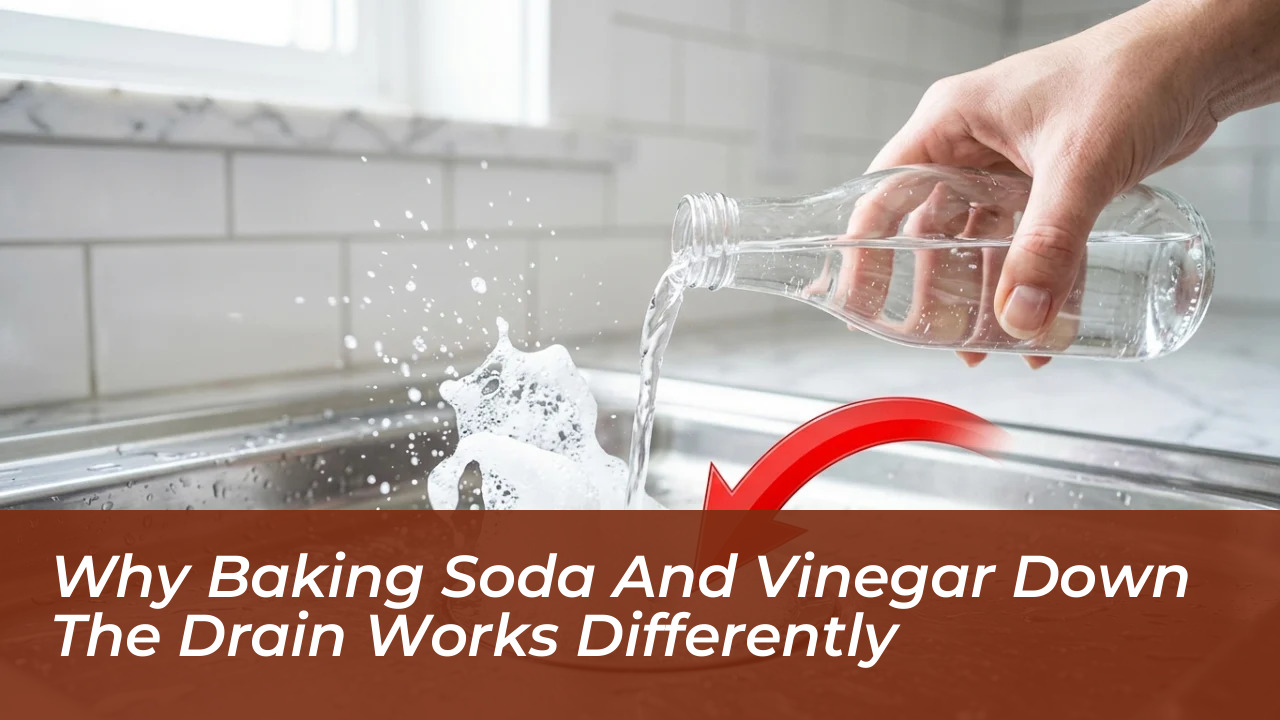


Pouring white vinegar and bicarbonate of soda drain mixtures into household pipes creates a fizzy visual reaction. However, this -base neutralization actually produces mostly water, salt, and carbon dioxide rather than dissolving dense clogs. While millions of households turn to this combination as a quick fix, understanding the exact chemistry prevents plumbing mishaps and protects delicate kitchen surfaces.
The combination has maintained legendary status in home maintenance because it uses inexpensive, non-toxic pantry staples. When bicarbonate of soda, also known as baking soda, meets the acetic in white vinegar, the immediate eruption of foam gives the impression of aggressive scouring power inside hidden pipe bends. Yet the physical behavior of trapped organic waste often tells a different story once that foam settles.
The Chemistry Inside Your Pipes: Meets Base
The dramatic fizzing that occurs when these two ingredients touch is a two-step chemical reaction. Sodium bicarbonate acts as a mild base, while white vinegar delivers dilute acetic . Their initial contact generates carbonic , which instantly decomposes into carbon dioxide gas and water.
That bubbling expansion provides light mechanical agitation right at the sink opening, helping dislodge loose particles and freshen foul odors. However, once the bubbling subsides, the remaining liquid is primarily dilute sodium acetate in water, possessing none of the caustic strength needed to melt stubborn fat deposits.
A common mistake in home plumbing maintenance is assuming that vigorous fizzing equates to dissolving heavy solid blockages deep within pipe walls. For heavy grease layers, commercial enzymatic cleaners or manual mechanical augers rely on completely different principles. Acetic can dissolve mineral scale and chalky deposits around faucets, but its degreasing potency drops drastically the moment it neutralizes against an alkaline powder.
Myth vs. Reality: What the Mixture Can and Cannot Do
Popular internet advice frequently treats pantry staples as universal remedies for every drainage headache. Dissecting the genuine capabilities of these ingredients reveals clear limitations.
Surface Deodorizing Versus Structural Clearing
The mixture excels at banishing sour odors from garbage disposals and P-traps. The mild scrubbing grit of baking soda, paired with vinegar’s ability to cut through thin films, easily refreshes stainless steel sinks and upper drain necks.
In contrast, fully obstructed pipes require physical clearance. Solid blockages caused by hair tangles, hardened cooking oils, or compacted food particles will not dissolve under gentle effervescence.

- Baking Soda & Vinegar: Produces bubbling mechanical lift for light surface scum; neutralizes into salt water.
- Solid Food Particles: Fails to break down in traps and binds with residual fats to form stubborn blockages.
- Hot Water Flush: Liquefies coagulated oils and carries loosened organic film past the P-trap.
- Exposure on Stone: Etches natural marble, granite, or limestone surfaces surrounding the sink basin.
Plumbing professionals consistently emphasize that non-dissolving materials must never enter waste lines alongside kitchen grease. When solid particles slip down a sluggish pipe, they act as an anchor for grease congealing down the line.
Step-by-Step Routine for Mild Drain Buildup
When dealing with slow-moving water or stale odors rather than a standing backup, using pantry staples correctly optimizes their modest cleaning potential.
- Clear the basin: Ensure standing water has drained entirely so the dry powder reaches the drain collar directly.
- Apply dry bicarbonate: Pour half a cup of fresh baking soda straight into the drain opening, allowing the dry powder to coat the inner walls.
- Follow with vinegar: Pour one cup of distilled white vinegar over the opening, covering the drain immediately with a stopper to direct expanding gas downward.
- Allow resting time: Let the chemical effervescence work through upper trap residue for 10 to 15 minutes.
- Flush thoroughly: Rinse the system with a steady stream of hot tap water to wash away loosened debris.
Maintaining awareness of your surrounding countertop materials is equally critical during application. Splashing acidic vinegar onto surrounding natural stone countertops, including limestone, marble, or unsealed granite, can etch the protective sealant and leave permanent dull spots.
Protecting Household Pipes for the Long Term
Preventative habits consistently deliver better plumbing health than emergency chemical flushes. Scraping dinner plates into trash bins or compost containers keeps dense solids away from the narrow confines of your wastewater lines. Routine flushes with hot water help dissolve softening oils before they harden against pipe walls.
When slow drainage persists despite basic care, inspecting the physical trap under the sink or using a mechanical drain snake provides a reliable, chemical-free resolution. Check your sink materials before cleaning to avoid acidic damage to natural stone surfaces, and monitor drainage speed regularly so minor sludge buildup never evolves into an emergency clog.