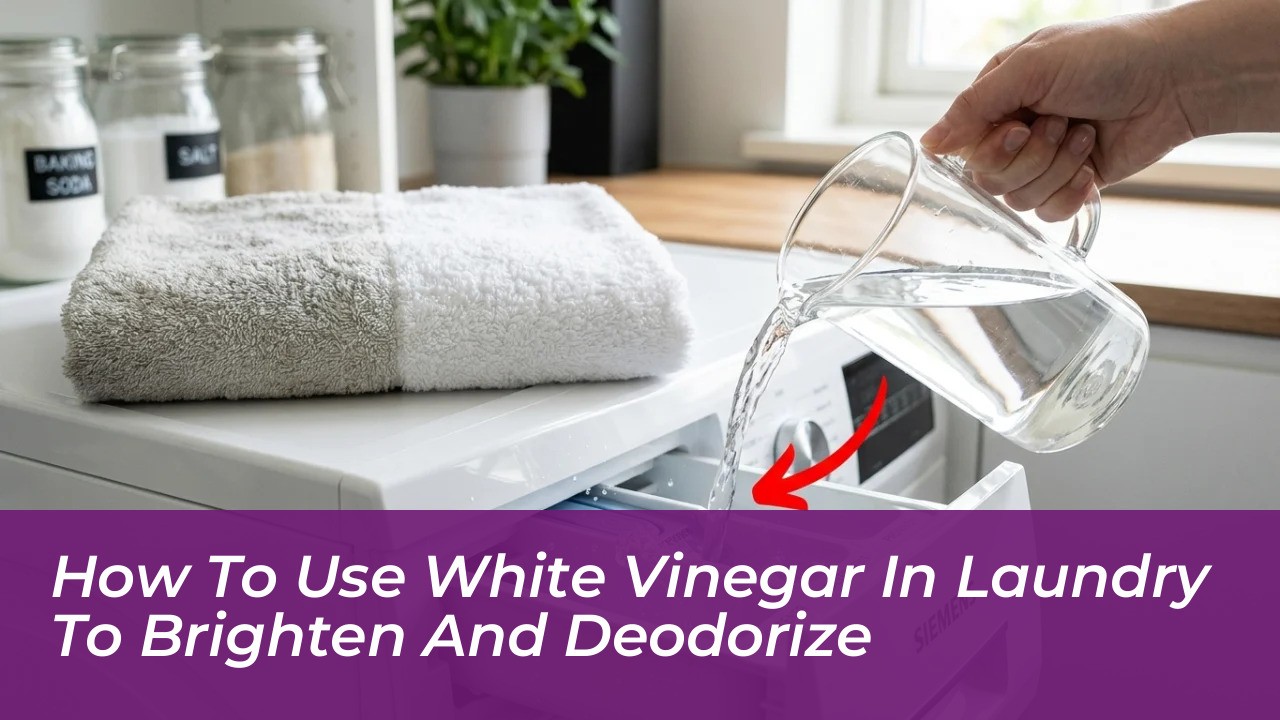


Adding standard distilled white vinegar to your laundry routine is an effective, chemical-free way to strip away stubborn detergent film, neutralize trapped sweat odors, and restore dingy white fabrics. Over time, commercial detergents and liquid softeners leave invisible chemical coatings on textiles, trapping grime deep inside the weave. A controlled dose of mild acetic dissolves these alkaline deposits directly in the rinse cycle, providing a natural alternative to chlorine bleach.
The Science Behind Vinegar as a Fabric Brightener
Distilled white vinegar typically contains roughly 5 percent acetic diluted in 95 percent water. This mild acidity serves as a chemical counterweight to modern commercial laundry detergents, which are formulated on the alkaline side of the pH scale to loosen grease and organic grime. When washing machines rinse clothes, trace amounts of alkaline surfactant often remain bonded to the fibers, especially in households dealing with hard water rich in calcium and magnesium.
Over several cycles, these mineral residues bond with dissolved soap to form microscopic soap scum. Acetic breaks that bond on contact, releasing the minerals and detergent from the weave so the final rinse water can flush them away entirely. Because the acidic rinse strips away dried surfactant coatings rather than adding synthetic perfumes or silicone lubricants, cotton fibers fluff up naturally. The result produces soft, clean fabric without leaving behind the heavy synthetic fragrances associated with standard liquid fabric softeners.
Step-by-Step: Adding White Vinegar to Your Routine
Using white vinegar in laundry requires precise timing and correct placement in the machine to ensure the liquid does not counteract the active cleaning phase of the detergent.
- Load the machine correctly: Place your laundry into the drum, leaving enough space for water and garments to circulate freely without crowding.
- Add detergent as normal: Measure your standard liquid or powder laundry detergent into the main wash compartment or directly into the drum per manufacturer guidelines.
- Fill the fabric softener dispenser: Pour one-half cup of distilled white vinegar directly into the machine’s designated fabric softener drawer. The appliance will automatically dispense the liquid during the final rinse cycle.
- Target deep-set odors or heavy yellowing: For workout gear or dingy socks, soak the items before washing in a basin filled with one gallon of warm water mixed with one cup of white vinegar for 30 to 60 minutes.
- Run a standard cycle: Select your standard wash and water temperature settings. The sharp vinegar scent completely evaporates as the garments dry on the line or inside the tumble dryer.
Best Practices for High-Efficiency (HE) Machines
High-efficiency front-load and top-load washers use significantly less water than traditional agitator machines. Because volume is restricted, never pour undiluted vinegar directly over dry clothing sitting in an HE drum, as concentrated exposure can cause uneven fading on sensitive colored dyes. Always utilize the machine’s automatic dispenser drawer to ensure controlled water dilution.
Dispenser Guidelines and Treatment Methods
Different laundry challenges require different applications of white vinegar to achieve maximum brightening and deodorizing power.
- Routine softening and residue removal: Pour 1/2 cup into the automatic fabric softener compartment for the rinse cycle.
- Persistent sweat and mildew odors: Add 1 cup directly into the drum during the rinse cycle of an odor-heavy load.
- Brightening dingy white cottons: Soak garments for 45 minutes in warm water containing 1 cup of vinegar before washing.
- Washing machine maintenance flush: Run an empty hot wash cycle with 2 cups of vinegar to clear drum soap scum.
Myth vs. Reality: Protecting Machine Parts and Fabrics
A widespread misconception suggests that white vinegar acts as a universal cleaning agent that can be used on every fabric and inside any appliance without consequence. While vinegar is exceptionally gentle on natural cottons, linens, and durable synthetics, frequent use of undiluted can pose risks.
Continuous, high-concentration exposure can prematurely degrade natural rubber seals and internal hoses found in older washing machines. Modern appliances generally use synthetic fluoropolymer or ethylene propylene diene monomer (EPDM) gaskets that resist mild acetic , but overusing vinegar in every single cycle remains unnecessary once residue buildup has been cleared. Limiting vinegar applications to every third or fourth wash maintains optimal fabric softness without stressing rubber parts.

The Critical Bleach Safety Warning
Crucially, white vinegar in laundry must never be mixed with chlorine bleach. Combining acetic with sodium hypochlorite triggers a chemical reaction that releases toxic chlorine and chloramine gases, creating severe respiratory hazards in enclosed laundry rooms.
Additionally, skip vinegar when laundering delicate silks, pure woolens, or clothing with fine elastic banding, such as specialized compression garments or swimwear. Acidic solutions can weaken natural protein fibers and degrade raw elastic cores over repeated exposures.
Frequently Asked Questions
Will vinegar damage my washing machine?
Occasional use of white vinegar in laundry is safe for most machines. However, very frequent use of undiluted vinegar over months or years can potentially degrade rubber door seals and hoses. Using 1/2 cup per wash cycle in the dispenser is safe.
Can I use apple cider vinegar for laundry?
Apple cider vinegar has the same acetic content as white vinegar, but its brown color can stain light-colored fabrics. Use only distilled white vinegar for laundry applications.
Why don’t my clothes smell like vinegar after washing?
Acetic is volatile and evaporates as clothes dry. The smell disappears completely in dry clothes under normal conditions. If you can smell vinegar on dry clothes, you likely used too much.
Does vinegar kill bacteria in laundry?
At the concentrations used in laundry (1/2 cup diluted in a full drum of water), vinegar reduces bacterial counts and odor, but for washing items with a genuine hygiene need, use hot water or a dedicated laundry sanitizer.
Can I mix vinegar with laundry detergent?
No. Vinegar is acidic while laundry soap is alkaline. When used together in the main wash, they neutralize each other’s effectiveness. Add vinegar to the rinse cycle instead.