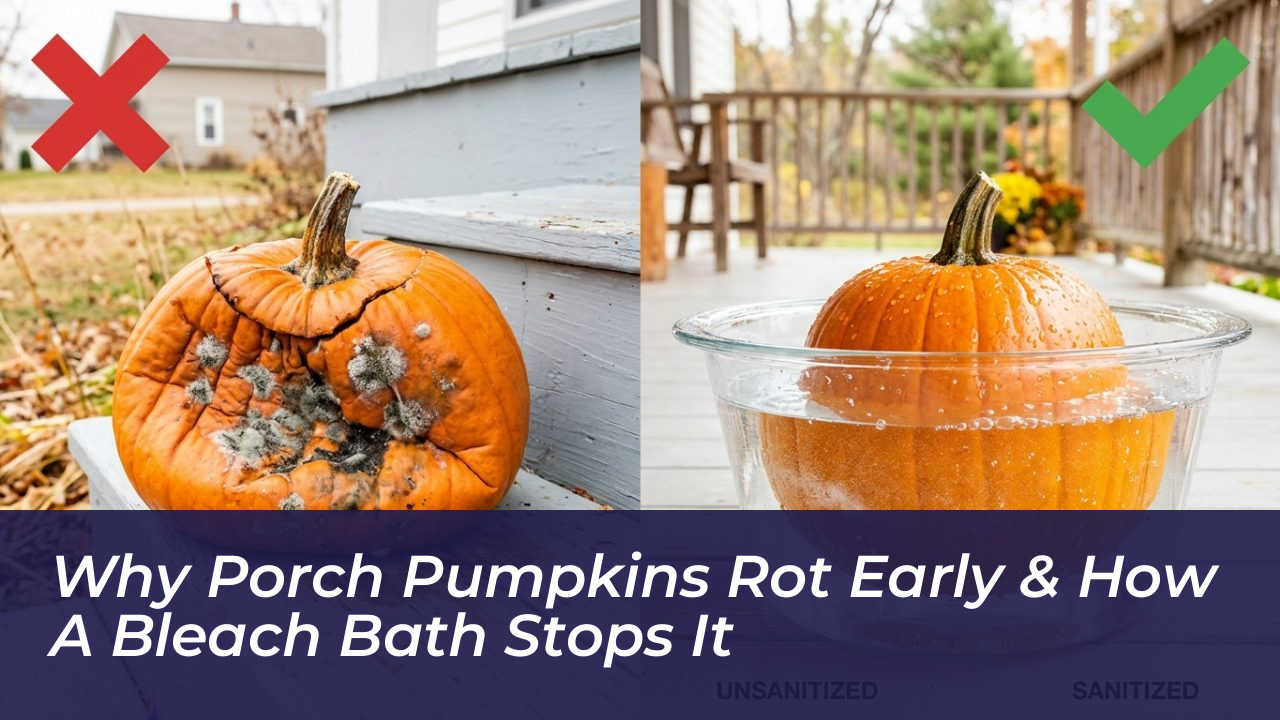

Every autumn, homeowners face the same disappointing gardening mystery: pristine pumpkins purchased in late September develop soft, sunken spots and collapse into mush long before trick-or-treaters reach the front door. While many assume warm weather alone is to blame, agricultural experts point to unseen microorganisms on the rind. Surface bacteria and wild fungal spores break down the outer shell weeks before temperatures truly shift. Fortunately, a simple sanitizing soak can destroy these microscopic culprits and extend your festive display through Halloween and Thanksgiving.
The Selection Rules That Prevent Early Softening
A lasting display begins long before bringing cleaning supplies into the mix. When shopping at local patches or grocery stores, aesthetic shape and uniform coloring should take a backseat to structural integrity. Examine every gourd by feeling its overall weight and rind density.
A specimen that feels surprisingly heavy for its size is dense with water and healthy flesh, whereas light ones are already drying out inside. Check the skin thoroughly for:
- Soft patches or tiny dark indentations
- Punctures that serve as immediate entry points for decay
- Snapped or missing stems, which tear the upper rind and invite infection immediately
Iowa State University Extension recommends choosing pumpkins that feel firm and heavy for their size with a portion of the stem still attached. Always support the fruit from the bottom rather than carrying it by the stem, as the weight can snap the top and ruin the protective barrier.
The Sanitizing Soak: Bleach vs. Vinegar
Even a completely intact rind carries dirt, wild fungal spores, and ambient bacteria straight from the soil. Leaving these microbes on the shell guarantees rapid decomposition the moment ambient humidity rises. Before decorating, wash the rind thoroughly using warm water and standard dish soap to strip away loose grime.
Next, prepare an antimicrobial bath to sanitize the entire fruit:
- The Bleach Method: Mix a disinfecting solution using one part household bleach to nine parts clean water in a tub or large bucket. Submerge the pumpkin completely, holding it under to soak for at least 15 minutes. Remove the gourd and allow it to air-dry completely or pat it dry with clean paper towels.
- The Vinegar Method: If you prefer to avoid chemical bleaches, mix one part distilled white vinegar with ten parts water (roughly one cup of vinegar per gallon). Submerge the pumpkin for 20 to 30 minutes, turning it halfway through if it floats, to establish an acidic barrier that neutralizes surface microbes.
Carved vs. Whole Pumpkins: Key Treatment Differences
Carving pierces the protective rind and exposes moist inner pulp directly to open air, accelerating the countdown to mold. To minimize loss, leave your decorative gourds intact for as long as possible and save intricate carving for the days immediately preceding Halloween-ideally October 29 or 30.
Once a jack-o’-lantern is carved, clean out every strand of loose string and pulp, as damp remnants harbor mold within hours. After carving, dip the whole piece back into your bleach or vinegar bath to sanitize the newly cut edges. Applying a thin coating of petroleum jelly across exposed incisions seals in natural hydration so the fruit does not shrivel.
Daily Maintenance and Reviving Drooping Faces
Because petroleum jelly, WD-40, and acrylic sprays are flammable, never place an open-flame candle inside a treated pumpkin. Stick strictly to battery-powered LED tealights. For daily hydration, spritz the openings with a water bottle mixed with a few drops of bleach. Alternatively, mix one cup of clean tap water with five drops of peppermint essential oil; the oil acts as a mild natural antifungal agent while deterring common insects.
If edges begin wilting, fully submerge the pumpkin in an ice water bath for several hours to rehydrate the cellular structure.
Porch Placement and Weather Protection
Direct sunlight and trapped moisture are the primary environmental causes of rapid softening. Placing your display directly under open skies exposes the fruit to fluctuating morning dew, rain, and intense afternoon heat, which weakens the rind.
Position pumpkins in shaded, well-ventilated locations such as a covered front porch or sheltered patio landing. Keep them off direct ground contact by using tiles, wooden blocks, or cardboard stands. Wipe excess water off the shells promptly following storms, and shift gourds indoors during unseasonal freezes or sustained downpours.
Frequently Asked Questions
Does a vinegar or bleach bath stop pumpkin rot completely?
It slows rot significantly by killing surface mold and bacteria, but it will not stop rot completely or fix a pumpkin that already has soft spots, deep bruising, or internal damage.
Can I use apple cider vinegar instead of white vinegar?
No. Apple cider vinegar contains sugar that can feed mold instead of killing it. Stick strictly to distilled white vinegar.
When is the best time to carve a pumpkin for Halloween?
Save carving for October 29th or 30th. Once carved, a pumpkin’s lifespan drops dramatically to just a few days, even with preventative treatments.
How can I revive a shriveled carved pumpkin?
If your jack-o’-lantern is starting to dry out or sag, submerge the entire carved pumpkin in an ice water bath for several hours to rehydrate the cellular structure.
Are treated pumpkins safe for backyard wildlife to eat?
If you treated your pumpkins with household bleach or petroleum jelly, do not leave them out for local wildlife or farm animals to consume after Halloween. Compost untreated pumpkins or safely dispose of chemically treated gourds.