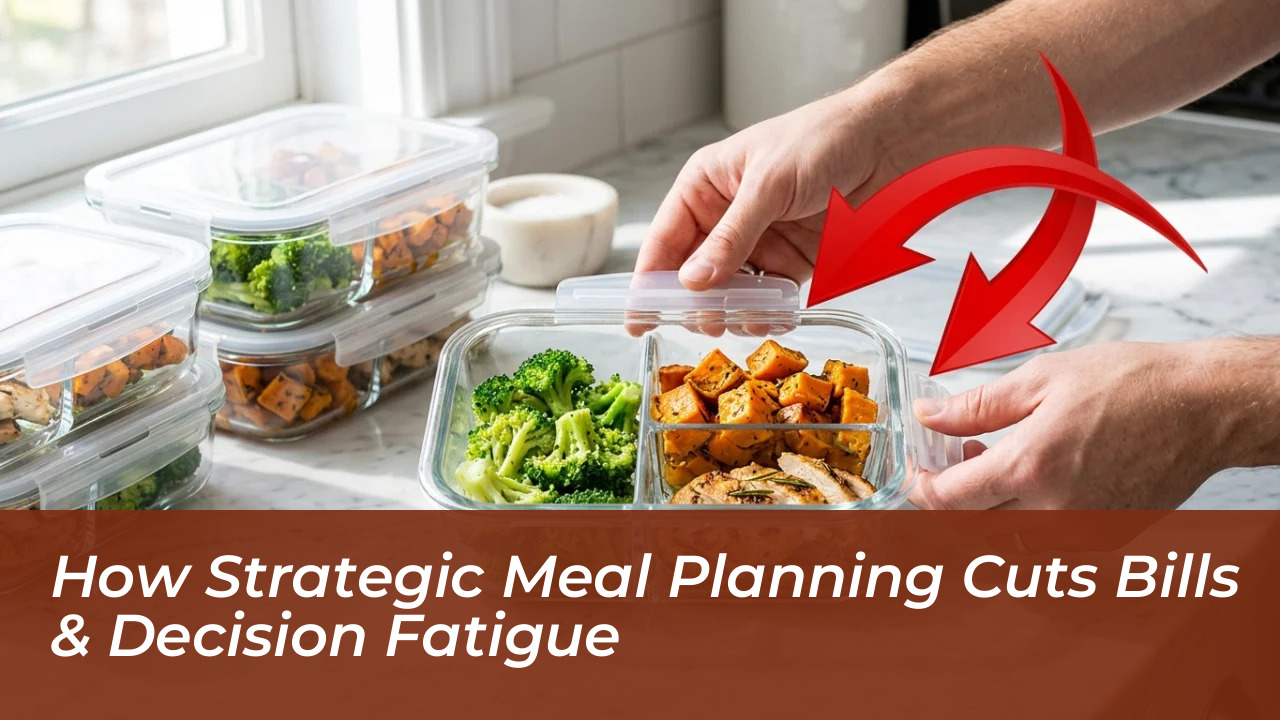


Structured meal planning cuts household food spending by preventing ingredient waste. The real secret lies in turning purchased groceries into usable meals before exhaustion sets in. When raw ingredients sit in a refrigerator without an immediate preparation schedule, they stop functioning as convenient dinners and turn into unpaid labor. The gap between buying groceries and eating them represents why household food budgets often collapse.
An overflowing crisper drawer provides no value on a hectic weeknight if cooking those items requires two hours of kitchen work. Bridging this gap requires treating weekly meal logistics like an efficient assembly line. By implementing a systematic approach, households can trim expenses and reclaim their evenings.
The Hidden Trap of Unprepared Groceries
Most failed attempts at eating on a budget stem from mismatched schedules. A refrigerator might be stocked with fresh vegetables and raw protein, yet the household still turns to expensive takeout because cooking demands energy that no longer exists at 7:00 PM.
When cooking responsibilities are postponed, every meal faces a domino effect:
- Prepared sides fail to match delayed proteins.
- Fresh produce wilts in the crisper drawer.
- The mental burden of figuring out what to eat compounds each day.
A refrigerator full of unassigned ingredients creates decision paralysis rather than security, turning dinner into a daily logistical crisis. This dynamic is intense for households managing strict dietary restrictions or food allergies, where every item must be accounted for in advance. When an expected meal fails, finding a safe alternative cannot be resolved with a quick pantry grab.
Busting the Scratch-Cooking Myth
A common misconception assumes budget-conscious meal planning requires cooking elaborate, custom dishes from scratch seven nights a week. This expectation sets an unsustainable standard that causes kitchen burnout by midweek.
The practical reality relies on modular components. By roasting a large batch of versatile proteins and grains on a single afternoon, those foundations pivot into completely different formats, such as grain bowls, wraps, or baked casseroles. Relying on modular batches eliminates the monotony of identical leftovers while keeping grocery costs controlled.
The 4-Step Budget Meal Architecture
A successful weekly meal cycle relies on strict boundaries set before visiting the grocery aisles. Organizing tasks into defined phases stops unnecessary spending before checkout.
1. Audit Existing Pantry Staples
Inspect dry goods, spices, and frozen items first to establish baseline carbohydrates and flavor profiles without spending new money. This inventory step prevents duplicate purchases of items like rice, pasta, and canned tomatoes.

2. Select a Multi-Use Protein
Anchor your weekly shopping around one or two versatile proteins that adapt easily across baking, braising, or grilling techniques. Buying family-sized portions of chicken thighs or ground turkey on sale cuts protein expenses.
3. Design Shared Secondary Ingredients
Limit fresh produce to items that work across at least three distinct dishes, such as leafy greens, cabbage, and root vegetables. Shared ingredients ensure packages get fully used up before spoiling.
4. Establish a Mandatory Prep Block
Schedule the roasting, simmering, or portioning immediately following your shopping trip so cooking is never deferred to a busy weekday evening. This sequence guarantees that the food you buy transforms into nourishment rather than waste.
Balancing Efficiency Against Flexibility
The structural difference between haphazard cooking and an organized system comes down to how prep time is distributed. When you shift the workload onto a dedicated prep window, dinner takes ten minutes to assemble instead of an hour.
Effective meal planning thrives on intentional redundancy rather than continuous novelty. A single tray of seasoned roasted chicken or lentils can anchor a crisp salad on Monday, fill corn tortillas on Tuesday, and enrich a vegetable stew by Thursday.
This approach protects household finances against emergency delivery charges that occur when energy levels bottom out. It also prevents discarding spoiled produce that was purchased with good intentions but abandoned due to lack of time.
Summary of Weekly Operations
Taking command of your kitchen schedule transforms groceries from a source of daily dread into a reliable system that protects your wallet and your time. Track your highest-waste groceries over the next seven days to uncover where your budget leaks, and identify two versatile base ingredients in your pantry right now that can anchor multiple dinners without requiring an extra grocery run.