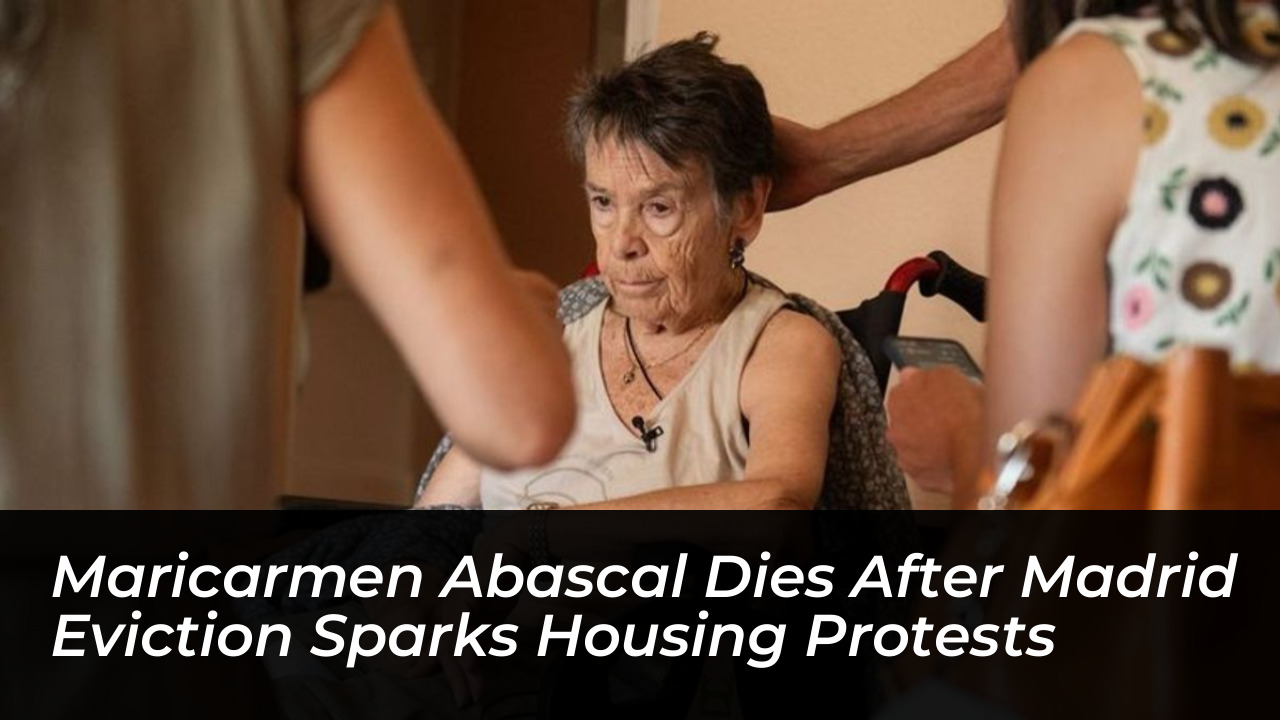


Maricarmen Abascal, an 87-year-old Madrid resident who became a powerful symbol of Spain’s housing rights movement, died Wednesday at Gregorio Marañón Hospital. Her passing comes just weeks after her high-profile eviction on September 23 from the Retiro apartment where she had lived for seven decades, according to the Inquilinas Union.
Abascal was transported to the hospital on a stretcher immediately after law enforcement enforced the eviction order, while supporters gathered outside the building located on Alcalde Sainz de Baranda Street. According to the Madrid Tenants’ Union, her health had deteriorated severely in recent months. Her condition remained critical during the two weeks following the forced removal.
A Turning Point for Spain’s Housing Crisis
The tenants’ union released a statement mourning her death and called it a turning point in the country’s social history. The organization noted that a late agreement reached with the property’s owner could have allowed Abascal to return home following her hospital discharge. However, the resolution ultimately came too late to save her from the ordeal, which they labeled totally avoidable and torturous.
Abascal’s sudden eviction catalyzed a wave of intense housing protests across Spain over the preceding weeks. Demonstrators and housing activists took to camping out in one of Madrid’s main public squares. This action fueled widespread public anger and demands for immediate government action to tackle escalating rent pressures and a mounting nationwide housing shortage.
Political Fallout and Snap Elections
The mounting public pressure, compounded by parliament’s rejection of legislative decrees aimed at curbing evictions and limiting rental market hikes, triggered significant political repercussions. Prime Minister Pedro Sánchez subsequently called an early general election for November 29.
Political analysts note that Sánchez is seeking to shift the national political narrative away from his government’s handling of migration challenges in Spain’s North African enclave of Ceuta and various corruption scandals. By pivoting toward the housing crisis, the administration hopes to harness growing public resentment over soaring housing costs.
Angel Víctor Torres, Spain’s territorial policy minister, expressed deep condolences over Abascal’s death. He acknowledged that she had tragically transformed into a national symbol representing the struggles of countless families, elderly individuals, and young people fighting to secure or maintain affordable housing.
Frequently Asked Questions
Who was Maricarmen Abascal?
Maricarmen Abascal was an 87-year-old Madrid resident who lived in the same Retiro neighborhood apartment for 70 years before being evicted. She subsequently became a central symbol of Spain’s housing crisis and tenant rights movement.
What caused Maricarmen Abascal’s death?
Abascal died at Gregorio Marañón Hospital following a severe deterioration in her health, which worsened significantly during the two weeks after her forced eviction and physical trauma on September 23.
How did her eviction impact Spanish politics?
Her eviction sparked widespread street protests and activist encampments across Spain, leading to increased pressure on lawmakers and prompting Prime Minister Pedro Sánchez to call early general elections for November 29.
What role did the Inquilinas Union play?
The Madrid Tenants’ Union, also known as the Inquilinas Union, supported Abascal during her eviction. They organized demonstrations, negotiated with property owners to secure her potential return home, and publicly advocated for systemic housing reforms following her passing.