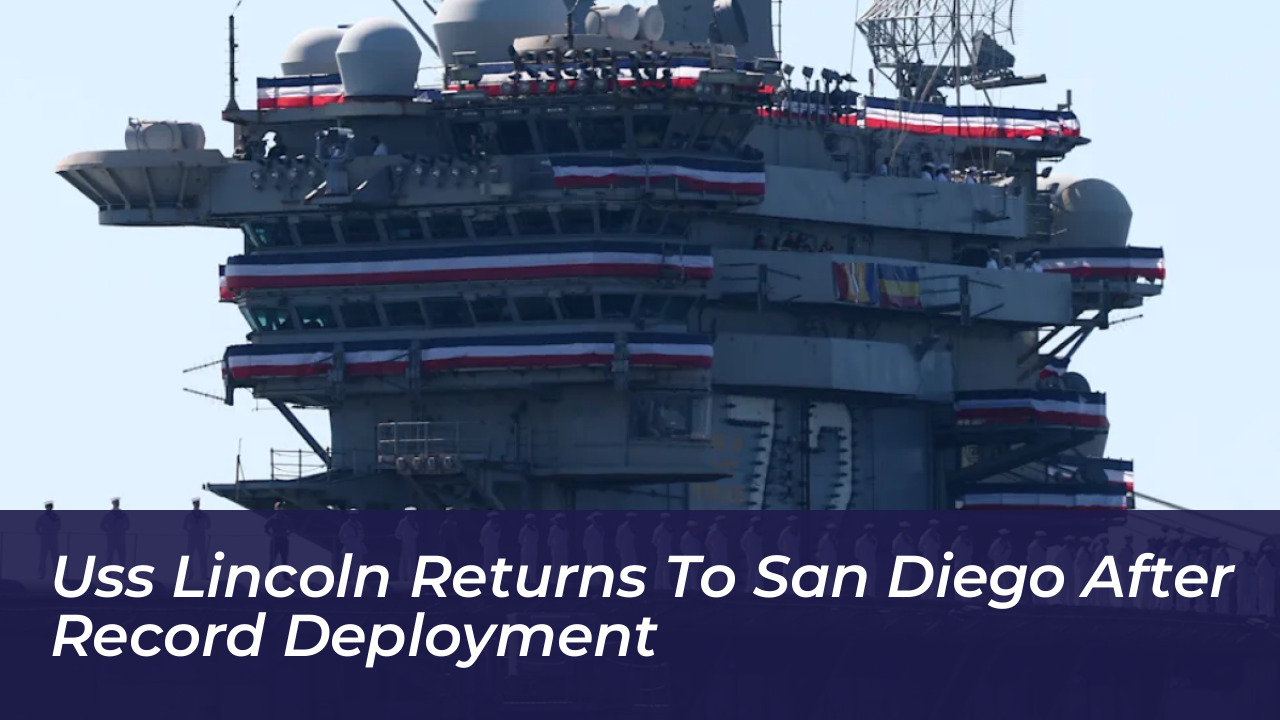


The aircraft carrier USS Abraham Lincoln returned to its homeport in San Diego Bay on Thursday, October 8, 2026, concluding an arduous deployment that lasted more than 10 months. The homecoming ended a historic stretch featuring a record 265 uninterrupted days at sea and intense combat operations in the Middle East. However, the mission was shadowed by logistical challenges, supply shortages, and growing concerns regarding crew well-being.
Hundreds of family members and friends filled Naval Air Station North Island, waving flowers, balloons, and cowbells as the Nimitz-class carrier pulled into the harbor. According to Navy officials, dozens of returning sailors-including 64 fathers-met their newborn babies for the very first time during the emotional reunion.
A Grueling Deployment Defined by Combat and Extended Operations
The USS Abraham Lincoln originally departed San Diego in late November 2025 for a standard Pacific deployment before being redirected to the Middle East as tensions and active conflict with Iran escalated. The carrier strike group became a central pillar of U.S. military operations in the region, supporting Operation Epic Fury and enforcing maritime blockades.
During the extended mission, the strike group achieved significant milestones:
- Executed 3,693 combat flights and missions.
- Conducted 40 days of continuous combat operations.
- Destroyed 64 Iranian warships and neutralized 77 one-way aerial attack drones.
- Launched 450 Tomahawk land-attack cruise missiles.
Defense Secretary Pete Hegseth visited the ship shortly before its return to award the Abraham Lincoln Carrier Strike Group the Presidential Unit Citation for extraordinary heroism in combat.
Logistical Struggles and Crew Welfare Concerns
Despite its combat successes, the deployment drew intense public and congressional scrutiny regarding conditions aboard the vessel. As the mission stretched past normal parameters without port visits-culminating in a modern record of 265 consecutive days at sea before a brief stop in Thailand-reports detailed severe logistical strains.
Sailors and their families highlighted chronic issues, including:
- Food and clean water shortages, with rations occasionally scaled back.
- Broken plumbing, non-functional laundry facilities, and moldy showers.
- Disrupted mail service and extreme fatigue from prolonged work schedules.
- Escalating mental health pressures, which prompted demands for congressional oversight and inquiries from lawmakers.
Acting Secretary of the Navy Hung Cao acknowledged the severe strain of the deployment, while military leadership defended the operational necessity of the mission. In response to the prolonged deployment, the Japan-based USS George Washington was dispatched to the Middle East to relieve the Lincoln, allowing the weary crew to chart a course back to California via Thailand and Guam.
The return of the Lincoln and its crew marks the close of one of the longest and most challenging modern deployments for a U.S. aircraft carrier, drawing praise for their tactical execution alongside renewed discussions regarding the welfare and support of deployed service members.
Frequently Asked Questions
When did the USS Abraham Lincoln return to San Diego?
The USS Abraham Lincoln returned to its homeport in San Diego on Thursday, October 8, 2026.
How long was the USS Abraham Lincoln deployed?
The deployment lasted for more than 10 months, featuring a modern-record 265 uninterrupted days at sea without a port call.
What missions did the carrier support?
The strike group supported combat operations in the Middle East, enforcing maritime blockades and participating in operations following the outbreak of conflict with Iran.
What awards did the crew receive?
Defense Secretary Pete Hegseth awarded the Abraham Lincoln Carrier Strike Group the Presidential Unit Citation for extraordinary heroism against enemy forces.
What challenges did sailors face during the deployment?
Crew members faced logistical hardships, including supply shortages, food and water rationing, broken facilities, and significant mental health pressures stemming from the extended time at sea.