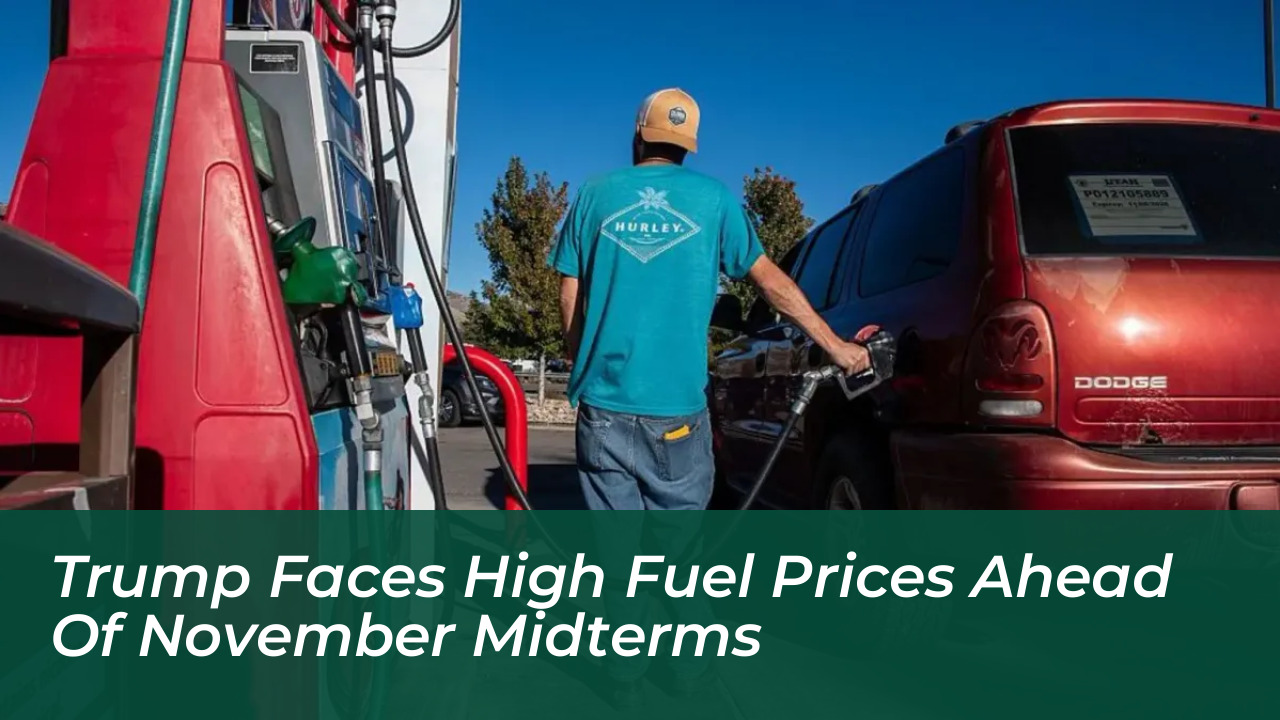


Elevated gasoline and diesel prices are creating a severe economic and political challenge for President Donald Trump ahead of the November 3, 2026, U.S. midterm elections. Persistent disruptions to global energy supplies continue to drive up costs for motorists, farmers, and transportation companies nationwide.
National gasoline prices averaged $4.36 per gallon on October 8, while diesel averaged $6.28, according to figures cited by CNBC. Market expectations indicate that gasoline could remain above $4 per gallon on Election Day, with diesel potentially staying above $6. This dynamic intensifies voter anxiety over inflation and affordability as Republicans fight to maintain control of Congress.
The Roots of the Global Energy Squeeze
The current fuel price crisis stems heavily from prolonged international conflicts. CNBC reported that gasoline prices peaked at $4.56 per gallon in late May following an initial surge in March, which was triggered by the outbreak of the war with Iran and the effective closure of the Strait of Hormuz. Although prices temporarily dipped to $3.79 in early July, they climbed steadily throughout the summer months.
Energy analysts note that a combination of factors has kept supplies constrained:
- The ongoing military conflict with Iran and restricted traffic through the Strait of Hormuz.
- Ukrainian drone strikes targeting and damaging Russian oil refineries.
- Depleted global crude oil inventories and high refining margins.
David Ruisard, pricing manager for commodities intelligence firm Argus, explained that the dramatic rise in diesel prices from around $3 to $6 a gallon is roughly 60% connected to the Strait of Hormuz disruption and 40% tied to the Russia-Ukraine war.
Administration Interventions and State Relief Efforts
In response to mounting public pressure, the White House and state governors have rushed to implement emergency measures to lower fuel costs:
- Red Dye Diesel Waiver: President Trump announced a waiver allowing tax-exempt off-road “red dye diesel” to be used on U.S. highways without facing federal levies, though industry experts warn of potential long-term complications and high fines once the waiver expires.
- G7 Stockpile Release: Following pressure from Washington, the G7 announced the release of 100 million barrels of oil and diesel from strategic reserves to ease immediate market tightness.
- State-Level Tax Suspensions: Several states have acted independently. Georgia Governor Brian Kemp declared a state of emergency to suspend the state’s motor-fuel tax for 30 days, while states like California, Massachusetts, Indiana, and Ohio have introduced temporary gas tax suspensions or seasonal fuel rule waivers.
Political Fallout as Midterms Approach
Public dissatisfaction over the cost of living has weighed heavily on Republican candidates. Polls indicate that voters strongly disapprove of the administration’s economic management and the protracted Middle East conflict. While President Trump recently told reporters that oil prices and the war with Iran would tumble downward right after the November elections, critics and opposition lawmakers have slammed the remarks.
Patrick De Haan, head of petroleum analysis at GasBuddy, noted that the administration has pulled most of the small economic levers available to it. According to energy economists, lasting relief at the pump will ultimately require a resolution to the geopolitical conflicts driving up crude prices-a solution that remains outside the direct control of the White House.