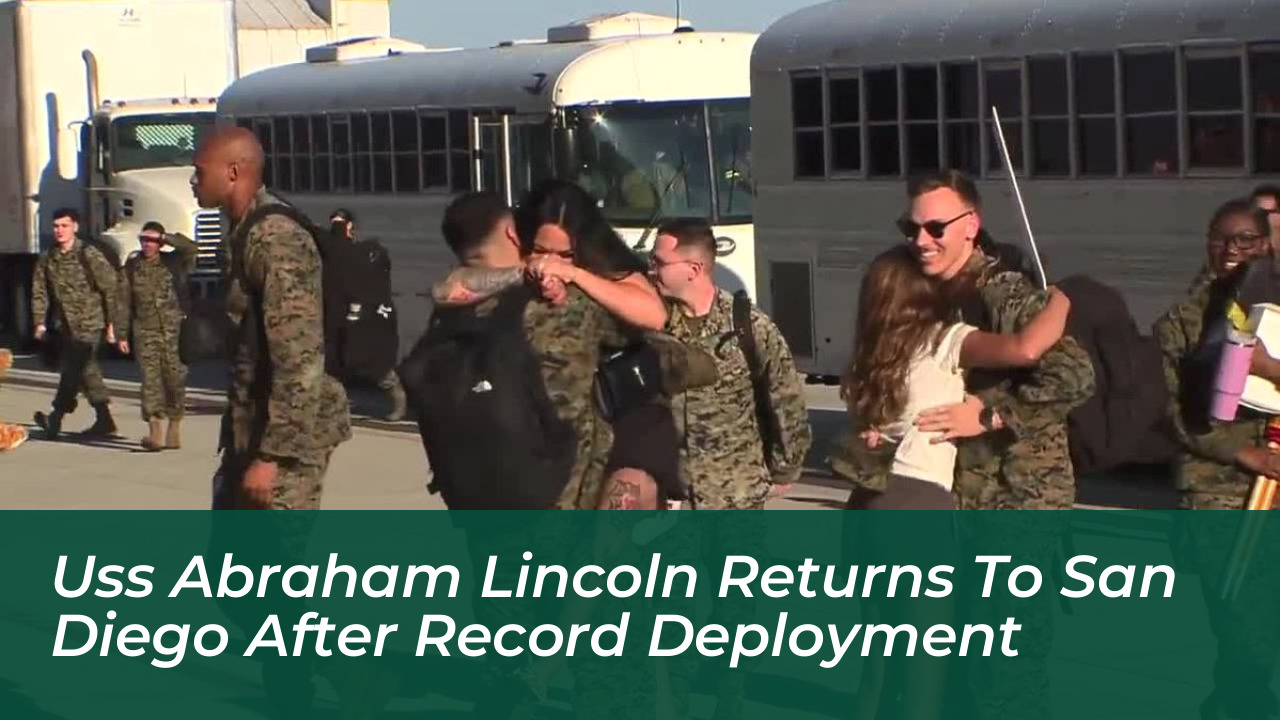

The aircraft carrier USS Abraham Lincoln returned to its homeport at Naval Air Station North Island in San Diego Bay on Thursday, bringing thousands of sailors and Marines home after more than 10 months at sea. The homecoming marked the end of a grueling and historic deployment that heavily supported U.S. and Israeli operations during the conflict with Iran.
According to Navy records, the carrier spent 265 consecutive days at sea without a port call, marking a modern-day record for uninterrupted time underway. It completed a total 322-day deployment away from its homeport. The lengthy mission concluded with emotional family reunions, highlighted by 64 fathers meeting their newborns for the first time. That figure climbed to 122 new fathers when including the embarked air wing.
Combat Operations and Record Achievements
The Abraham Lincoln Carrier Strike Group played a pivotal role in U.S. regional strategy, participating heavily in combat operations following joint U.S.-Israel actions against Iran in February. Defense Secretary Pete Hegseth boarded the carrier on Wednesday to present a Presidential Unit Citation to the strike group for extraordinary heroism against enemy forces.
During the deployment, the strike group’s achievements included:
- Nearly 3,700 combat missions flown from the carrier’s deck.
- 450 Tomahawk land-attack cruise missiles launched.
- 77 one-way attack drones successfully intercepted and shot down.
- 64 Iranian warships sunk during operations.
- 21 anti-ship cruise missiles destroyed.
Capt. Daniel Keeler, commander of the Lincoln, praised the crew’s performance, noting that every single sailor and Marine who left on the deployment returned home safely without the loss of life, aircraft, or major combat damage.
Logistical Challenges and Crew Welfare
Despite its tactical success, the deployment tested the limits of the crew’s resilience. Sailors and Marines faced significant logistical hurdles, including food and water shortages, disrupted mail service, and sparse opportunities for downtime during 40 days of continuous combat operations.
The prolonged isolation and demanding operational tempo raised serious concerns regarding mental health. Lawmakers and naval officials later confirmed that eight service members within the broader strike group attempted during the extended mission. Acting Navy Secretary Hung Cao acknowledged the attempts in a congressional letter, while local representatives like U.S. Rep. Sara Jacobs pushed for deeper inquiries into carrier conditions and command planning.
Defense officials defended the necessity of the mission, with Secretary Hegseth asserting that the carrier’s presence was vital to regional security and strategic goals. The Lincoln eventually departed the U.S. Central Command area of responsibility in late August, making logistical and morale stops in Guam and Thailand before steaming back across the Pacific toward Southern California.
Reunions and the Road Ahead
Thursday’s arrival brought an eruption of cheers, water cannons, and musical accompaniment as families embraced their loved ones on the pier. While the immediate focus centers on family time, extended leave, and medical and psychological readjustment support, the broader Navy faces lingering questions regarding operational pacing, retention rates, and future fleet maintenance schedules following the carrier’s historic run.
The USS Abraham Lincoln is now slated for an extended maintenance period in San Diego, while other carrier strike groups continue maintaining a rotational presence in the Middle East.