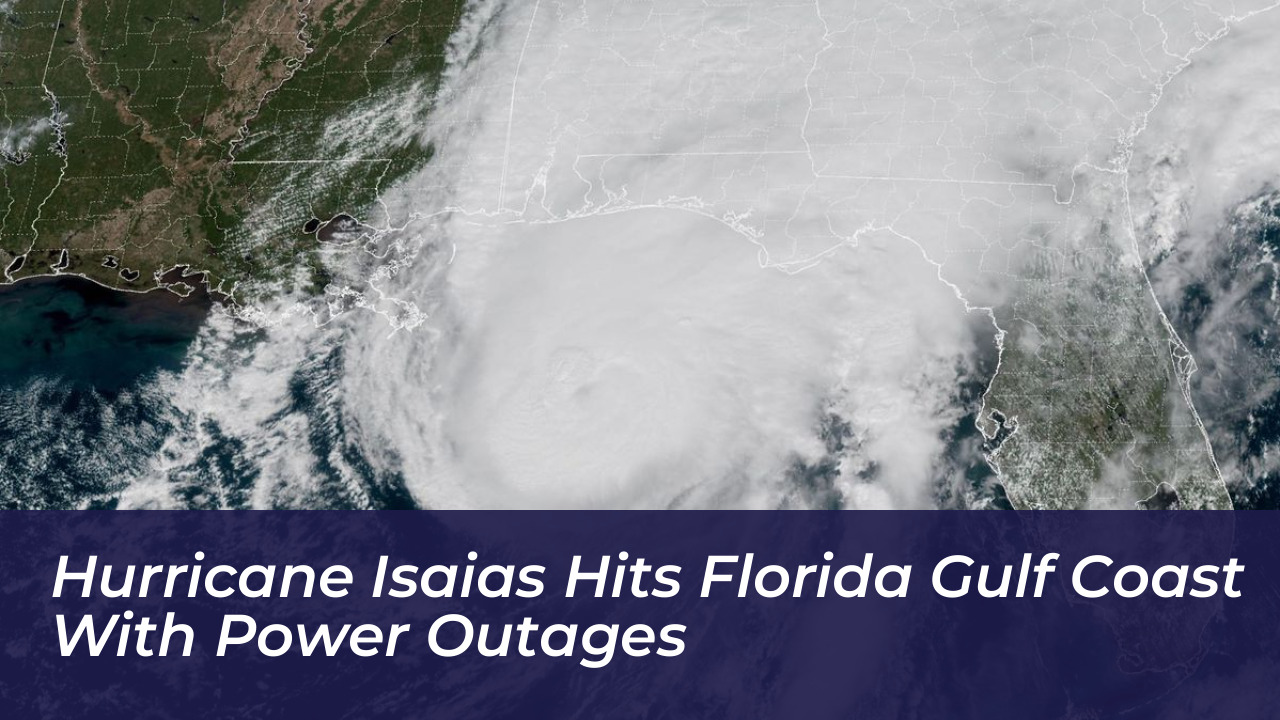

Dangerous winds, heavy rainfall, and coastal flooding swept across Florida’s Gulf Coast after Hurricane Isaias made landfall near Destin on Friday night. The storm prompted emergency declarations, mandatory evacuations, and widespread preparations across the southeastern United States. The storm subsequently weakened as it moved inland. However, officials continued warning residents in Florida and Alabama about life-threatening storm surges, tornadoes, and severe flooding.
According to Sky News, Isaias initially reached the coast as a Category 2 hurricane with maximum sustained winds recorded at 105 mph. The BBC reported that the system was later downgraded from hurricane status to a post-tropical cyclone. The National Hurricane Center discontinued all hurricane warnings by Saturday morning, but storm surge and tropical storm warnings remained active for several affected regions.
Widespread Power Outages and Regional Impacts
The severe weather system knocked out electrical grids across multiple states. According to PowerOutage.us data cited by news agencies, more than 430,000 customers in Florida and nearly 300,000 customers in Alabama lost electricity by Saturday morning. Total figures from Sky News indicated that more than 594,000 homes and businesses across the two states were left without power. Neighboring Georgia also experienced infrastructure disruptions, with approximately 40,000 utility customers affected by the storm.
Before making landfall, the late-forming hurricane severely impacted regional industries. Energy companies in the Gulf of Mexico temporarily halted a significant share of offshore oil and gas production, taking over one million barrels a day off the market as dozens of manned platforms were evacuated. Commercial operations, schools, and transportation networks across the Florida Panhandle and coastal Alabama were brought to a temporary halt as residents braced for the severe weather.
Emergency Response and Recovery Efforts
State leaders activated extensive emergency protocols ahead of the storm’s arrival. Florida Governor Ron DeSantis and Alabama Governor Kay Ivey declared states of emergency across dozens of counties. They mobilized thousands of National Guard troops and pre-positioned utility repair crews to respond immediately once conditions permitted safe travel.
Emergency management officials repeatedly emphasized the severe risk posed by rising water levels throughout the affected flood zones. As the system transitioned into a post-tropical cyclone and moved inland toward Georgia and surrounding areas, the focus shifted from immediate wind protection to search-and-rescue operations, clearing blocked roadways, and restoring critical infrastructure for residents across the region.