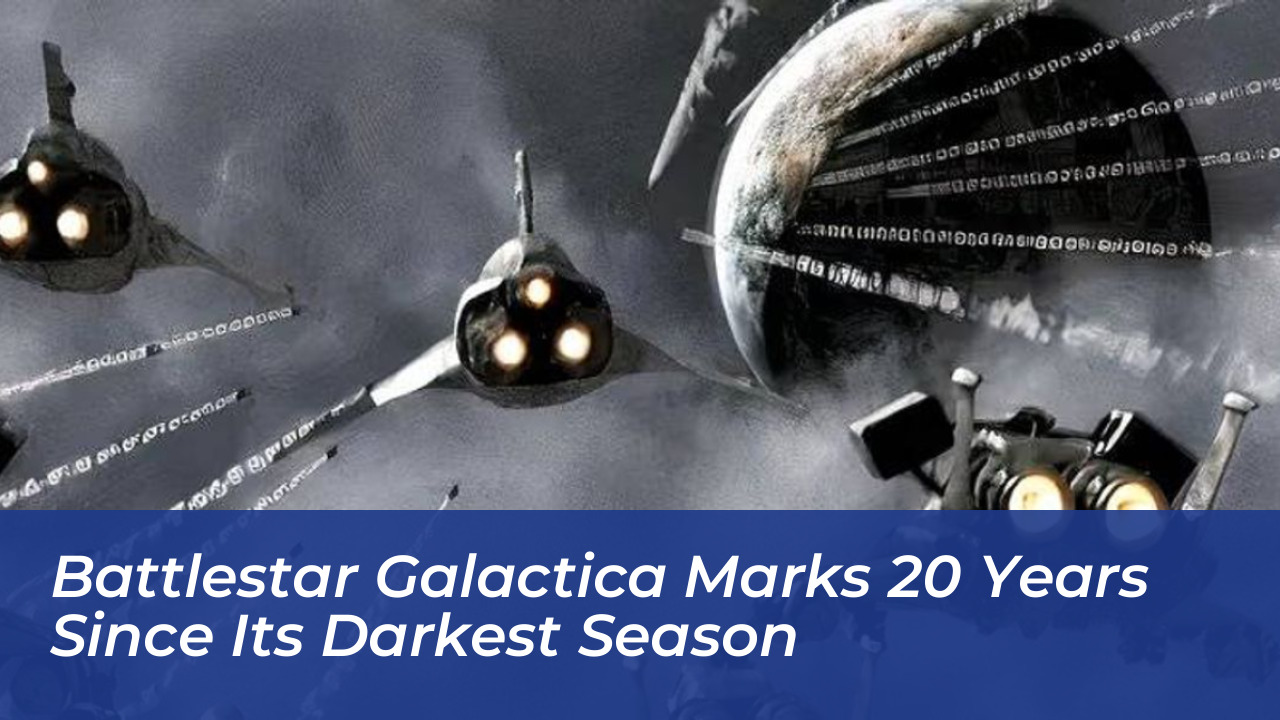

Twenty years after its third season premiered on October 6, 2006, Battlestar Galactica remains a monumental achievement in television history. Developed by Ronald D. Moore and David Eick as a reimagining of the 1978 series, the science fiction drama broke away from traditional space opera tropes. Instead, it offered an unsettling, grounded examination of occupation, resistance, moral compromise, and the haunting aftermath of total societal collapse.
The dark narrative tone of the series was established early on, but season 3 pushed humanity’s remaining survivors to their absolute limits. Opening with the powerful two-part premiere “Occupation” and “Precipice,” the show plunged viewers directly into life under Cylon rule on New Caprica before the high-stakes rescue operations in “Exodus, Part 1” and “Exodus, Part 2” altered the trajectory of the series forever.
The Shadows of New Caprica and Real-World Parallels
When “Occupation” first aired, its exploration of an insurgency against an occupying force carried immediate parallels to the ongoing Iraq War and historical conflicts like Vichy France. Four months after the devastating season 2 finale, the last surviving humans found themselves trapped under the thumb of the robotic Cylons. Rather than presenting a clean battle between clear-cut heroes and villains, the writers forced characters into impossible moral corners.
Chief Petty Officer Galen Tyrol transitioned from a labor leader into a desperate resistance fighter, while Colonel Saul Tigh endured brutal physical and psychological at the hands of the Cylon Number One, played by Dean Stockwell. Meanwhile, Kara “Starbuck” Thrace was held captive by Number Two, portrayed by Callum Keith Rennie. The narrative asked uncomfortable questions: How far is a repressed population willing to go to reclaim its freedom? When does a freedom fighter become a ?
Challenging Conventions and Redefining Sci-Fi Television
What set Battlestar Galactica apart from its contemporaries was its refusal to offer easy answers or clean resolutions. The Cylons themselves were deeply fragmented, driven by conflicting theological motivations, desires for atonement, and the capacity for cruelty. Director Sergio Mimica-Gezzan, who brought experience from working alongside Steven Spielberg on Saving Private Ryan and Schindler’s List, imbued the episodes with a gritty, documentary-style realism.
The show’s willingness to critique religious fundamentalism, political collaboration, and the brutal calculus of asymmetrical warfare resonated deeply with audiences navigating the real-world tensions of the post-9/11 era. The agonizing choices faced by characters such as President Laura Roslin, Commander William Adama, and Gaius Baltar transformed the series into a timeless psychological study of survival.
Legacy of a Masterpiece
Two decades later, the influence of Battlestar Galactica’s darkest era can still be felt across modern television. By anchoring grand, interstellar space battles in raw human emotion and unflinching political commentary, the series proved that science fiction could serve as a powerful mirror for contemporary anxieties. The haunting refrain repeated throughout the series-“All of this has happened before, and it will all happen again”-serves as a permanent reminder of the cyclical nature of human conflict, pride, and resilience.