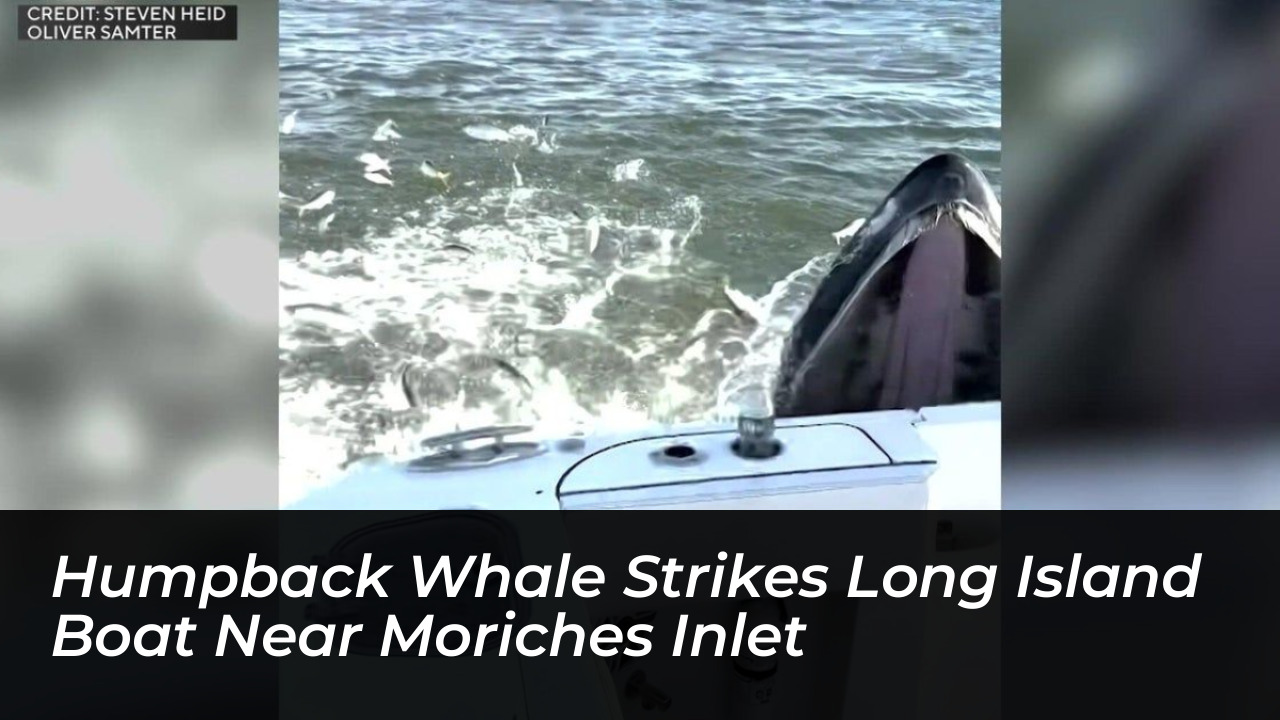

A routine fishing trip off the coast of Long Island turned into an extraordinary encounter when a juvenile humpback whale surged from the water and collided with a 34-foot vessel near Moriches Inlet. The dramatic incident, captured on video and quickly shared on social media, caused minor damage to the boat. Fortunately, none of the passengers or the marine mammal suffered any injuries.
What Happened During the Moriches Inlet Whale Strike
The encounter took place when Plainview resident Steven Heid, his father-in-law Steve Bashian, and his nephew Oliver Samter were out on the water west of Fire Island. The crew noticed numerous bunker fish, also known as Atlantic menhaden, schooling in the area. Recognizing that marine wildlife was present, the group shut off the boat’s engine and allowed the vessel to drift to avoid disturbing any feeding animals.
As the family watched the water, a humpback whale surfaced close to another nearby boat. Heid instructed his nephew, a senior at Roslyn High School, to record the moment on his phone. Moments later, the whale breached violently, striking the side of their vessel.
“It was like a freight train hit the boat,” Heid said in interviews following the incident. Passengers noted that the impact tore a door from its hinges and punctured a hole in the hull, nearly capsizing the craft. However, because of the boat’s solid construction, it remained seaworthy.
Lunge-Feeding Behavior
Marine experts and conservationists reviewed the viral video, explaining that the whale’s actions were entirely accidental. Robert DiGiovanni, executive director of the Atlantic Marine Conservation Society, noted that the animal was likely engaged in surface lunge-feeding. This behavior occurs when humpbacks surge vertically through dense schools of prey fish to feed.
Biologists emphasize that the whale was not attacking the boat. Instead, it misjudged its trajectory while chasing baitfish near the surface. Because bunker fish swarm tightly, feeding whales frequently break the surface with little to no warning, leaving boaters with minimal reaction time.
Experts praised the fishermen for taking proactive safety measures, such as cutting their engine and maintaining a distance from active feeding zones. Under guidelines from NOAA Fisheries and New York regulations, boaters are advised to stay at least 300 feet away from whales and to watch for surface bubble clouds that indicate a diving or surfacing animal.
The Ecological Context Behind Long Island Whale Sightings
The close call near Moriches Inlet highlights a broader ecological shift along New York’s South Shore. In recent years, sightings of humpback whales have increased significantly. This trend is largely attributed to the robust recovery of Atlantic menhaden stocks.
Following coast-wide catch limits implemented by the Atlantic States Marine Fisheries Commission in 2012, prey fish populations rebounded. This drew apex predators like humpbacks back into local waters, including the New York Bight and New York Harbor.
Conservationists and researchers celebrate this marine resurgence. For example, the Gotham Whale organization documented its 500th individual humpback sighting earlier in the year. However, this growth also presents new challenges. With more whales sharing coastal habitats alongside growing recreational and commercial vessel traffic, unexpected encounters remain a persistent risk for mariners navigating Long Island’s waters.
Frequently Asked Questions
Where did the humpback whale strike the fishing boat?
The collision occurred off the coast of Long Island, near Moriches Inlet in Suffolk County, west of Fire Island.
Were any passengers or the whale injured?
No. Despite the force of the impact-which damaged a cabin door and the hull-neither the three fishermen nor the whale suffered any injuries. The whale swam away unharmed immediately after the strike.
Why did the whale hit the boat?
Marine biologists explained that the juvenile humpback was engaged in lunge-feeding, chasing a dense school of bunker fish. The whale did not attack the vessel; rather, the boat happened to be in the animal’s path as it surged upward for food.
What precautions did the boaters take?
The fishermen spotted bunker fish in the area, realized whales might be feeding nearby, and deliberately shut off their engine to drift and maintain a safe distance before the unexpected breach occurred.
How common are whale sightings off Long Island?
Humpback whale sightings have become increasingly common along Long Island’s South Shore due to the successful rebound of Atlantic menhaden (bunker fish) populations following strict conservation management measures.