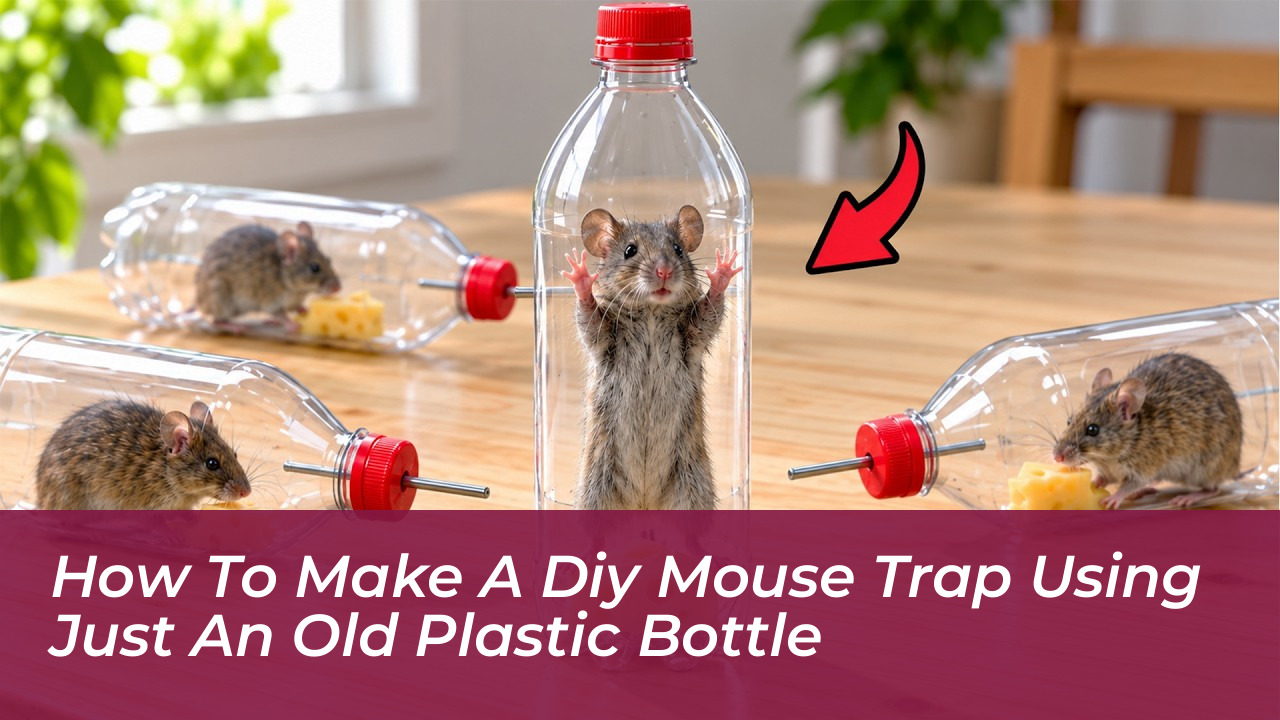

Transforming an everyday plastic bottle into a DIY mouse trap creates a humane, zero-cost capture device that relies on simple gravity rather than snap springs or chemical poisons. The mechanism operates on a balanced fulcrum: the rodent enters seeking aromatic bait, its body weight tilts the container downward, and the slick interior prevents escape. This simple upcycling solution bypasses expensive store-bought hardware while delivering rapid results in garages, basements, and pantries. By understanding rodent behavior and basic mechanics, anyone can assemble and deploy this functional capture tool in less than ten minutes.
The Mechanics of the Plastic Bottle Gravity Trap
Mice possess an acute sense of smell and a natural instinct to explore narrow, enclosed voids. Standard wooden snap traps often cause messy cleanups, while sticky glue boards raise severe animal welfare concerns. A recycled bottle trap solves both problems by functioning as a live-catch enclosure.
The trap utilizes a standard two-liter soda bottle or plastic water bottle positioned near the edge of an elevated surface or counter. A string secures the neck of the bottle to a fixed anchor point, leaving just enough slack so that when the bottle tilts off balance, it drops into a vertical hanging position with the opening facing upward. A properly balanced gravity trap relies entirely on the animal passing its center of mass past the pivot line, ensuring the bottle drops smoothly without startling the pest prematurely.
Once the mouse enters the bottle to retrieve the bait placed at the far bottom end, its center of gravity shifts past the pivot line. The bottle tips off the ledge and hangs suspended in mid-air. Because the rodent cannot grip the slick, smooth walls of polyethylene terephthalate (PET) plastic, it remains securely trapped inside without suffering physical injury.
Step-by-Step Construction Guide
Building this capture device requires zero specialized woodworking or welding tools. Most components are already present in standard household recycling bins.
- Prepare the bottle: Thoroughly wash and dry an empty two-liter plastic bottle to remove lingering beverage odors that could deter curious rodents.
- Create the suspension point: Punch a small hole roughly one-third of the distance from the bottle neck, or tie a durable piece of twine tightly around the neck.
- Secure the counterweight anchor: Fasten the other end of the string to a stable anchor point on a counter, table, or shelf, ensuring the bottle sits horizontally along the ledge with roughly one-third of its base hanging slightly over the edge.
- Bait the deep interior: Place a dab of high-value bait directly at the very bottom interior of the bottle so the rodent must crawl entirely to the back end.
- Create an access ramp: Place a small piece of wood, cardboard, or wire netting leading from the floor up to the neck opening to give the rodent easy access.
Choosing the Right Attractant
Many homeowners assume cheese is the optimal choice for pest bait, yet professional exterminators consistently favor calorie-dense foods packed with fats and sugars. Mice are opportunistic seed and nut eaters by nature. A dab of creamy peanut butter, sunflower seeds, or a smear of hazelnut spread adheres well to the bottom of the bottle and releases powerful aromatic cues across the room. Unlike loose seeds, sticky peanut butter forces the rodent to linger at the far base of the bottle, ensuring the weight shift fully triggers the drop mechanism.
Common Trapping Misconceptions vs. Mechanical Reality
Navigating DIY pest management requires separating traditional folklore from verifiable physical design principles.
- Traditional Snap Traps: Risk painful false triggers or snapped paws.
- Plastic Bottle Strategy: Enclosed bottle captures the mouse unharmed for safe transport.
- Single-Use Glue Boards: Present high biohazard risks.
- Washable Plastic Enclosure: Allows repeated humane releases.
- Rodenticides: Lead to pests decaying behind drywall.
- Contained Trap: Ensures full visibility and immediate disposal.
- Chemical Poisons: Present accidental ingestion risks to household pets.
- Non-Toxic Food Bait: Keeps household pets entirely safe.
A frequent mistake in setting up gravity-based traps is using a bottle that is too rigid or heavy. If the container material has too much structural mass, a lightweight juvenile mouse may not weigh enough to tip the balance. Lightweight, thin-walled disposable plastic bottles provide the best sensitivity. Checking live traps twice daily prevents captive rodents from experiencing severe dehydration or chewing an exit through thinner plastic barriers.
Safe Relocation and Hygiene Protocol
Once the trap triggers, handle the bottle with thick work gloves to protect against accidental scratches or exposure to parasites. Transport the captured mouse at least two miles away from the property before releasing it into a suitable wooded or brush-heavy area, preventing the animal from navigating back to your residence.
Wash all contact surfaces where the trap was deployed using an appropriate disinfectant solution. If the bottle is retained for reuse, sanitize it thoroughly with warm soapy water before rebaiting and resetting the line along known rodent pathways.
Frequently Asked Questions
Will a plastic bottle mouse trap hurt the mouse?
No. This is a humane, live-catch trap that relies on gravity and smooth plastic walls. The mouse remains completely unharmed inside the enclosure until you release it.
What is the best bait to use in a bottle trap?
Peanut butter, hazelnut spread, or sunflower seeds work best because their strong aromas attract mice, and their sticky texture forces the rodent to venture all the way to the back of the bottle to trigger the weight shift.
How often should I check the DIY mouse trap?
You should check live traps at least twice a day to prevent the captured mouse from experiencing severe dehydration, stress, or attempting to chew through the plastic walls.
How far away should I release the captured mouse?
Transport the mouse at least two miles away from your home and release it in a wooded or brush-heavy area to ensure it cannot find its way back inside your property.
Can I reuse the plastic bottle trap?
Yes. As long as the bottle is structurally intact, you can thoroughly wash and sanitize it with warm soapy water and disinfectant before resetting it with fresh bait.