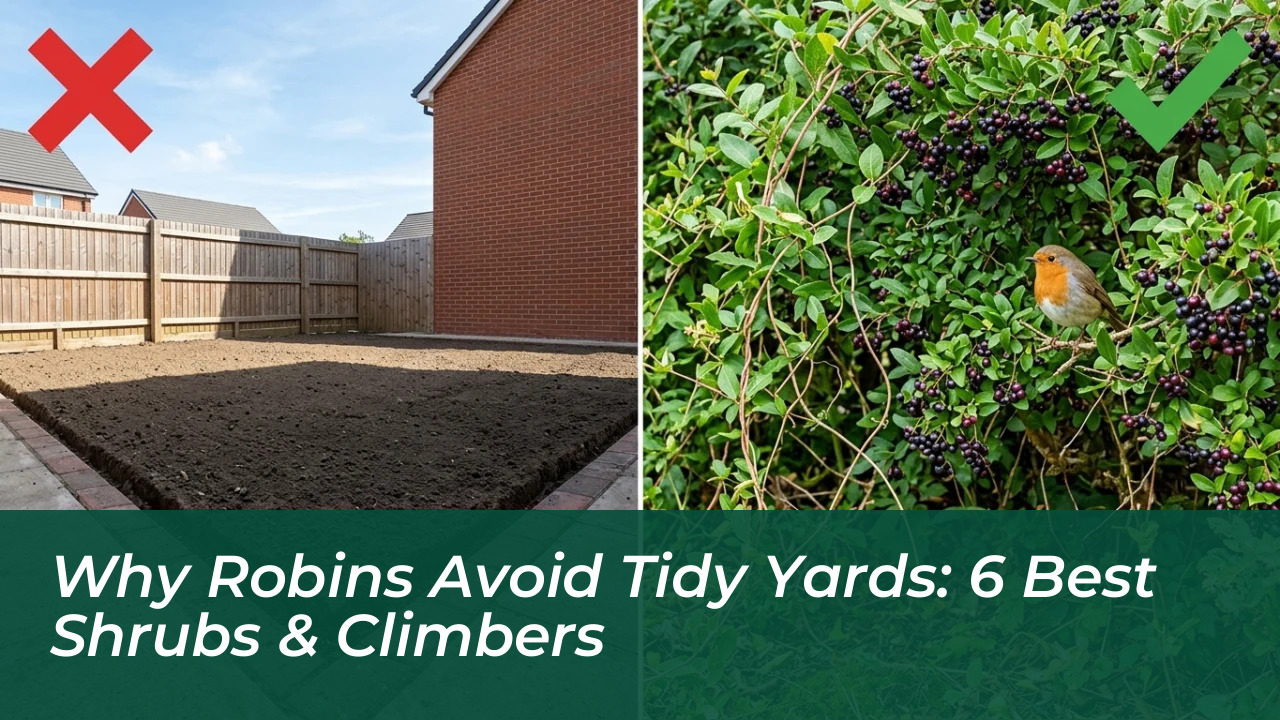

Pristine, manicured landscapes often drive wild robins away, whereas six specific shrubs and climbers provide the natural sanctuary and calories they crave. While offering high-energy mealworms and suet cakes remains a proven method to attract robins, artificial feeding stations only solve half the equation when severe weather sets in. Robins are resident birds that remain local all year long, relying heavily on natural foliage when insects hibernate and flowering plants cease producing seeds. To secure a permanent presence of these beloved red-breasted songbirds, introducing dense hedge structures and berry-producing botanicals transforms an ordinary backyard into a functional wildlife haven.
As wildlife specialists point out, the bird’s biological instincts prioritize survival through structure just as much as caloric intake. Gardens stripped clean of debris, brush, and thick undergrowth offer no defense against predatory birds or freezing winds. Robins are fiercely territorial and need safe nesting spots. Dense shrubs, hedges, and climbing plants provide the perfect refuge. They offer shelter from harsh weather, and protection from larger birds. Robins are actually put off by extremely uniform gardens without trees, shrubs, leaves, and debris.
The Biology of Robin Habitats: Busting the Tidy Garden Myth
A widespread misconception among property owners is that an immaculate, debris-free lawn creates an inviting environment for songbirds. In reality, hyper-manicured spaces eliminate leaf litter and branch networks, stripping away both nesting cover and the natural invertebrates that form a core component of a robin’s diet. Because robins establish and defend rigid territories, they require distinct vertical tiers of vegetation. Incorporating specific native hedges, robust climbers, and fruiting bushes delivers continuous sustenance alongside predator protection throughout late fall and freezing winter conditions.
Top 6 Proven Plants to Shield and Feed Garden Robins
Integrating the right combination of fruit yields and dense branch patterns creates a resilient ecosystem. Wildlife authorities emphasize planting a mix of evergreen foliage and deciduous varieties that provide sustenance across alternating months.
1. Wild Privet
Wild privet delivers an all-in-one habitat solution. It functions simultaneously as a secure shelter, an insect haven, and a winter pantry. Its berries serve as an essential lifeline for thrushes, starlings, blackcaps, and robins when frost sets in. The plant’s foliage also provides shelter for birds alongside the invertebrates that form part of a robin’s diet.
2. Honeysuckle
Honeysuckle is renowned for fragrant flowers, but its structural benefits are what truly attract nesting songbirds. The dense, tangled stems form thick screens that hide vulnerable birds from aggressive aerial predators. In summer and autumn, honeysuckle produces bright red berries that supply an instant source of hydration and sugar. Gardeners gain aesthetic floral beauty while birds secure a fortified retreat.
3. Ivy
This evergreen climber offers unique seasonal timing that bridges critical feeding gaps. Unlike early-ripening garden plants, mature ivy berries ripen late into the season when competing food resources have vanished. Ivy berries boast a significantly higher fat content than many standard garden fruits, providing long-lasting metabolic energy. The thick, overlapping leaves also form weather-resistant microclimates during driving rain and heavy snow.
4. Holly
Holly is an iconic cold-weather stalwart that balances security with rich sustenance. Female holly plants produce heavy clusters of scarlet fruit that provide critical calories throughout late autumn and the height of winter. The spiny leaves establish an impassable barrier against neighborhood cats and predatory species. This protective framework makes holly an unmatched choice for safe roosting through sub-zero nights.
5. Serviceberry
Also recognized as shadbush or juneberry, serviceberry expands avian support far beyond the colder seasons. The shrub blooms early in mid-spring, attracting pollinator insects that robins feed on during critical nesting stages. By late spring and throughout the summer, the fruit ripens into soft, nutrient-packed clusters. These tender berries provide parent birds with easily digestible, energy-rich meals to nourish growing chicks.
6. Hawthorn
Hawthorn stands out as a premier hedging specimen for natural barrier creation. Cultivating a dense hawthorn boundary yields thick, intertwining woody vegetation that larger predatory birds cannot easily penetrate. Beyond defensive nesting cover, hawthorn produces winter fruit that keeps songbirds nourished when ground insects are completely inaccessible under frozen ground.
Plant Profile Comparison for Bird-Friendly Yards
To help you map out your landscaping strategy, review this quick reference guide detailing how each plant benefits your backyard robins:
- Wild Privet: Cold-weather berries, shelter, and invertebrate habitat
- Honeysuckle: Dense nesting canopy and summer-to-autumn berries
- Ivy: Late-ripening berries with high fat content
- Holly: Thorny predator barrier and vital winter calories
- Serviceberry: Spring insect attractant and soft summer berries for chicks
- Hawthorn: Thick hedgerow cover and winter berries
How to Strategically Landscape for Nesting Birds
Establishing an effective bird sanctuary requires practical plant distribution rather than isolated plantings. To encourage long-term territory establishment, consider this structured approach:
- Build Perimeter Buffers: Plant hawthorn or wild privet along outer fences to generate thick boundary hedges that deflect harsh prevailing winds.
- Incorporate Vertical Climbers: Train ivy or honeysuckle against stone walls, sheds, or sturdy trellises to grant multi-tiered vertical escape routes.
- Pair Pollinators with Evergreens: Position serviceberry alongside evergreen holly to guarantee an uninterrupted seasonal rotation of insects, foliage, and berries.
- Retain Natural Ground Cover: Allow fallen leaves to gather naturally beneath shrubs rather than clearing every patch, preserving foraging zones for insects.
Transform your outdoor space into an active wildlife haven by integrating thick, protective hedges alongside berry-yielding plants. Assess your yard’s layout this season to identify exposed boundaries that could benefit from thorny cover or nutrient-dense climbers. Share your experiences with us: which native plants have brought the most songbirds to your garden?
Frequently Asked Questions About Robins and Tidy Yards
Why do robins prefer messy or untidy yards?
Robins rely on leaf litter, brush, and branch networks to find earthworms and ground-dwelling invertebrates. Tidy, chemical-treated lawns lack the natural debris and structural cover that protect them from predators and weather.
Do robins use birdhouses or prefer shrubs?
Robins rarely use standard enclosed birdhouses. Instead, they prefer open-fronted nesting platforms, dense evergreen shrubs, or the protected fork of a sturdy tree or hedge.
What do robins eat during winter when berries run out?
When berries and ground insects are scarce in deep winter, robins survive on high-fat suet, mealworms, and persistent high-sugar fruits found on late-fruiting plants like holly, ivy, and hawthorn.
Are climbing plants like ivy harmful to walls?
Mature self-clinging ivy can damage crumbling mortar or damp brickwork, but when trained against sturdy trellises, fences, or stone walls, it provides invaluable nesting cover and winter food without structural damage.
How can I protect nesting robins from cats?
Planting spiny or dense barrier shrubs-such as holly, hawthorn, and firethorn-creates natural thickets that deter domestic cats and other predators from reaching active robin nests.