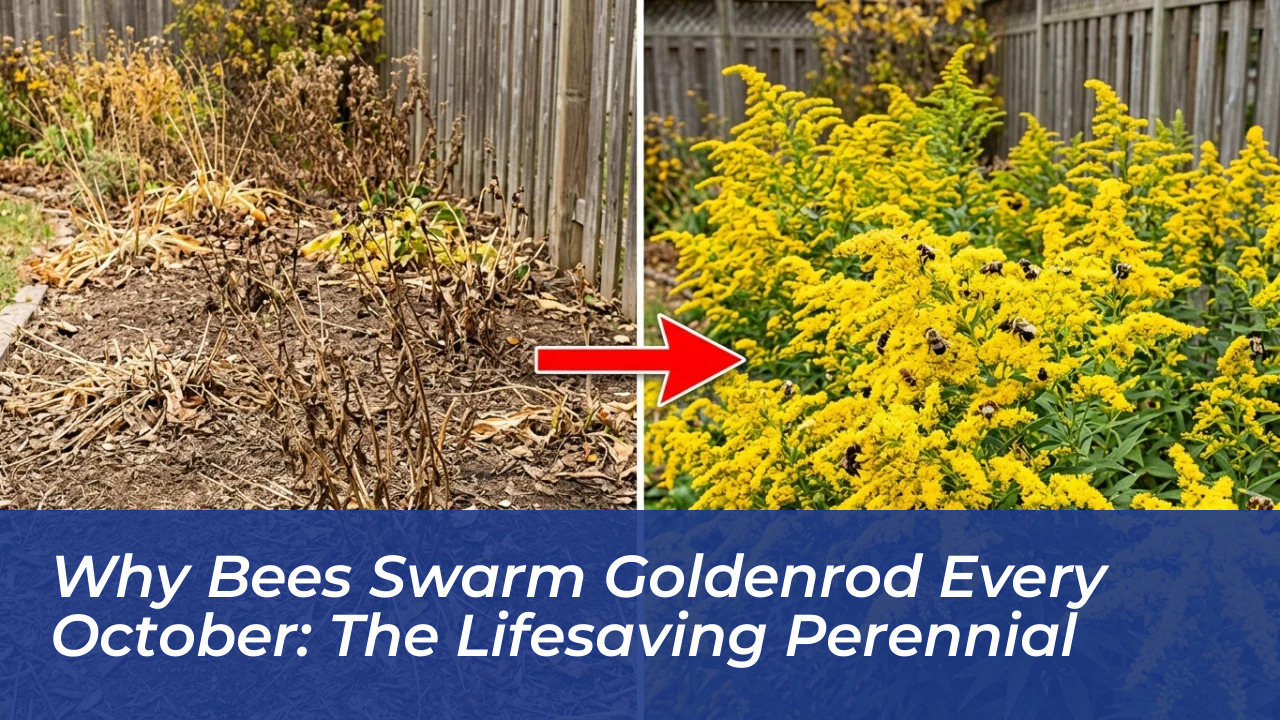

Every October, honeybees, bumblebees, and a wide variety of native insects swarm goldenrod plants in a frantic push for late-season survival. As summer blossoms disappear across North America, the brilliant yellow plumes of the Solidago genus deliver massive, life-saving reserves of nectar and pollen right when freezing temperatures loom.
As autumn settles in, maintaining an ecologically vital landscape comes down to choosing hardworking perennial species. Closely related to asters, goldenrod is a resilient, clump-forming plant that spreads through underground rhizomes while demanding very little routine maintenance from growers.
The Science Behind Why Pollinators Rely on Autumn Blooms
As summer blossoms fade, pollinator activity does not cease. Instead, the metabolic demands on insects intensify. Master gardener Tabar Gifford highlights that the clustered architecture of the plant allows bees to feed efficiently without burning precious calories flying across wide distances.
Goldenrod produces masses of tiny flowers packed into its showy plumes, giving bees access to ample nectar and pollen without requiring long flights between plants. Nectar provides immediate carbohydrates for energy, while pollen supplies the protein and essential amino acids required for growth and reproduction. For solitary bees, this late nourishment ensures the successful completion of their reproductive cycle before winter sets in.
Colony-forming insects face an equally vital window. Newly mated bumblebee queens rely heavily on these late-season floral spikes to accumulate fat reserves. These reserves are necessary to survive underground freezes and establish healthy colonies when spring returns. Goldenrod stands as a keystone species that has evolved alongside over 50 types of specialist native bees, including leafcutter, longhorn, mining, carpenter, and sweat bees.
Dispelling the Seasonal Allergy Myth
A widespread misconception leads many homeowners to eradicate goldenrod from their property, wrongly blaming its vivid yellow blooms for seasonal sneezing and hay fever. In biological reality, goldenrod produces heavy, sticky pollen grains engineered specifically for insect transportation rather than wind dispersal.
The true culprit behind autumn allergies is common ragweed (Ambrosia), an incons**cuous plant that flowers at the same time and releases light, windborne pollen directly into the air. Goldenrod’s vibrant flowers simply make it a visible target for misplaced blame.
Top Species for Home Landscapes
With roughly 75 species native to North America, selecting the appropriate variety ensures optimal garden performance without the plant becoming overly aggressive in rich soils. Gardeners can reference tools such as the National Wildlife Federation Native Plant Finder to determine regional compatibility.
- Solidago rugosa ‘Fireworks’: Arching sprays, grows 3-4 ft tall and 2-3 ft wide; thrives in full sun across USDA Zones 4-9.
- Solidago sphacelata ‘Golden Fleece’: Compact mound reaching 1-2 ft high; ideal for walkway borders and dense floral displays.
- Solidago flexicaulis (Zigzag Goldenrod): Tolerates partial shade; reaches 2-4 ft tall, perfect for woodland borders and under trees.
- Solidago odora (Anise-Scented): Features aromatic foliage and distinct plumes; reliable clump-forming habit.
Strategic Companion Plantings and Winter Care
Pairing goldenrod with complementary autumn perennials builds a sustained forage network for wildlife. Asters serve as the primary companion, blooming in sync to create continuous floral nutrition while offering striking purple-and-gold visual contrast.
Leaving uncut hollow stalks through the cold months creates secure overwintering cavities for solitary insects, ensuring biodiversity thrives year-round in your garden ecosystem.
Managing an autumn garden for biodiversity requires minimal intervention once established. By letting these perennial clumps stand untouched through the winter, seedheads remain accessible to foraging birds while native stem-nesting bees secure vital shelter. Selecting native cultivars suited to your soil type transforms standard border beds into functioning pollinator stations.