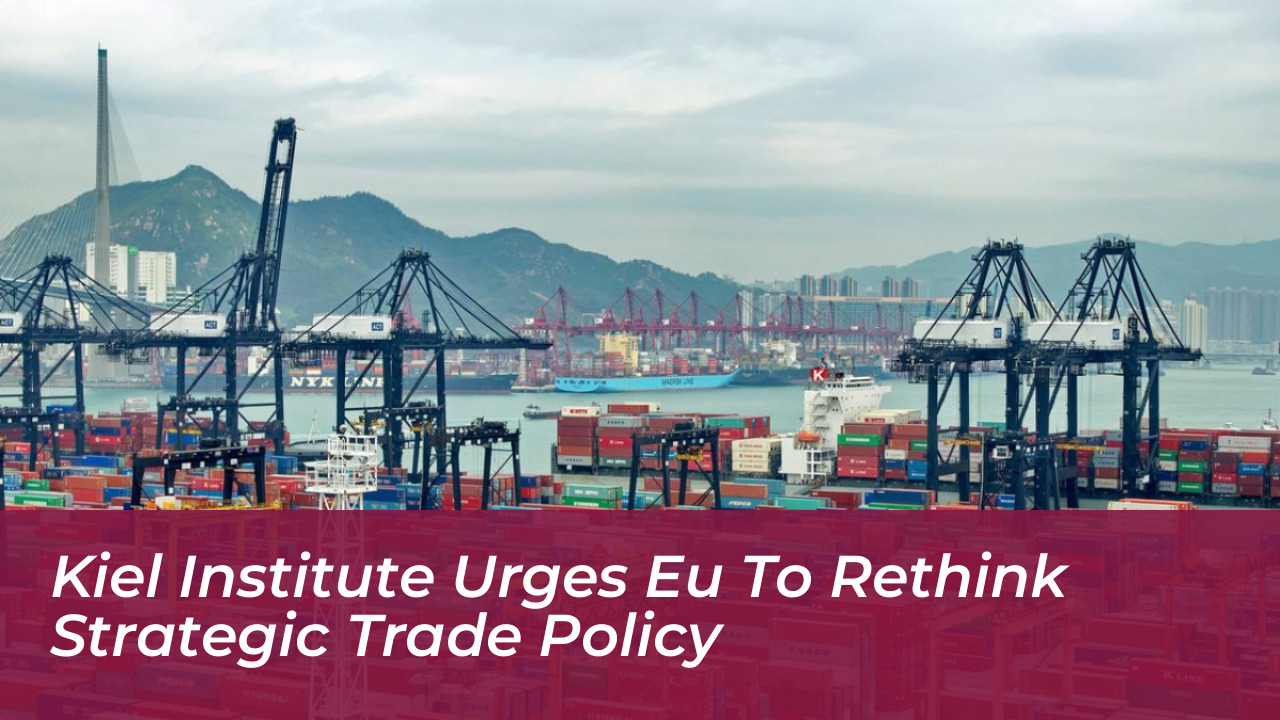

European policymakers face growing pressure to protect the continent’s industrial competitiveness. Chinese manufacturers are expanding into sectors where Europe has traditionally held an advantage. Ahead of the European Council meeting on October 15-16 in Brussels, leaders in Paris and Berlin are considering stronger trade defenses, European purchasing preferences, and diversification measures. However, the Kiel Institute argues that these proposals lack a clear strategic objective.
In a new Kiel Policy Brief, researchers state that the European Union needs to define which industries it must develop and protect before expanding its trade policy instruments. Without that direction, additional defensive measures could increase administrative complexity without strengthening Europe’s long-term industrial capabilities.
Growing Chinese Competition Challenges European Advantage
According to the Kiel Institute, China now competes directly with the euro area in nearly 40% of the sectors where Europe has a comparative advantage. This is a significant increase from approximately 25% in the early 2000s.
Germany faces particular exposure in core economic sectors, including:
- Automobiles and automotive components
- Industrial machinery and heavy equipment
- Chemicals and specialty manufacturing
In these critical areas, domestic European producers encounter intense Chinese competition at home, inside the Chinese market, and across vital third-country export destinations.
The Need for Strategic Clarity in Brussels
EU institutions are weighing new tools to shield local manufacturers from unfair trade practices. Yet, economic analysts at the Kiel Institute caution that reactive measures are insufficient. Deploying tariffs or procurement rules without a unified industrial roadmap risks fragmenting the single market and creating unnecessary bureaucratic hurdles for businesses.
The upcoming European Council discussions are expected to focus heavily on economic security, supply chain resilience, and relations with Beijing. Economists maintain that member states must first reach a consensus on which technologies and industrial ecosystems are truly vital for Europe’s strategic autonomy before implementing sweeping trade interventions.