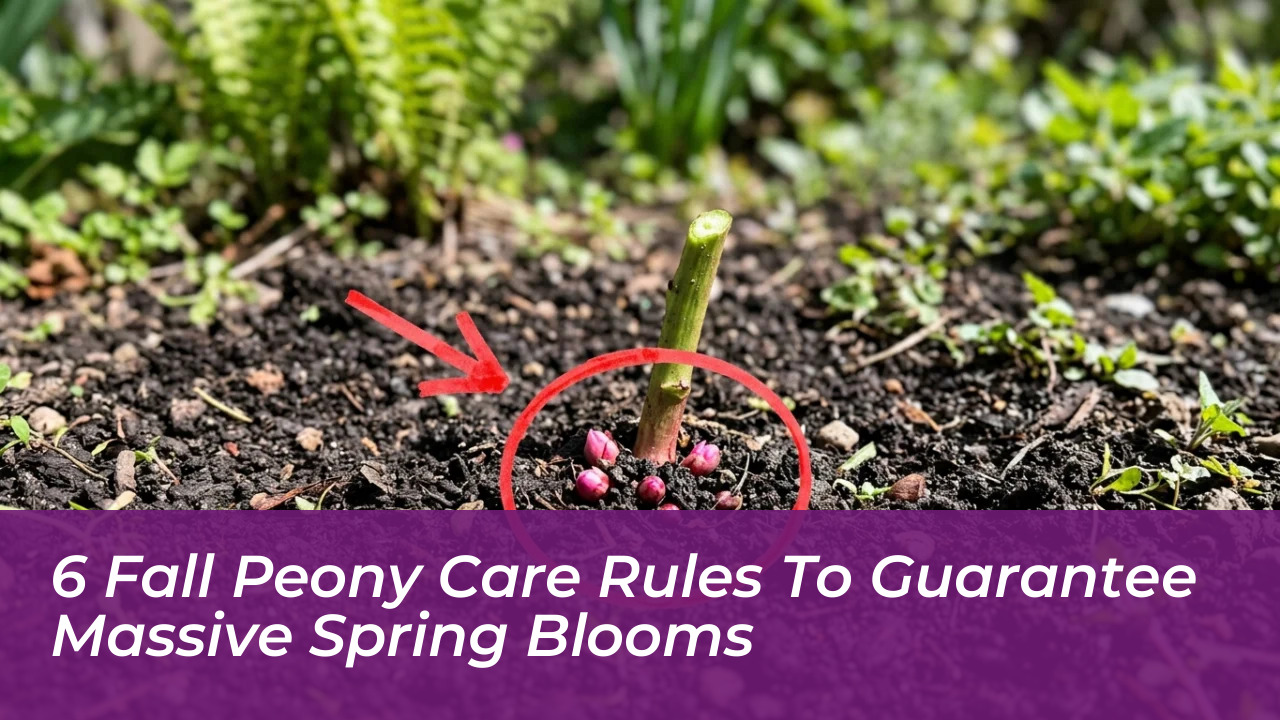

Preparing peonies in October requires six precise seasonal steps. These range from trimming herbaceous foliage down to 2 inches (5 cm) to leaving woody tree peony stems completely intact, safeguarding dormant buds and guaranteeing robust spring blooms. While widely considered resilient garden perennials, peonies do not thrive on total autumn neglect. Autumn maintenance dictates how successfully these plants navigate freezing winter soil.
Because peony varieties react differently to cold weather, applying a single blanket technique across your entire garden can accidentally wipe out next season’s buds. Understanding whether you grow herbaceous, intersectional (Itoh), or tree varieties determines how you should handle cuts, root divisions, and winter ground cover before the ground freezes solid.
1. Herbaceous and Itoh Varieties: Pruning After the First Hard Freeze
Herbaceous peonies form soft green stems each spring that naturally die back as winter sets in. Itoh peonies, which are intersectional hybrids developed to produce larger flowers and stronger upright stems, share this exact seasonal pattern of autumn dieback.
Timing is critical when pruning these varieties. Wait until your area experiences a hard freeze before reaching for bypass shears. As long as peony foliage remains green, the leaves actively manufacture energy to nourish and expand underground root systems. Once frost turns the foliage completely yellow or brown, prune the stems down to roughly 2 inches (5 cm) above the soil level using clean clippers like Fiskars Bypass Pruning Shears. This prevents accidental trauma to the resting crown eyes below.
Pruning peony stems before the foliage naturally yellows starves the underground root system of essential winter nutrients. Sanitation after cutting is mandatory. Gather every fallen stem, spent blossom, and shriveled leaf, then dispose of them directly in household trash rather than your garden compost pile. Composting infected debris allows persistent fungal spores to overwinter and attack emerging spring foliage.
2. Tree Peonies: Why Woody Stems Must Never Be Cut Back
The cardinal rule of tree peony maintenance is simple: never cut them down to the ground. Unlike herbaceous selections, tree peonies develop permanent woody branch structures that persist through the cold winter months to produce early spring blooms. Removing woody stems in autumn strips away developing flower buds.
Limit October tree peony pruning strictly to removing spent, leathery seed pods and clipping away dead or diseased foliage. Thoroughly clear all fallen plant debris away from the base of the shrub. If fungal problems emerged during the previous summer, a clean soil border serves as your frontline defense until you apply a preventative copper spray, such as Bonide Captain Jack’s Copper Fungicide, during early spring emergence.
Peony Classification October Care Guide
- Herbaceous Peony: Cut stems back to 2 inches (5 cm) above the soil line after a hard freeze turns leaves brown.
- Itoh (Intersectional): Prune dying stems down to 2 inches (5 cm) above ground level; remove all fallen foliage.
- Tree Peony: Retain woody framework; prune only brown leaves and leathery seed pods.
3. Dividing and Transplanting Established Clumps
Autumn offers the ideal window to divide congested plants or relocate specimens struggling in excessively shaded areas. Moving roots during October allows them to settle and anchor into surrounding soil before freezing temperatures halt root development.
Step-by-Step Division Technique
- Excavate carefully: Dig widely around the root ball using a specialized perennial tool like the Radius Garden Root Slayer shovel to prevent cutting critical side roots.
- Inspect the crown: Lift the clump and identify sections featuring robust roots paired with active growing points.
- Slice clean sections: Separate the clump using a sharp knife, confirming that each new division retains at least three distinct pink-white buds (eyes).
- Replant at proper depth: Position each division into loose, well-draining soil so the crown eyes rest exactly 1 to 2 inches (2.5 to 5 cm) below the surface.
4. Fall Irrigation Protocols for New Roots
Both fresh bare-root divisions and newly transplanted specimens require deep soaking immediately after setting them in garden beds. This eliminates air pockets and locks roots securely against adjacent soil particles.
Maintain consistent moisture by irrigating once weekly, or twice weekly during arid autumn periods without rain. Soil should remain consistently damp rather than waterlogged, which can be verified with tools like the Yamron 4-in-1 Soil Moisture Meter. Taper supplemental irrigation gradually as outdoor temperatures fall toward late autumn. Cease all watering entirely once the upper ground layer freezes solid.
5. Mulching Methods: Protecting Roots Without Rotting the Crown
Widespread gardening advice often recommends piling heavy mulch across entire perennial beds, but doing so directly on peony crowns invites disastrous fungal decay. Established peonies require no supplemental winter mulch at all.
First-year divisions and newly planted roots need winter cover only to prevent frost-heaving, which occurs when repetitive freeze-thaw cycles eject roots from the ground. Instead of burying the crown, place a loose ring of mulch around the perimeter of the root zone, keeping the center open. Select lightweight, breathable covers such as clean straw (like EZ Straw Seeding Mulch), shredded leaves, or evergreen boughs. Steer clear of dense compost, manure, or fine sawdust that hold heavy moisture over dormant buds.
6. Planting Nursery Stock and Bare-Root Selections
Warm late-season soil combined with crisp autumn air creates optimal conditions for planting dormant peonies. Installing roots during October allows underground networks to establish before full winter dormancy takes hold.
Select a planting site receiving full sun with fertile, porous soil. When dealing with heavy native clay, blend in quality amendments like Miracle-Gro Garden Soil for Flowers to promote rapid drainage away from sensitive tubers. Burying crown buds deeper than 2 inches (5 cm) remains the single most common reason why otherwise healthy peonies fail to produce flowers. Keep those pink eyes close to the surface, water thoroughly, apply an outer mulch ring, and leave the dormant crowns ready for vigorous spring growth.
Frequently Asked Questions About Fall Peony Care
When should I cut back my herbaceous peonies in the fall?
Wait until your area experiences its first hard freeze and the foliage naturally turns yellow or brown. Cutting green leaves prematurely starves the roots of essential nutrients.
Can I use heavy mulch directly over my peony crowns?
No. Piling heavy mulch directly on peony crowns traps moisture and invites fatal fungal crown rot. Apply a loose ring of breathable mulch around the perimeter instead, leaving the center clear.
Why are my established peonies failing to bloom in spring?
The most common reason for a lack of blooms is planting the crown eyes too deep. Ensure crown eyes rest no more than 1 to 2 inches (2.5 to 5 cm) below the soil surface.
Should I cut back tree peony stems before winter?
Never cut tree peony stems down to the ground. They rely on permanent woody branches to support next season’s flower buds. Only trim dead leaves and leathery seed pods in autumn.
How often should I water newly transplanted peonies in October?
Water newly planted roots deeply right after installation, then maintain a schedule of once a week (or twice weekly during dry spells) until the ground freezes solid for the winter.