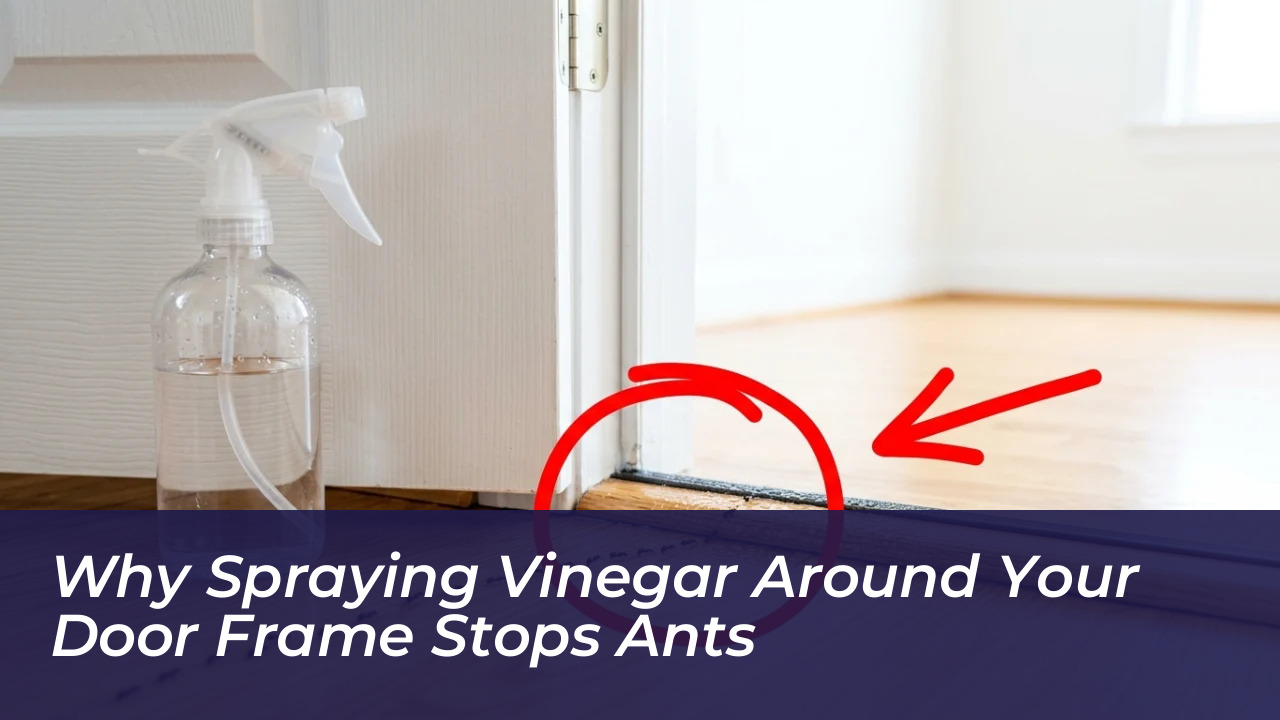

Spraying a mild mixture of vinegar for ants around your door frame breaks up chemical scent trails and temporarily halts pests from crossing into your living space. According to the University of Minnesota (UMN) Extension, applying a diluted solution of vinegar and water directly onto entry thresholds cleans the surface and immediately disrupts foraging pathways.
When worker ants scout your home for food and moisture, they deposit an invisible chemical signal known as a pheromone trail. Other members of the colony follow this microscopic roadmap directly into your kitchen, baseboards, and pantry shelves. Wiping down entry points with an acidic wash erases these chemical messages, leaving incoming insects disoriented at the door. Yet while this simple pantry staple offers an immediate fix, stopping an infestation long-term requires addressing the underlying source.
How Vinegar Disrupts Entryway Pest Trails
Ants do not wander randomly once an established route is active. They rely heavily on the scent signatures left behind by scout insects to shuttle resources back to the nest. Applying a diluted solution of vinegar across the door frame, surrounding floorboards, and sill strips away these lingering pheromones. Without the chemical guide, incoming ants lose their bearings and struggle to navigate the same indoor path.
The most effective strategy to manage ants involves locating where they nest and treating the colony directly rather than relying solely on surface deterrents. The University of Minnesota Extension emphasizes that while surface treatments disrupt active trails, vinegar serves as a complementary management tactic rather than a permanent eradication measure. It acts as an immediate physical barrier of scent removal, but it will not eliminate the nest hidden outside or inside wall voids.
Household Cleaning Benefits and Surface Safety
Beyond disrupting insect routes, white vinegar remains a versatile household cleaner. The Cleaning Healthy, Cleaning Green guide from the University of Georgia Cooperative Extension identifies white vinegar as a mild, accessible cleaner capable of replacing certain conventional chemical cleaners on compatible household surfaces. Its natural acidity helps dissolve everyday grime and residues without relying on harsh commercial formulas.
However, because vinegar contains acetic , homeowners should always ensure that the underlying threshold or door material is safe for acidic cleaners before soaking entire door casings.
Vinegar Application Overview
- Primary Action: Cleans surfaces and strips away active pheromone trails
- Acidity Type: Mild natural (replaces select commercial cleaners)
- Duration: Temporary disruption; does not destroy the parent colony
- Best Application: Targeted entry points, baseboards, and frame thresholds
Common Misconception vs. Reality
A widespread myth suggests that spraying vinegar kills the entire ant colony or builds an impassable, permanent shield around the home. Scientific guidance reveals that vinegar does not poison the colony or permanently seal the perimeter. It simply cleans away the communication markers guiding the insects, meaning foragers can establish new trails if entry gaps and food attractants remain unchecked.
Step-by-Step Application for Entry Thresholds
Blanket-spraying an entire home is unnecessary and inefficient. Targeted application at primary access points provides the best results when handling localized insect movement.
- Locate the entry path: Watch the insects to identify whether they crawl underneath the door sweep, through trim crevices, or across frame edges.
- Mix a mild solution: Combine white vinegar with water to create an effective, diluted cleaning wash.
- Wipe down the threshold: Dampen a clean cloth with the solution and thoroughly wipe the compatible surfaces where scent trails run.
- Inspect physical gaps: Examine door seals and exterior trim for unsealed gaps, holes, or cracks that permit entry.
- Eliminate food sources: Clean up crumbs near entryways and keep indoor pantry goods sealed in airtight containers.
To establish durable pest defense, the University of Minnesota Extension further advises homeowners to caulk structural openings, clear outdoor debris that shelters nesting sites, and trim tree branches that bridge contact with exterior walls. Regular entryway maintenance combined with simple exclusion techniques keeps persistent foraging pests outside where they belong.
Frequently Asked Questions
Does vinegar spray kill ant colonies?
No. Vinegar does not poison ants or destroy the parent colony. It only disrupts the pheromone scent trails that worker ants follow inside.
How long does the vinegar barrier last?
The disruption is temporary, typically lasting from a few hours to a couple of days. Once the scent fades or moisture washes it away, ants can rebuild their trails.
Can vinegar damage my door frame?
Yes. Because vinegar is acidic, repeated or prolonged application can break down protective coatings on wood doors and affect metal hardware like aluminum or copper if not diluted and used carefully.
What is the best way to mix vinegar for ant control?
A simple mixture of equal parts white vinegar and water applied with a clean cloth to wipe down entry thresholds works best for erasing scent trails.
What else can I do to keep ants out permanently?
To stop ants long-term, you must seal exterior entry gaps with caulk, eliminate indoor food sources, and target the outdoor nest directly rather than relying solely on surface cleaning sprays.