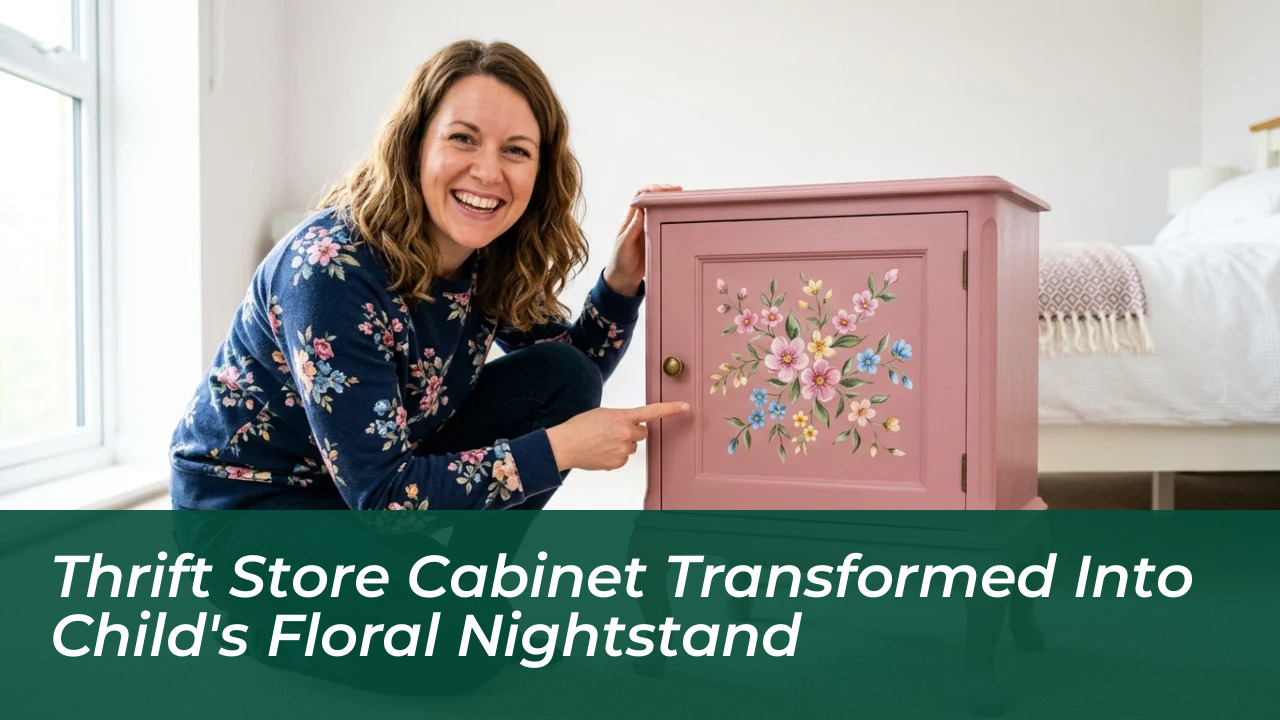

A scuffed secondhand cabinet discovered in a charity shop has been revitalized into a bespoke floral bedside table. The design followed a direct brief from a four-year-old client: “Pink. Flowers. More pink.” Painted in soft dusty rose tones with hand-detailed blossoms across its front panel, the neglected piece demonstrates how vintage wooden furniture can be reimagined for modern children’s bedrooms. Created by the artist behind The Little Furniture Room in Bristol, the project salvaged a discarded piece from a Dorothy House shop that originally showed heavy signs of wear.
Uncovering Potential Beneath Heavy Wear
Before the makeover, the cabinet showed its age clearly. White scuffs crossed the top molding, deep abrasions marked the base, and missing hardware left an empty hole in the front door. However, beneath decades of surface wear, the piece retained significant character. Distinctive curved legs, a shaped apron, and rounded molding framing the single door offered an ideal structural foundation for an artistic finish.
Restoring the existing silhouette allowed those unique curves to guide the final look. Opening the door revealed two internal compartments divided by a single shelf, perfectly sized for books or bedroom storage. However, extensive gouges across both the internal shelf and exterior frame required thorough preparation before any paint could touch the wood.
Structural Preparation and Surface Repairs
The restoration process began with detailed structural work across the entire wooden case:
- The single door was unhinged and removed to access narrow interior moldings and frame corners.
- Wood filler was patched across damaged areas on the top surface, door front, and lower rails.
- Comprehensive sanding reduced the dark brown topcoat across the entire case, legs, and trim.
These surface repairs established the physical bond required before introducing fine brushwork and detailed painted layers.
Executing the Hand-Painted Floral Centerpiece
A common misconception in painted furniture makeovers is that decorative features require contrasting accent colors or heavy stenciling. In this transformation, the artist applied uniform dusty pink across the side panels, curved legs, and lower scrolls. This used the cabinet’s natural shadows and molding depth to highlight its shape while turning the recessed door into a central canvas.
With the door unhinged and resting flat on the workbench, pencil outlines established the scale of the composition. Larger blossom clusters anchored the center, while branching stems and unopened buds filled the top and bottom borders. Real five-petal blossoms served as the visual source material, ensuring the finished surface avoided looking like a flat vinyl decal or mass-produced print.
Design Elements and Material Palette
| Element | Application Detail |
|---|---|
| Base Palette | Dusty pink exterior paint across body, apron, and legs |
| Floral Petals | Blended shades of cream and pink with visible directional strokes |
| Accents | Fine radiating lines, dotted yellow stamen centers, and green stems |
| Hardware | Ornate gold-toned handle replacing the missing pull |
Opening the finished door exposes the original wood-toned shelves, maintaining a functional interior for books and baskets while the exterior acts as an artistic bedside focal point. The final piece bridges functional storage with bespoke children’s decor.
Frequently Asked Questions
Where was the original cabinet found?
The cabinet was salvaged from a Dorothy House charity shop in Bristol by the artist behind The Little Furniture Room, showing heavy signs of wear before its transformation.
What inspired the color scheme and design?
The design was guided directly by a four-year-old client whose brief was succinct: “Pink. Flowers. More pink.”
How were the floral details painted?
The artist used real five-petal blossoms as visual reference, mapping out pencil outlines on the flat removed door, and layering cream and pink paints with fine brush strokes for depth.
What preparation was done to the wood?
The project required unhinging the door, patching gouges and damage with wood filler, and thoroughly sanding down the dark brown topcoat to create a smooth base.
What happened to the interior of the cabinet?
The interior shelving was preserved in its original wood tone behind the painted frame, providing practical storage for children’s books and toys.