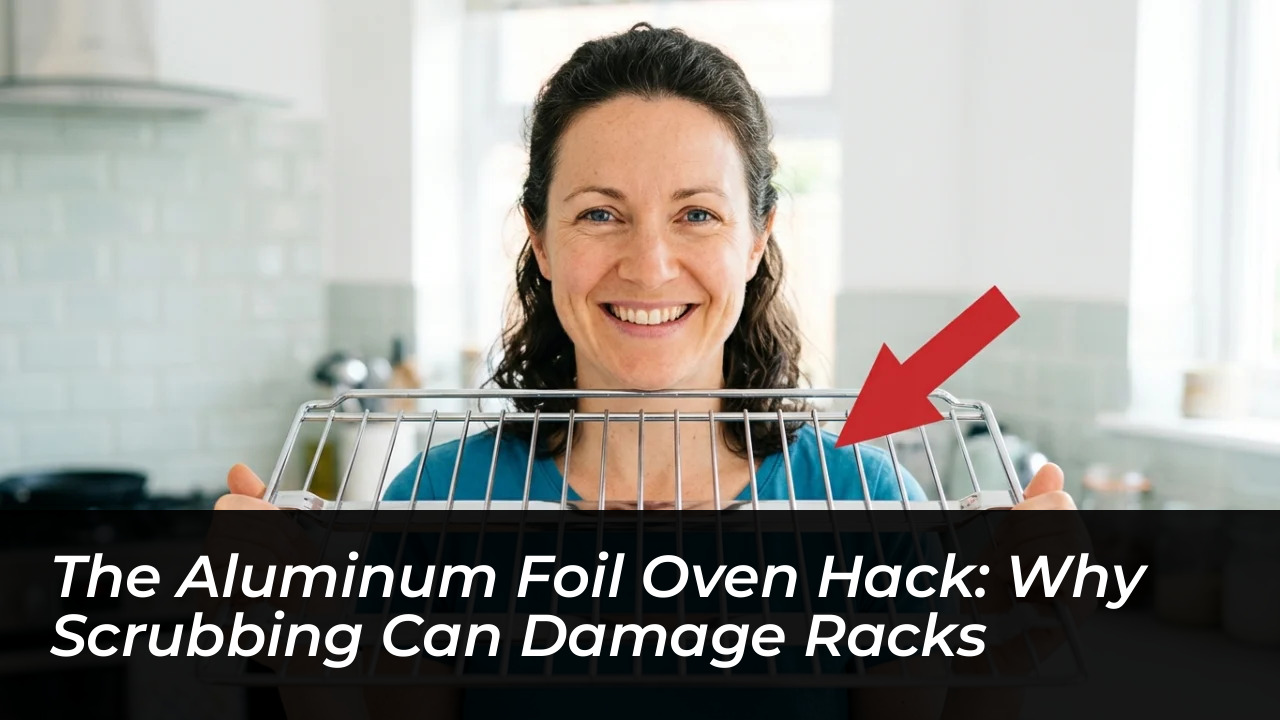

Scrubbing baked-on grease off dirty metal shelving with a crumpled ball of aluminum foil sounds like the ultimate quick household hack. However, using it to clean oven racks can strip specialized protective coatings and leave permanent scratches. While the abrasive texture does scrape away burnt residue, the material offers zero degreasing chemistry and poses serious risks to delicate kitchen appliances. Oven maintenance remains one of the most delayed household chores because grease, spatters, and food debris harden under intense cooking heat. When conventional wiping fails, home cooks frequently reach for heavy-duty kitchen foil as a makeshift scouring pad. Understanding the physical limitations of this technique prevents accidental surface damage before a routine clean turns into an expensive replacement.
The Mechanics Behind the Foil Method and Why It Poses Hidden Risks
The popular cleaning method involves balling up a sheet of kitchen foil and using its crinkled edges to scour hardened spots. This relies purely on manual friction rather than chemical action, meaning it will not dissolve polymerized oils or substitute for dish soap. If grease remains solid and unsoftened, scrubbing harder simply increases the risk of gouging the metal.
Oven racks frequently feature chrome plating, enamel coatings, or specialized non-stick surfaces designed to handle high heat. Introducing an abrasive metal ball can quickly wear through these layers, exposing the raw metal underneath to rust and uneven wear. The potential utility of aluminum foil comes entirely from physical friction rather than grease-cutting power, which means it cannot replace soap or protect fragile finishes. Checking the appliance user manual before attempting any viral hack is essential, as many manufacturers explicitly forbid abrasive tools on their interior components, advising gentler soaking methods instead.
Myth vs. Reality: Does Foil Really Degrease Metal?
A widespread misconception suggests that aluminum foil chemically breaks down grease through a unique reaction. In reality, aluminum provides no degreasing properties whatsoever. The perceived effectiveness stems entirely from physical scraping, which dislodges charred particles that should ideally be softened with warm water first.
| Method Feature | Actual Cleaning Impact |
|---|---|
| Grease Dissolving | Zero chemical degreasing properties |
| Scrubbing Action | Mechanical friction that can scratch chrome |
| Pre-Soak Requirement | Essential before any manual scraping |
| Enamel Safety | High risk of surface dulling and abrasion |
Relying on friction alone forces users to apply excessive elbow grease, which directly accelerates surface degradation. Softening the grime beforehand reduces the physical force needed to clean the metal.
A Step-by-Step Guide to Safely Cleaning Oven Racks
When appliance guidelines permit light mechanical cleaning, adopting a structured soak-and-wipe process ensures grease releases without harming the underlying finish:
- Allow the appliance to cool completely: Never handle racks while they retain residual heat. Remove them carefully and lay them out on a protected surface.
- Soak the metal in warm soapy water: Submerge the racks in hot water mixed with standard dish detergent for 20 to 30 minutes. Heavily soiled pieces may require extended soaking to penetrate dense grease layers.
- Perform a discreet spot test: If opting to use a small foil ball, test it gently on an incons**cuous corner first. Check immediately for visible abrasions, dulling, or scratches before proceeding further.
- Wipe gently without excessive force: If stubborn residue remains stuck, return the rack to the soak bath rather than applying heavy pressure. Non-abrasive sponges or soft-bristle brushes serve as much safer alternatives.
- Rinse thoroughly and dry: Wash away all soap residue with clean water and dry the components completely with a clean towel before returning them to the oven cavity.
In most instances, a prolonged hot-water bath combined with ordinary dish soap eliminates the need for aggressive scouring altogether.
The Dangers of Leaving Foil Inside the Oven Cavity
Beyond cleaning, many households mistakenly leave aluminum foil lining the base of their ovens to catch drips during baking. Appliance manufacturers explicitly caution against this habit because it alters essential internal airflow and traps excessive heat near the heating elements. This heat buildup can ruin the enamel interior and permanently impair cooking performance.
Safety Hazards During High-Heat and Self-Clean Cycles
Covering the wire shelving with sheets of foil restricts ventilation, leading to uneven baking temperatures and potential safety hazards. The danger escalates during high-temperature self-cleaning cycles, where stray foil can melt or fuse directly onto the appliance walls. Always remove aftermarket liners and verify whether racks must be pulled out entirely before running automatic self-clean programs.
Frequently Asked Questions About Oven Rack Maintenance
Will aluminum foil scratch my oven racks?
Yes, if used with excessive pressure or on delicate finishes. Foil acts as a mechanical abrasive, and aggressive scrubbing can easily strip chrome plating, dull enamel surfaces, or scratch polished stainless steel.
Does aluminum foil chemically dissolve grease?
No. Aluminum possesses zero chemical degreasing agents. Any cleaning power derived from a foil ball is purely physical friction, which requires warm water and soap to soften grime first.
Can I leave aluminum foil on the bottom of my oven?
No. Lining the floor of your oven with foil blocks proper airflow, traps intense heat near the heating elements, and can cause the foil to melt onto the interior enamel, permanently damaging the appliance.
Is it safe to use foil during the oven’s self-cleaning cycle?
Absolutely not. The extreme temperatures reached during a self-clean cycle, often between 800°F and 1,000°F, can cause aluminum foil to fuse to the interior surfaces, releasing fumes and ruining the oven cavity.
What is the safest alternative to scrubbing racks with foil?
A prolonged soak in hot water and heavy-duty dish soap, combined with a baking soda paste for stubborn carbon spots, provides a highly effective, non-abrasive alternative that protects your metal finishes.