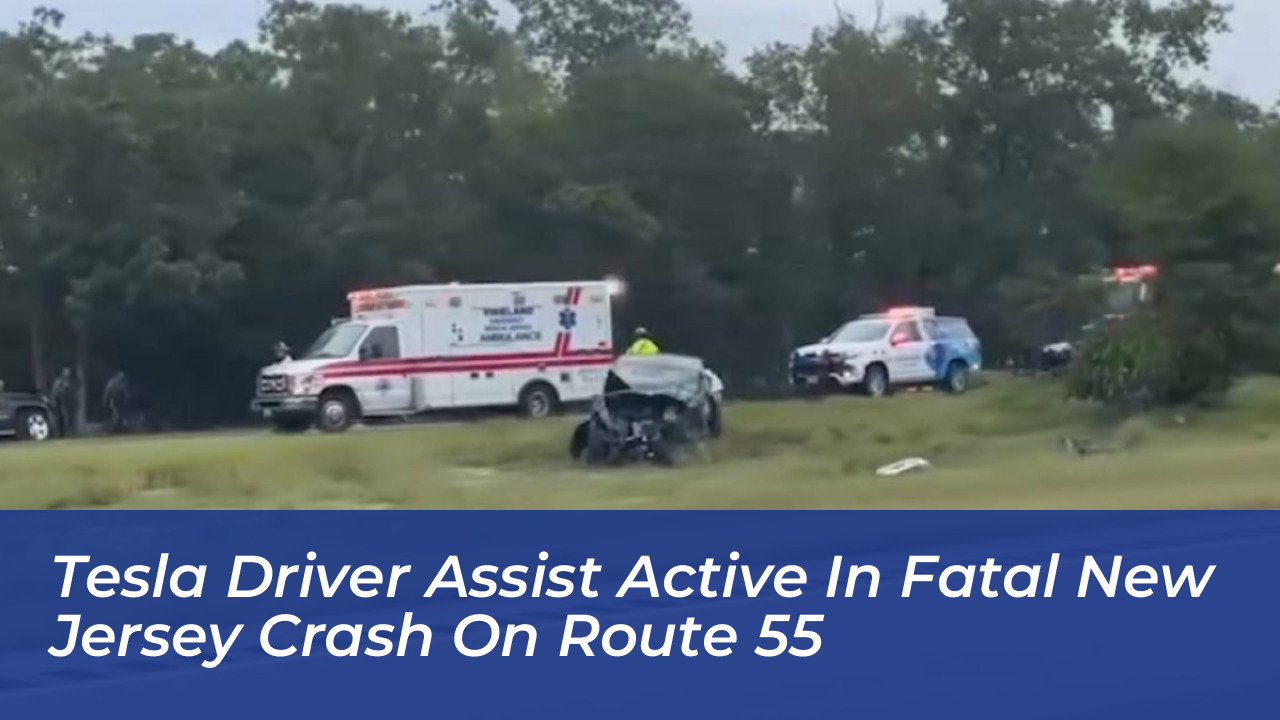

A Tesla Model Y that crossed a grass median on Route 55 in Vineland, New Jersey, and collided with an SUV, killing the driver, had its driver-assist system engaged just before the crash. According to regulatory documents filed by Tesla with federal authorities, the August 22, 2026, collision is currently under review to determine the exact role vehicle automation played.
The fatal accident occurred at approximately 8:31 a.m. near milepost 34.6 in Cumberland County. New Jersey State Police reported that a southbound Tesla Model Y veered off the left side of the roadway, traveled across the grass median, struck a tree, entered the northbound lanes, and collided head-on with a Chevrolet SUV.
Details of the Fatal New Jersey Collision
The driver of the Chevrolet SUV, 68-year-old Phillip Eastman of Springfield, Pennsylvania, suffered fatal injuries in the crash, according to state police statements. Both the driver of the Tesla and a passenger traveling in the Chevrolet sustained moderate injuries and were transported to a local hospital for medical treatment.
Following the incident, the collision details were logged into federal databases managed by the National Highway Traffic Safety Administration (NHTSA) under the Standing General Order. This regulatory mandate requires automakers to disclose crashes where a Level 2 driver-assist system was active within 30 seconds of an impact resulting in property damage, injury, or death.
Tesla’s Regulatory Filing and Safety Oversight
Tesla’s report submitted to NHTSA indicated that the vehicle’s automated driving system was active during the sequence of events leading up to the impact. However, critical operational details regarding the software version and specific operational metrics remain heavily redacted as confidential business information within the public filing.
Federal regulators and safety advocates continue to scrutinize how advanced driver-assistance systems (ADAS) are utilized on public roads. The incident highlights ongoing questions regarding transparency in automated vehicle crash reporting, driver attentiveness, and the balance between automated capabilities and human supervision.
Driver-Assist Systems and Traffic Safety
Advanced driver-assistance technologies, commonly marketed under names like Autopilot or Full Self-Driving, are designed to assist with steering, braking, and lane centering under specific conditions. Automotive safety agencies emphasize that these configurations are classified as Level 2 automation. This means the human driver remains entirely responsible for vehicle operation at all times.
State police and federal investigators are continuing their forensic examination of the Route 55 crash site, vehicle telematics, and physical evidence to determine the precise sequence of events that caused the Model Y to leave its lane and cross the median.