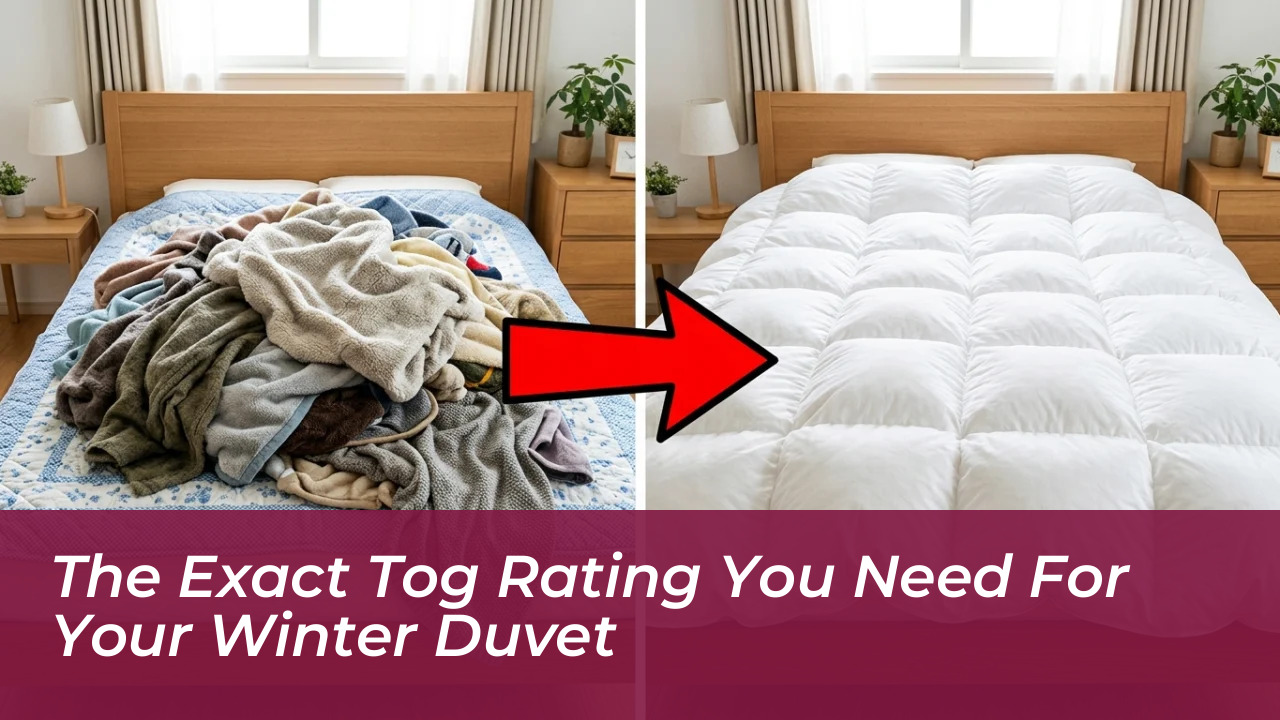

Finding the exact tog rating for your winter duvet can mean the difference between waking up shivering or sleeping soundly through the night. When indoor temperatures dip below 60°F to 61°F (around 15°C to 16°C), standard summer bedding fails to trap sufficient body heat. This prompts the seasonal transition to a heavier insulation rating. A standard winter duvet tog rating between 12 and 13.5 provides ideal thermal warmth for cold weather. However, your exact rating depends heavily on your overnight bedroom temperature and heating habits.
Many sleepers make the mistake of pulling out extra blankets at random without understanding how thermal resistance works inside a comforter. Switching at the right time ensures deep, uninterrupted sleep throughout the chilliest months of the year.
When to Make the Seasonal Bedding Switch
The transition typically happens in October, coinciding with the first persistent drop in nighttime conditions. The most reliable physical indicator arrives when you reach for a secondary throw blanket two or three nights in a row. Relying solely on calendar dates often leads to restless nights. Ambient room heat, draftiness, and personal metabolic rates dictate the exact moment to rotate your bedding setup.
Tog rating measures how well a duvet holds warmth. The higher the number, the warmer the duvet. It has nothing to do with weight or fabric weave. Instead, it measures how much air the filling traps. A high tog number indicates superior thermal trapping rather than extra bulk. Understanding this distinction prevents you from buying an unnecessarily heavy comforter that restricts movement without keeping you properly warm.
Matching Your Room Conditions to the Right Tog
Bedding specialists note that a 13.5 tog rating excels in spaces where ambient temperatures fall significantly overnight or where central heat stays switched off until morning. In contrast, well-insulated rooms or homes that maintain steady heating throughout the night require only a 10.5 to 12 tog option.
Selecting the Proper Warmth Profile
Your ideal configuration depends on nighttime heating habits and personal sleeping preferences:
- Well-insulated rooms: A 10.5 tog duvet provides ample warmth throughout midwinter if your home holds heat efficiently.
- Unheated bedrooms: A 12 to 13.5 tog duvet maintains consistent warmth when overnight ambient temperatures plunge below 60°F.
- Naturally cold sleepers: A 13.5 tog model protects against midnight chills, while combination setups allow dual-temperature customization for partners.
- Naturally hot sleepers: Keeping a 10.5 to 12 tog duvet prevents nighttime sweating, with top blankets added only during severe freezes.
This balance eliminates nighttime overheating while ensuring your core body temperature remains stable until morning.
The Difference Between Weight and Warmth
A common misconception assumes that a heavier blanket automatically generates more heat. In practice, thermal efficiency depends entirely on air pocket retention within the inner insulation layer.
Natural fills like goose down demonstrate this principle clearly. High-loft clusters trap pockets of warm air while remaining substantially lighter than dense synthetic alternatives. Evaluating your bedroom conditions ensures you choose the precise winter duvet tog needed for restful seasonal comfort.
Winter Duvet Tog Selection Guide
Review the breakdown below to match your bedroom environment with the recommended thermal overall grade:
- Heated overnight or well-insulated living spaces: 10.5 Tog
- Unheated overnight or room drops below 60°F (16°C): 12 to 13.5 Tog
- Consistently cold sleepers needing maximum warmth: 13.5 Tog
- Warm sleepers who overheat easily: 10.5 to 12 Tog (plus layered blankets)
Check your bedroom thermostat tonight to see which rating matches your space best. Upgrading your bedding before temperatures plummet prevents disrupted sleep and unnecessary heating costs. Share your experiences with us: what tog rating keeps you most comfortable during winter?
Frequently Asked Questions About Winter Duvets
What does TOG stand for?
TOG stands for “Thermal Overall Grade.” It is a unit of measurement for thermal insulation used in textiles, indicating how effectively a duvet traps warm air.
Is a 15 tog duvet too hot for winter?
A 15 tog duvet is one of the highest ratings available. It is ideal for people who feel the cold intensely or sleep in unheated bedrooms during freezing weather. If your home has central heating, a 15 tog might cause overheating.
Can I combine two duvets to make a winter duvet?
Yes. Many people use an “all-season” system, combining a 4.5 tog summer duvet and a 10.5 tog autumn/spring duvet to create a heavy-duty 15 tog setup for peak winter.
What is the difference between natural and synthetic fills regarding tog rating?
Natural fills like down and feathers can achieve high warmth ratings with less weight and bulk compared to synthetic fills, such as hollowfibre or polyester. They also offer superior breathability and a lighter physical feel.
How often should a winter duvet be replaced?
Most duvets should be replaced every 5 to 10 years. Over time, fillings compress, lose their loft, and trap less air, which reduces the overall thermal efficiency of the duvet.