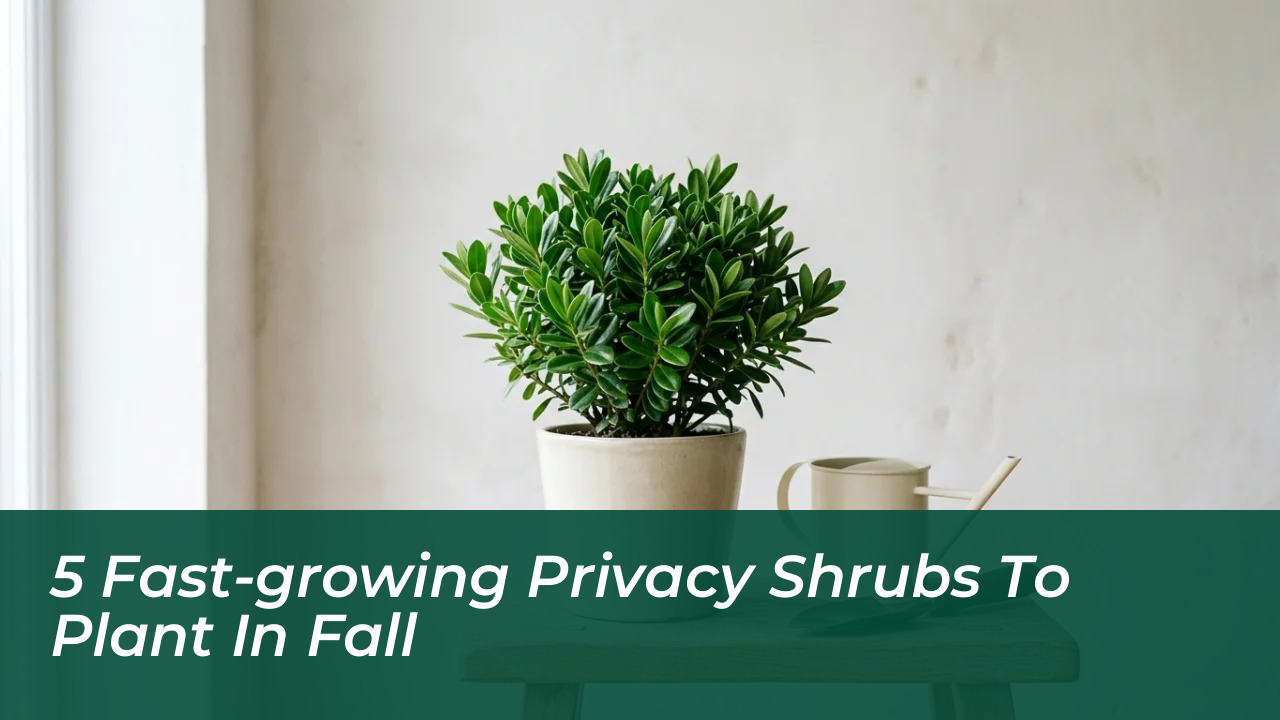

Planting rapid-growing evergreen privacy shrubs during early fall eliminates visibility into an overlooked yard much faster than waiting for spring. As horticultural expert Lance Russell notes, the soil still retains summer warmth while cooling air temperatures and natural rainfall stimulate aggressive root growth without the dehydrating stress of high heat. Bypassing summer heat stress gives root systems several uninterrupted months to anchor firmly beneath the surface. This prepares them to produce vigorous upper foliage as soon as the first warming trend hits.
Homeowners often mistakenly believe spring provides the optimal window to establish a boundary hedge. That assumption frequently backfires when tender root networks confront intense summer droughts before anchoring into native soil. Selecting the right species and planting during the autumn sweet spot allows property owners to create dense, living screens capable of soaring between 13 and 26 feet high.
Top 5 Fast-Growing Shrubs for Boundary Privacy
Choosing the correct hedge variety determines how quickly a property transitions from exposed to completely secluded. These five reliable evergreen picks deliver rapid vertical development, rich foliage density, and multi-season visual appeal.
1. Cherry Laurel (Prunus laurocerasus)
Cherry laurel functions as an impenetrable physical screen due to its broad, glossy foliage and rapid growth rate. Reaching mature heights between 13 and 26 feet, it produces upright spikes of white flowers in spring followed by dark red berries heading into winter. This hardy evergreen thrives across a wide spectrum of soil types and sun exposures.
However, its aggressive vigor requires careful placement to keep it contained within domestic boundaries. Horticultural expert Richard Barker warns, “This fast-growing shrub can tolerate most conditions. However, due to its potentially invasive nature, it should not be planted close to woodland or other natural areas where it could spread.”
2. Privet (Ligustrum)
Privet remains a classic selection for sharp, formal boundaries. Its compact arrangement of oval leaves forms an impenetrable barrier that tolerates tough soil conditions and urban settings effortlessly. For strong establishment, position plants in moist, well-draining soil at the exact depth they sat in nursery containers. Keep privet consistently hydrated throughout its first two seasons. Clip foliage two to three times annually to prevent stems from stretching into a ragged, straggly form.
3. Viburnum Tinus
If you prefer ornamental blooms alongside functional sightline blocking, Viburnum tinus provides continuous coverage paired with prolonged color. Dark green, leathery leaves maintain constant density while clusters of delicate pink buds burst into fragrant white flowers from late autumn straight into spring. This species excels in residential yards where standard utilitarian hedges look too industrial. It offers four-season beauty without sacrificing sightline protection.
4. Photinia × Fraseri ‘Red Robin’
Photinia ‘Red Robin’ is celebrated for its dynamic display of fiery crimson foliage that emerges in spring before maturing to a deep, lustrous green. Unpruned specimens can reach up to 13 feet in height and width, adding roughly 18 inches of fresh vertical and horizontal growth every single year. When installing a tight hedge, space individual rootballs between 12 and 24 inches apart. Trim branches two to three times per year during the formative stages to trigger lower stem branching and maximize baseline foliage density.
5. Escallonia Rubra ‘Macrantha’
Commonly known as Red Escallonia or Red Claws, this dense evergreen displays small, glossy foliage accented by rich pink tubular blooms from June through October. Pollinators gravitate to the nectar-rich flowers throughout the summer months. Escallonia prefers milder climates and benefits directly from early fall soil warmth to spark root expansion. Once established, prune plants immediately after their autumn flowering cycle concludes. Taper the hedge slightly narrower at the top so sunlight reaches lower branches.
Privacy Shrub Comparison: Growth and Features
Matching shrub characteristics to your specific boundary dimensions ensures lasting privacy without overwhelming nearby infrastructure.
- Cherry Laurel: Grows 13–26 ft; large glossy leaves; white spring blooms; highly adaptable.
- Privet: Fast, dense boundary screening; requires pruning 2–3 times yearly to stay neat.
- Viburnum Tinus: Glossy evergreen foliage; fragrant pink-to-white blooms late fall to spring.
- Photinia ‘Red Robin’: Expands ~18 inches annually; brilliant crimson spring tips; reaches 13 ft.
- Escallonia Rubra ‘Macrantha’: Thick glossy foliage; vibrant pink summer-to-fall blooms; thrives in mild zones.
Essential Steps for Planting Fall Hedges
Proper planting mechanics during the fall window guarantee your living screen hits maximum growth velocity by early spring.
- Excavate the right trench: Dig holes slightly wider than the rootball so new roots can push easily into loosened surrounding soil.
- Match soil depth precisely: Ensure the top of the root crown sits perfectly level with the native ground line to prevent base rot.
- Incorporate biological stimulants: Add mycorrhizal fungi into the planting hole to boost root colonization and nutrient absorption.
- Mulch thoroughly: Spread a thick layer of organic mulch across the root zone to suppress weeds, retain moisture, and insulate soil heat.
- Water during dry spells: Provide steady, deep watering through autumn and during dry periods throughout the first two growing seasons.
Selecting fast-rooting evergreen varieties this season allows you to reclaim complete outdoor seclusion long before the outdoor living season begins. Choosing between a formal sheared look like Privet or a colorful border like Photinia depends on how much seasonal trimming you plan to manage.
Frequently Asked Questions
Why is fall the best time to plant privacy shrubs?
Fall features warm soil and cool air temperatures, creating ideal conditions for root systems to establish deeply without enduring the dehydrating stress of high summer heat.
How tall do cherry laurel shrubs grow?
Cherry laurels are aggressive growers that typically reach mature heights between 13 and 26 feet, making them exceptional for tall property line barriers.
How often should Photinia ‘Red Robin’ be pruned?
Trim branches two to three times per year during the formative stages to encourage lower stem branching and maximize overall foliage density.
Are these privacy shrubs safe for pets and wildlife?
While many shrubs like Viburnum tinus and Escallonia attract pollinators and birds with berries or blooms, certain varieties like Cherry Laurel have toxic foliage and pits if ingested by pets. Always verify plant safety if you have roaming animals.
What is the proper spacing for planting a dense hedge?
Spacing depends on the variety, but tight hedges like Photinia perform best when individual rootballs are placed 12 to 24 inches apart, while larger species may require more room.