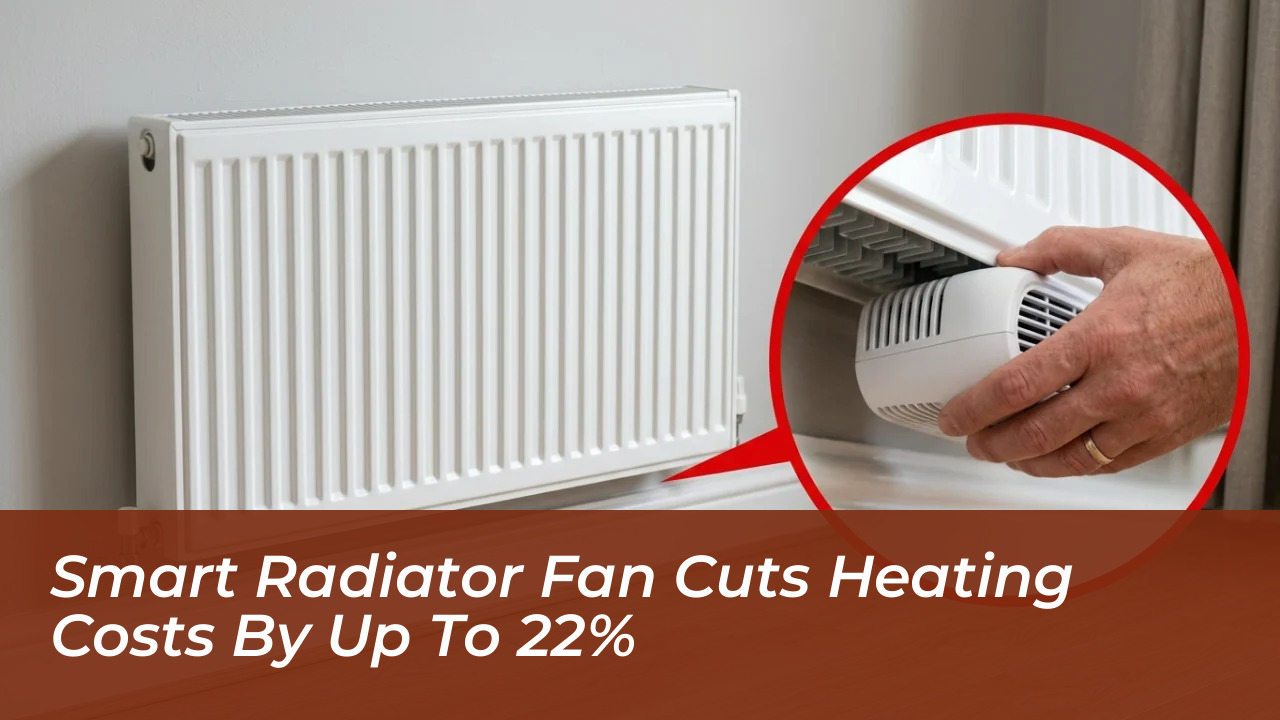

Homeowners facing steep winter utility bills can reduce heating fuel consumption by up to 22% using a compact radiator fan system designed to double effective heat distribution without upgrading existing hardware. The magnetic SpeedComfort device accelerates airflow across standard household radiators, allowing living spaces to reach comfortable temperatures twice as fast while letting users drop their central thermostats by one to two degrees.
Traditional radiators rely purely on natural convection, which often causes thermal energy to rise directly to the ceiling or linger inefficiently around the radiator body. By transforming passive hot-water radiators into active heat exchangers, the compact unit forces warm air directly into the living space to quickly eliminate persistent cold spots.
How Magnetic Convection Boosts Room Heat
Central heating setups often leave rooms feeling unevenly heated, with high temperatures right next to the wall unit and chilly conditions across the room. The SpeedComfort unit targets this inefficiency by securing directly to the bottom or top of standard radiators with magnetic sliders, eliminating the need for professional plumbing or complex tools.
Instead of running continuously and draining power, the hardware operates via an automated thermal switch. A built-in sensor detects when the radiator surface reaches 33°C (91°F) and triggers the circulation fans instantly. Once the heating cycle ends and the surface cools down to 25°C (77°F), the unit automatically powers off.
Operational noise remains virtually unnoticeable during full circulation. Generating around 20 dB(A)-comparable to the rustle of dry leaves-the system circulates warm air quietly in living rooms, home offices, and bedrooms. The SpeedComfort can save up to 22% on gas costs by improving heat distribution and allowing households to lower their thermostat while maintaining a similar level of comfort.
The Mechanics of Heating Efficiency
Energy consumption remains low due to an efficient 12V power supply engineered to draw zero standby power when the fans switch off. This smart setup prevents phantom electricity drain while maximizing heating system efficiency.
- Position the magnetic brackets directly against the radiator framework without mounting hardware.
- Attach the external thermal sensor against the radiator supply surface.
- Connect the low-voltage 12V power adapter to an active outlet for hands-free temperature regulation.
Comparing Room Air Circulation Options
While dedicated radiator attachments offer a direct boost for hydronic systems, consumers also turn to alternative devices to move stagnant heat pockets around their living spaces.
| Device Option | Primary Function |
|---|---|
| SpeedComfort Radiator Fan | Magnetically mounts to radiators; auto-activates at 33°C to push trapped convective heat into the room. |
| VALIANT 4-Blade Stove Fan | Heat-powered log burner fan; runs entirely on thermal power from stove surfaces to cut cold spots. |
| MeacoFan Sefte Air Circulator | Standalone pedestal room fan; redistributes high-level ambient warm air down into living areas. |
Busting the Cold Room Myth: Heat Output vs. Air Distribution
A widespread heating misconception is that cold rooms always suffer from undersized boilers or failing baseboard systems. In many older homes, the radiator itself produces ample BTUs, but poor natural convection causes that warm air to trap near exterior walls or pool at the ceiling.
Accelerating the convective loop across the heating fins distributes that trapped thermal output throughout the room. Because warm air reaches the central thermostat significantly faster, the boiler shuts down earlier in its heating cycle, delivering fuel savings without compromising room comfort.
Consumer testing across thousands of installations highlights that while individual fuel reductions vary depending on insulation, draftiness, and home size, active air circulation delivers immediate gains in overall living comfort. Managing winter heating costs requires smart air distribution rather than simply turning up the furnace.
Frequently Asked Questions
How do smart radiator fans reduce heating costs?
By accelerating airflow across standard radiators, these fans double effective heat distribution. This allows rooms to heat up twice as fast, enabling homeowners to lower their central thermostats by 1 to 2 degrees without sacrificing comfort.
Do I need a plumber to install a SpeedComfort radiator fan?
No plumbing or complex tools are required. The units attach easily using magnetic sliders and feature an external thermal sensor that automates operation based on radiator temperature.
Are radiator fans loud during operation?
Operational noise is virtually unnoticeable, generating around 20 dB(A), which is comparable to the quiet rustle of dry leaves.
How much electricity do these fans consume?
They operate on a low-voltage 12V power supply engineered to draw zero standby power when the fans are powered off, preventing any phantom electricity drain.
What temperature activates the automatic thermal switch?
The built-in sensor automatically triggers the circulation fans when the radiator surface reaches 33°C (91°F) and shuts them off when the surface cools down to 25°C (77°F).