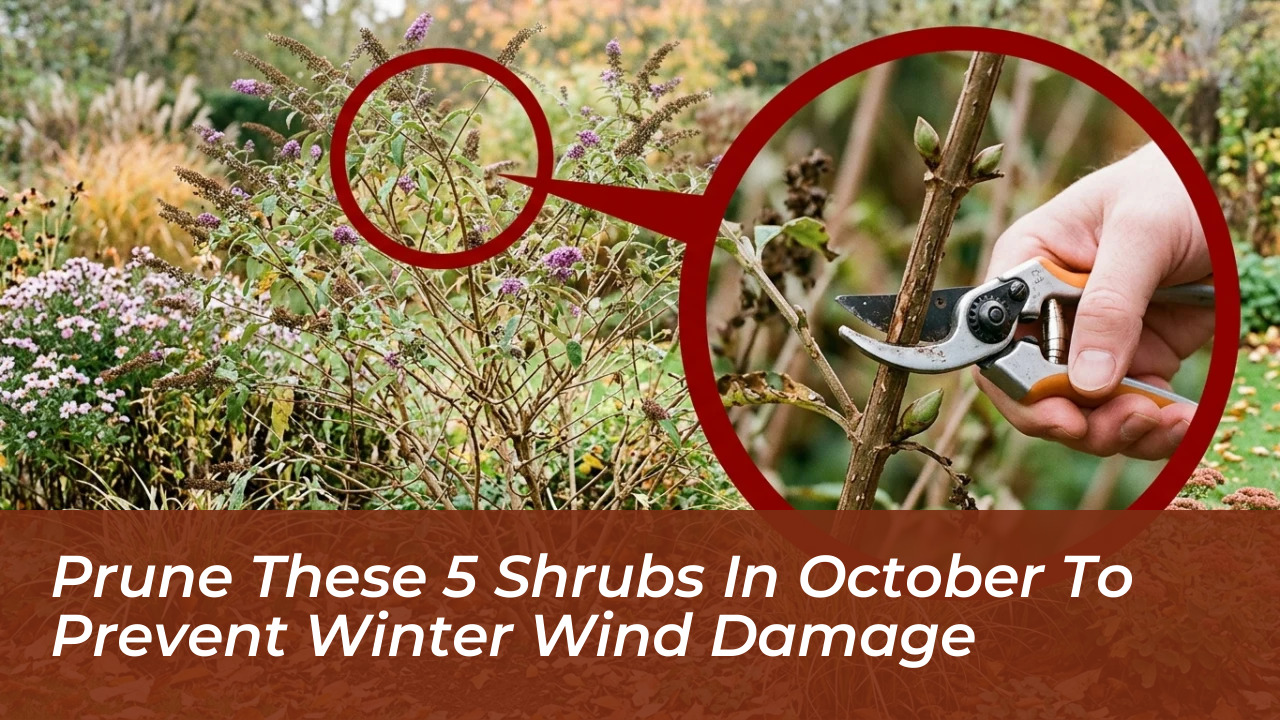

As mid-autumn sets in, gardens naturally transition from vibrant color to a quieter pace. While it is tempting to leave all outdoor cleanup until spring, October marks a critical window for specific maintenance. Pruning select shrubs now protects their root stability against fierce winter gusts and clears away damaged, decaying stems before dormancy begins. This mid-autumn trim is not about harsh reshaping, but rather selective pruning designed to stop winter wind-rock from loosening root balls in saturated soil.
Timing remains critical when you prune shrubs under October conditions. While certain plants benefit from an autumn tidy, cutting back the wrong bushes now can strip away next year’s entire floral display. Understanding which selections need immediate maintenance and which demand restraint is essential for healthy borders heading into cold weather.
The Autumn Pruning Myth: Why Spring Bloomers Must Be Left Alone
A widespread gardening mistake involves cutting back every overgrown bush before the onset of winter. Applying secateurs indiscriminately to spring-flowering plants strips away dormant flower tissue that took months to form. Varieties such as lilacs, rhododendrons, and forsythia already hold mature embryonic buds on their stems. Pruning them in October severs next spring’s flowers before they have a chance to open.
For these spring-flowering varieties, gardeners must delay structural cuts until directly after their flowering period finishes in early summer. Knowing which selections need immediate maintenance and which demand restraint is essential for healthy borders heading into cold weather.
1. Buddleia (Butterfly Bush)
Buddleia is a vigorous deciduous shrub celebrated for drawing pollinators to sunny spots with well-draining soil. Because mature plants produce tall, flexible stems, late-season storms create extensive leverage that loosens root systems in wet ground.
‘Even though this should normally be cut back hard in spring, butterfly bush can be cut back by half now to stop wind from rocking the roots of the plant and making it unstable,’ suggests Richard Barker, horticultural expert and commercial director at LBS Horticulture. ‘Cut back tall, whippy branches by half, but avoid cutting back the plant lower than three to four feet. Any dead, diseased or broken branches can also be cut back to healthy wood.’
Resist cutting below that three-to-four-foot threshold during autumn. The remaining wood shields lower dormant buds against severe frost, leaving ample growth to be pruned down properly once spring arrives.
2. Lavatera (Tree Mallow)
Lavatera provides fast summer growth, blooming extensively from June through September with delicate petals in shades of pink, white, and lilac. Vigorous varieties frequently surpass two meters (over six feet) in height, leaving them open to mechanical stress when late autumn gales strike.
‘If you have one of the tall, fast-growing varieties of lavatera which is likely to reach two metres or more in height, such as the popular lavatera x clementii ‘Burgundy Wine’, ‘Rosea’ or ‘Barnsley’, to protect them from wind damage in late autumn and winter it’s important to spend some time pruning them in October,’ explains Lucie Bradley, gardening and greenhouse expert at Harvst Automatic Watering.
For these fast-growing mallows, execute a conservative reduction by removing between one-third and one-half of the current height. This balanced trim lowers wind drag across the canopy without stimulating soft, vulnerable new shoots.
3. Climbing and Rambling Roses
Climbing and rambling roses demand structured containment before severe winter weather arrives. Unchecked canes whip violently in high winds, which loosens fixings and bruises stems against masonry, gutters, and adjacent pathways.
‘October rose pruning is about tidying up and reducing wind-rock rather than heavy reshaping,’ advises Julian Palphramand, head of plants at British Garden Centres. ‘Climbing and rambling roses can be trimmed to keep long shoots off paths, gutters and windows, with the main pruning left for later in winter.’
To safely prep climbing varieties for the cold season, prioritize structural support:
- Cut out dead, diseased, or damaged stems back to healthy wood.
- Shorten this season’s outward side shoots to within a few buds of the permanent framework.
- Anchor all vigorous new basal shoots firmly to trellises or support wires to avoid snapping.
This light intervention keeps vigorous growth secure, ensuring the main framework remains intact until deep-winter pruning commences.
4. Hydrangeas
Hydrangeas present a specific challenge in autumn because improper trimming can eradicate the following season’s blooms entirely. Knowing the exact cultivar growing in your border dictates how your pruners should be handled.
‘With them in particular, it’s important to know which type you have before reaching for the secateurs,’ notes Lance Russell, horticultural expert at Thompson & Morgan. ‘Many varieties flower on old wood, so a hard autumn prune could mean removing next year’s flower buds.’
Rather than cutting stems down, focus solely on sanitation. Clear away dead, decaying, or broken stems, then remove crossing branches that rub against each other to open the center of the crown.
5. Lavender
Mediterranean sub-shrubs like lavender need careful handling when temperatures begin to dip. Slicing too deeply into mature foliage leaves the plant unable to seal cut surfaces before the first freeze.
‘If you haven’t already dealt with your lavender, you can give it a light trim, although avoid cutting hard back into old woody growth,’ says Will Williamson, Squire’s Garden Centres horticultural expert. ‘At this time of year it’s much more about looking at what needs tidying in your own garden rather than pruning for the sake of it.’
Clip off faded flower stalks and skim the soft tips of green foliage to preserve an attractive mound. Avoid slicing into brown, woody stems, which rarely regenerate after hard late-season cuts.
Recommended Pruning Limits by Shrub Type
Use this quick reference guide to ensure you trim each variety correctly without damaging next year’s potential blooms:
- Buddleia: Cut whippy stems down by half; keep overall framework above 3 to 4 feet.
- Lavatera: Tidy tall specimens by cutting back between one-third and one-half in height.
- Climbing/Rambling Roses: Trim side shoots back to a few buds; tie new basal canes to supports.
- Hydrangeas: Remove diseased stems and crossing branches; avoid cutting down old-wood varieties.
- Lavender: Perform a light trim on soft foliage; do not cut into old, woody growth.
Approaching autumn cleanup with restraint protects structural health without triggering late, cold-sensitive growth flush. Sharpen clean bypass secateurs, focus on wind protection, and save severe branch renovations for early spring. Check each shrub’s framework before cutting to avoid removing hidden spring bloom buds, and inspect your plants closely for cracked branches, crossed stems, and signs of fungal decay.