
Coming home from a relaxing vacation should feel amazing, but walking through your front door only to be hit by a stale, foul stench can instantly ruin the mood. Most travelers remember to adjust the thermostat, set lighting timers, take out the trash, and lock all the doors. Yet, a returning homeowner is frequently greeted by a distinct odor reminiscent of an open sewer. The issue rarely stems from forgotten food in the pantry; instead, the culprit usually hides directly beneath the kitchen basin inside your plumbing lines.
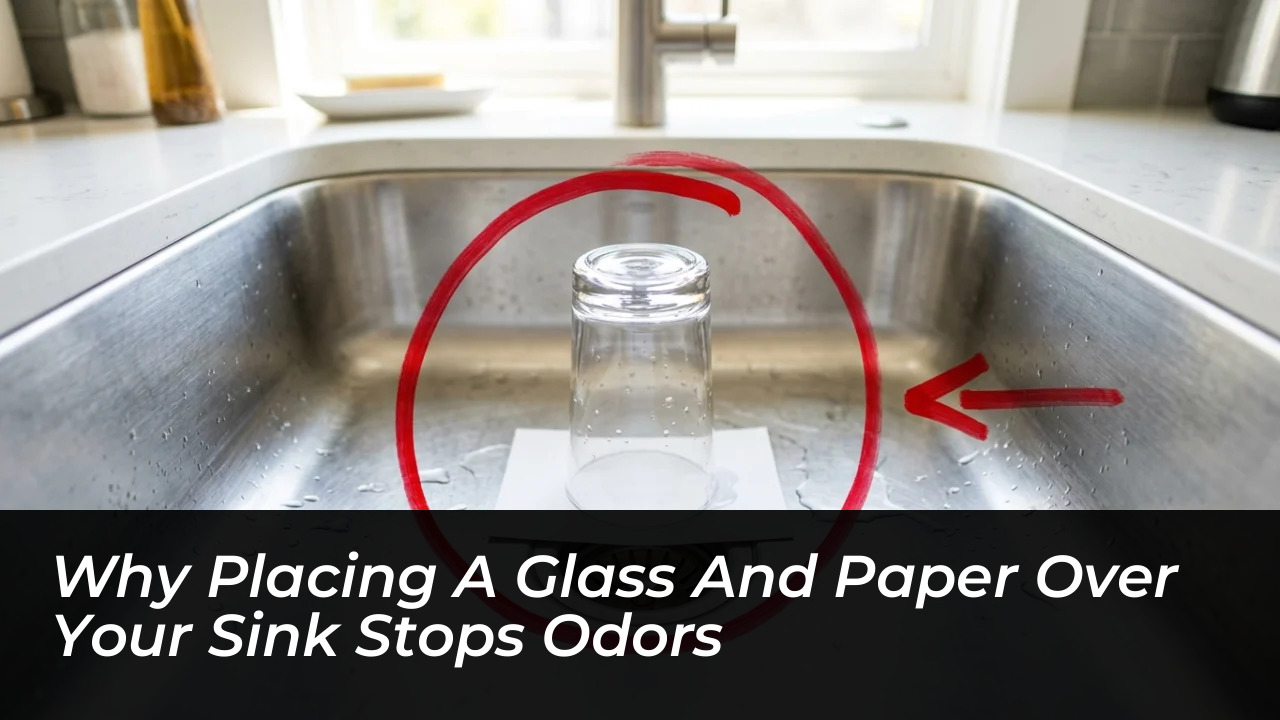
Placing a simple sheet of paper and an upside-down glass over your kitchen drain is an old-fashioned household hack that creates an airtight barrier to stop noxious gases from invading your home. When plumbing fixtures sit unused for several consecutive days, the protective water barrier inside the drain evaporates, letting terrible smells rise directly into your living space. Sealing the opening before you head out the door slows that evaporation to a crawl.
The Science of the Dry P-Trap
Under every domestic sink rests a curved section of pipe known technically as a P-trap. Under normal conditions, this bend continuously retains a small reservoir of standing water. That small pool functions as a physical liquid plug, preventing dangerous sewer gas and foul aromas from rising out of municipal waste lines and into residential spaces.
Daily household water usage continually replenishes this reservoir. Turning on the tap washes fresh water through the bend, keeping the seal intact around the clock. When a home remains empty, that standing water begins to evaporate. Warm, dry indoor air-particularly during winter heating months or in arid climates-accelerates the process significantly. According to the South Davis Sewer District, extended absences represent one of the primary drivers of a dried-out plumbing trap. Once that liquid barrier dries up, drain lines vent directly into your home.
A widespread misconception assumes that bad sink smells originate purely from rotting food trapped in disposal blades. While old food debris does decay, it rarely matches the heavy, pervasive sewer stench caused by an unsealed waste pipe.
The Two-Second Sink Sealing Method
Preventing an evaporated water seal does not require specialized plumbing tools or chemical treatments. A basic household barrier slows down air exchange sufficiently to protect the drain line throughout standard vacations. To execute the technique properly, follow these simple preparation steps right before leaving your property:
- Run the tap for several seconds to guarantee the P-trap holds its maximum water level.
- Lay a flat sheet of clean paper or a dampened paper towel directly over the drain strainer opening.
- Place a heavy, upside-down drinking glass or a small ceramic plate directly over the paper to anchor it down securely.
The paper and inverted glass act as a makeshift lid. Restricting airflow directly above the drain opening minimizes surface evaporation. If any mild air drafts push past the water line, the inverted glass keeps the fumes contained beneath the rim instead of letting them spread through your kitchen. Some homeowners prefer to fill a glass with water before tipping it upside down over the paper to add extra moisture, while others rely on extra-absorbent paper towels.
Beyond Odors: Blocking Pests and Insects
Keeping your home smelling fresh is only half the battle. When a P-trap dries out completely, it opens an unobstructed highway for pests. Many travelers return from trips to find that c**kroaches, drain flies, and other unwanted bugs have crawled up through their sink pipes.
By covering the drain with a damp paper towel and an inverted glass, you create a physical roadblock. Any insects attempting to make the journey up the plumbing lines will be contained or stopped entirely, keeping them out of your kitchen and bathrooms.
Professional Plumbing Checklist for Vacations
While the paper-and-glass technique effectively guards the kitchen sink, comprehensive home protection requires addressing every drainage fixture across the residence. Evaporation occurs universally across all plumbed lines that remain dormant during long absences.
| Plumbing Fixture | Preventive Action |
|---|---|
| Kitchen Sink | Run water, place paper flat, cap with an inverted glass. |
| Showers & Tubs | Run water to fill traps completely before departure. |
| Basement Floor Drains | Add water, followed by a small measure of mineral oil. |
| Toilets | Keep lids firmly closed throughout the absence. |
For seasonal homeowners or residents taking extended trips lasting multiple weeks, professional plumbers recommend adding a small splash of food-grade mineral oil to rarely used secondary drains. Because mineral oil sits on top of water rather than mixing with it, it forms a floating shield that drastically cuts surface evaporation without going rancid like cooking oils.
Recognizing Persistent Plumbing Failures
When you return from a trip, immediately flush every household fixture with fresh running water for 30 to 60 seconds to restore the normal fluid barrier. In most cases, the fresh water immediately restores the seal and washes out stale air.
If sewer odors persist long after running the water, the underlying cause extends beyond a simple dry trap. Recurring odors often point to a partial downstream clog, a blocked roof vent pipe, or physical damage to the pipe assembly. Under these conditions, an inspection by a licensed plumbing contractor becomes necessary to isolate the structural failure.
Frequently Asked Questions
Is the upside-down glass trick safe for my sink?
Yes, it poses zero risk to your sink or plumbing infrastructure and takes only seconds to set up before walking out the door.
Can I use a bowl or ceramic plate instead of a glass?
Absolutely. Any clean container that completely covers the drain opening and holds the paper flat will serve the exact same purpose.
How long can I leave the sink covered?
You can leave the glass and paper in place for the entire duration of your trip. Simply remove and discard the paper, then flush the drain with water when you return.
Does this hack work in winter?
Winter heating systems dry out indoor air rapidly, which actually makes this trick even more important during cold-weather travel.
Should I clean my drains before leaving?
Yes. Pouring a mixture of baking soda and vinegar down the drain followed by hot water before your trip helps eliminate organic buildup and bacteria that cause localized smells.