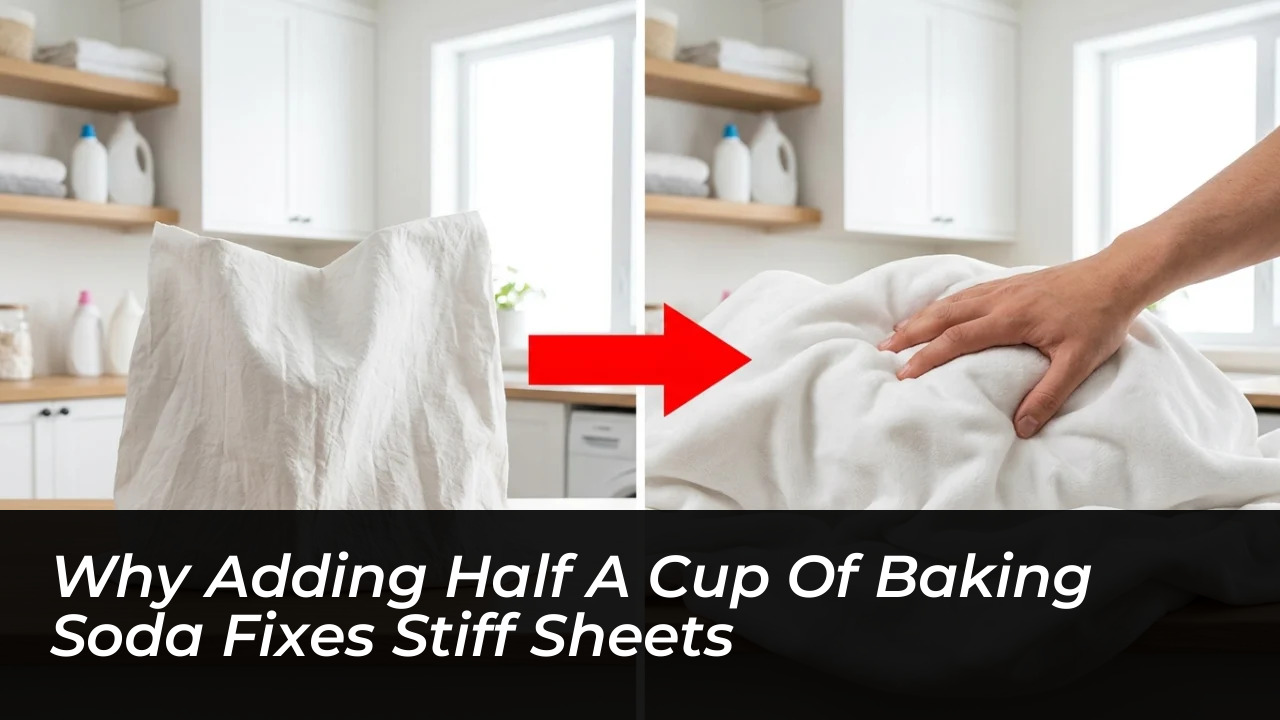

Adding half a cup of baking soda directly into your washing machine drum alongside your normal detergent neutralizes persistent odors and helps relieve the scratchy stiffness that often plagues freshly washed bed sheets. This simple pantry staple works directly on wash-water chemistry without masking fabrics with heavy artificial fragrances or requiring prolonged soaking cycles. While fresh bedding frequently emerges from the spin cycle visibly clean, mineral buildup and residue often leave the material feeling rigid across your mattress. Understanding how this kitchen staple alters the water environment provides a practical fix, but timing the addition correctly remains critical to avoiding counterproductive results.
The Science of Sodium Bicarbonate in the Wash Cycle
Known scientifically as sodium bicarbonate, baking soda is a mild alkaline compound capable of regulating pH levels in laundry water. By balancing acidity, it optimizes detergent performance, allowing surfactants to work more efficiently across sheets, towels, and clothing. It acts strictly as an additive rather than an outright cleaning agent on its own.
Standard laundry detergent remains mandatory for lifting dirt and body oils, as baking soda laundry treatments enhance cleaning power rather than replacing the primary formula entirely. Baking soda serves as a wash additive to support cleaning and odor removal, meaning it never replaces the foundational detergent needed to wash the load.
Why Bedding Struggles with Stiffness in Hard Water
The softening potential of baking soda stems primarily from its ability to buffer wash-water pH, making it especially effective in homes dealing with hard-water conditions. By softening the interaction between dissolved minerals and textiles, the additive helps bedding emerge with a gentler texture. However, natural limitations apply to fabric care across older textiles.
A wash additive cannot change the weave or repair worn fibers, meaning permanently abraded or damaged linens will not suddenly regain their original softness after repeated cycles.
Myth vs. Reality: Wash Expectations
A widespread misconception assumes that rough sheets simply need double doses of powder across consecutive loads. In reality, baking soda delivers load-dependent support rather than a guaranteed instant transformation, making proper dosing more effective than excess product.
| Laundry Factor | Practical Effect |
|---|---|
| Standard Dosage | Half a cup added directly inside drum |
| Primary Function | Adjusts water pH and neutralizes odors |
| Detergent Role | Must remain in routine to clean soil |
| Fiber Restoration | Cannot repair damaged or aged weaves |
Correct Application: Where and When to Add the Powder
To avoid damaging your appliance or ruining a load, placement and timing dictate the entire outcome. Dispensing errors can turn an effective routine into a mechanical headache. Confirm your appliance user manual and textile care labels permit dry mineral additives.
- Measure half a cup of baking soda and distribute it directly onto the bottom of the drum.
- Add regular laundry detergent as directed, keeping both items inside the main drum area.
- Select the temperature and cycle designated on the bedding care label without adding a soak phase.
Never pour the dry powder into automatic detergent or liquid fabric softener drawers. Trapped powder inside mechanical dispensers absorbs moisture rapidly, creating dense clogs that impede water flow.
The Costly Rinse-Cycle Mistake That Leaves Sheets Rigid
Timing the introduction of sodium bicarbonate determines whether sheets feel soft or remain scratchy. Baking soda must enter exclusively during the initial wash phase so standard cycles can rinse every trace away before drying. Introducing the powder during the final rinse leaves residual alkaline sediment trapped inside the fibers, causing fabrics to feel remarkably stiff and scratchy against the skin.
Sensitive fibers demand caution: delicate materials like silk and wool require strict adherence to individual care labels before attempting any additive treatment. Check bedding labels carefully before applying mineral additives to delicate fibers, and always measure half a cup straight into the machine drum rather than the dispenser drawer.
Frequently Asked Questions
Can I use baking soda with all types of bed sheets?
Baking soda works wonders on cotton, linen, and synthetic blends. However, you should always check the manufacturer care label before treating delicate materials like silk or specialty wool blends.
Should I put baking soda in the detergent drawer instead?
No. Always add baking soda directly into the washing machine drum. Putting dry powder into automatic dispensers can cause clogs and restrict proper water flow during the cycle.
Does baking soda replace liquid laundry detergent?
Never. Baking soda acts strictly as a wash booster to adjust pH, eliminate odors, and soften water minerals. It does not contain the surfactants required to lift body oils and dirt.
Will baking soda fix permanently worn-out sheets?
While baking soda softens stiff textures caused by mineral buildup and detergent residue, it cannot repair physically abraded, frayed, or permanently worn-out fabric weaves.
Is baking soda safe for septic systems?
Yes, sodium bicarbonate is entirely septic-safe and breaks down safely without harming the natural bacterial balance inside standard residential septic tanks.