
Preparing your plants for winter requires five vital maintenance steps, beginning with halting late-season deadheading to trigger natural plant dormancy. As daylight fades and temperatures decline, managing rose shrubs correctly shields delicate root systems and prevents fungal outbreaks from decimating next year’s blooms. Many gardeners make the mistake of over-tending their beds right before freezing weather arrives. Knowing which seasonal tasks to complete determines whether your roses survive winter storms or suffer permanent cold damage.
1. Why Letting Rose Hips Form Protects Against Winter Freeze
When flowering cycles end in October, stop removing spent blooms immediately. Letting those final flowers mature produces rose hips, the seed pods that naturally instruct the shrub to slow its sap flow and halt vegetative development. Leaving hips on the canes provides winter color and sustenance for local birds while chemically discouraging tender new growth that would blacken at the first freeze.
“Hips add colour to the garden, provide a good source of vitamin C for birds, and, like many fruit-bearing plants, signal the rose to go dormant for the season,” says horticulturist Gail Pabst, marketing director for the National Garden Bureau.
Once dormancy signals are in place, focus shifts down to the soil level to prevent lingering plant diseases.
2. Eradicating Fallen Leaves and Overwintering Black Spot
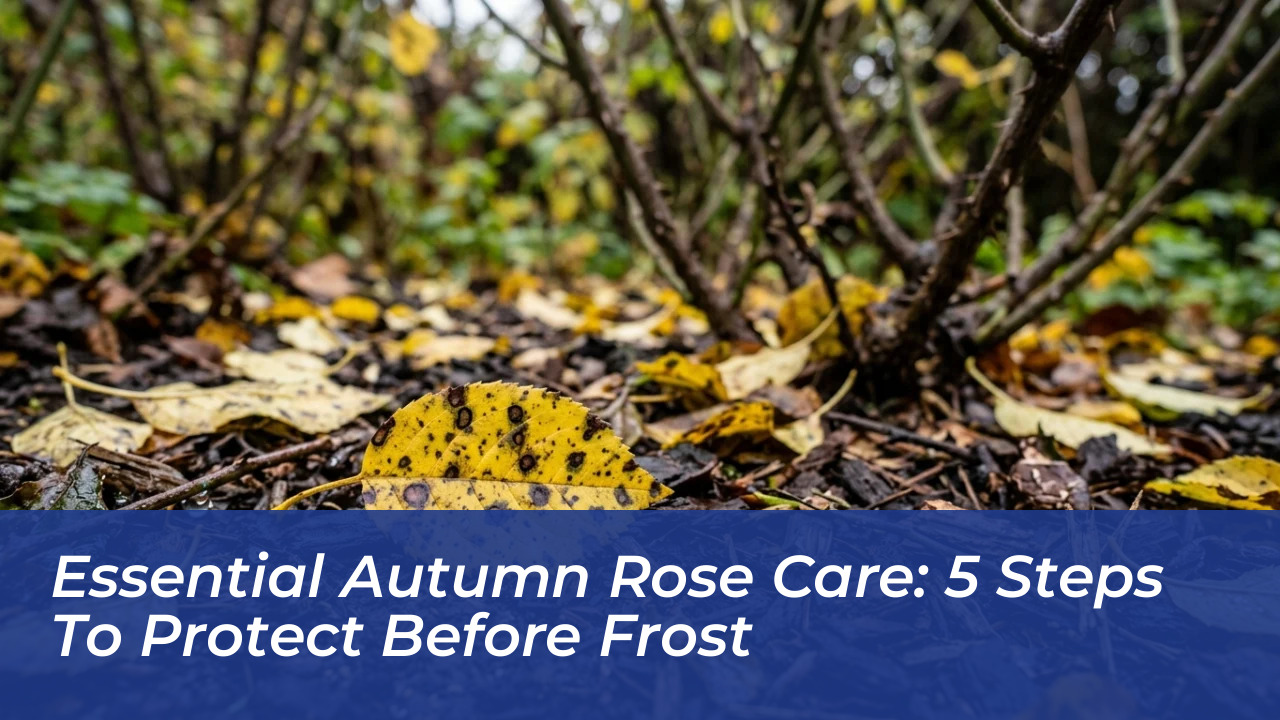
Decaying foliage resting around the base of bushes is a prime vector for garden disease. Diseased leaves harboring fungal spores, especially black spot, must be completely cleared away rather than left to break down into the soil.
“Clear garden beds of debris, especially any diseased leaves that may have fallen from your roses,” advises Gail Pabst. “Fungal disease will overwinter in your garden and will be there to greet you if you don’t remove it.” Rake beds thoroughly, bag contaminated foliage, and dispose of it offsite rather than adding it to standard compost piles.
3. Tidying Loose Stems Without Premature Pruning
High winds can easily whip long, unwieldy stems, destabilizing roots and ripping canes. Inspect bushes for excessive growth and trim back the longest shoots just above an outward-facing bud to minimize wind rock.
Cut away snapped, dead, or split branches cleanly, but avoid conducting a heavy structural prune. Cutting too deeply at this stage triggers late-season shoot development that cannot survive sub-zero nights.
“Shorten long stems so that the base can’t fill with water that freezes and expands,” explains garden designer and director Oliver Burgess. “Don’t do the main prune until Feb or March, otherwise you’ll push out soft growth which the frost will hurt.”
Autumn Maintenance vs. Spring Pruning Comparison
- Autumn Maintenance: Shorten tall canes to reduce wind rock, clear diseased foliage and black spot leaves, apply root-protecting organic mulch, secure rambling and climbing varieties.
- Spring Pruning (Feb-March): Conduct main hard prune for shape and vigor, encourage rapid soft vegetative growth, resume targeted fertilizer feeding, cut out old non-productive woody stems.
4. Mulching Roots While Halting Plant Food
Apply a protective layer of organic material around the root zone once beds are tidy. Spread well-rotted manure or finished compost across the root perimeter to insulate roots against deep soil freezes and retain moisture throughout dry cold spells.
Never apply mulch flush against the main woody stems. Trapping moist material against the plant collar invites decay, rot, and bark diseases during damp winter conditions. “Don’t feed the roses because you don’t want to encourage soft growth until spring,” notes Oliver Burgess. “Mulch around the base but not against the stems, otherwise you’re just making them damp.”
5. Shielding Potted and Climbing Varieties from Winter Winds
While established bush roses are resilient, climbers and ramblers are exposed to gale-force winds that tear canes from supports. Inspect all ties and secure loose runners firmly to trellises or walls before winter storms hit.
“Most roses are very hardy but climbers and ramblers are the most vulnerable in winter due to increased winds. They’ll be fine if they’re tied in. Roses in pots should be moved to a sheltered wall, wrapped and raised on their feet so that the pot doesn’t freeze,” advises Burgess. Raising containers on pot feet allows surplus winter rain to drain freely, preventing wet root balls from freezing solid and cracking containers.
Expanding Your Beds with Bare-Root Selections
Once current stock is safeguarded, attention turns to planting ahead. Late autumn marks the start of the planting season for bare-root roses, which are lifted from fields and sold dormant without soil pots. Industry bodies confirm that bare-root stock becomes available towards late October, ready for planting through March during mild spells when the ground is not frozen solid.
Frequently Asked Questions About Autumn Rose Care
Do I still need to water roses in the fall?
Yes, keep watering deeply once a week until the ground freezes. Do not let the soil dry out entirely, as roots still need steady moisture during dry autumn spells.
When should I stop fertilizing my roses?
Stop fertilizing at least 6 weeks before your first expected frost. Late feeding triggers weak, tender growth that cannot survive sub-freezing temperatures.
Can I hard prune my roses in autumn?
No, avoid heavy structural pruning in autumn. Only trim back long or whippy stems to prevent wind rock, and leave heavy pruning for late winter or early spring.
Should I remove rose hips from my bushes?
Leave rose hips on the canes during autumn. They signal the plant to enter dormancy, provide winter color, and serve as a food source for local wildlife.
How thick should my winter mulch layer be?
Apply a 2-to-3-inch layer of well-rotted manure, compost, or bark mulch around the base. Ensure the mulch does not touch the main stems directly to prevent rot.