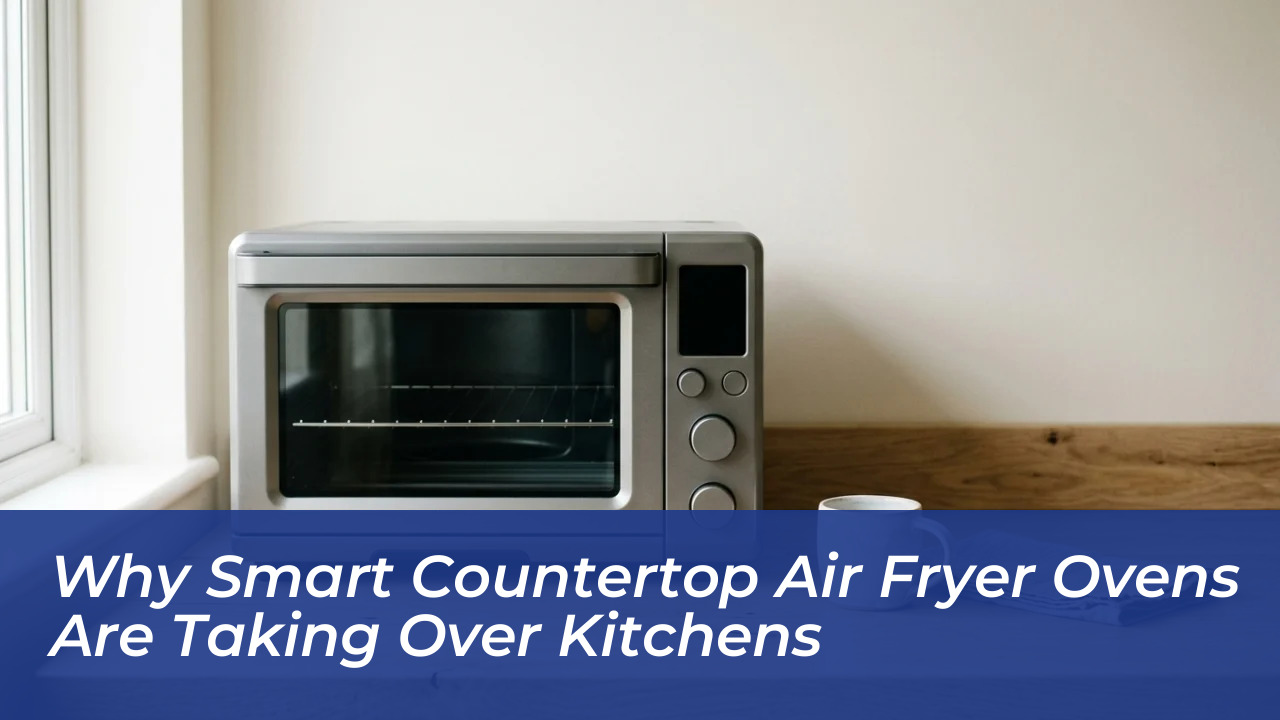

The standard single-basket appliance is rapidly losing its prime real estate on kitchen counters as the versatile air fryer oven takes over modern homes. By pairing high-velocity convection fans with multiple heating elements, these multifunctional countertop ovens roast whole chickens, bake 12-inch pizzas, and toast bread within a single streamlined footprint. This design effectively addresses the restrictive capacity limits that held back earlier models.
For years, households accepted the daily tradeoff of cooking small batches simply to enjoy the rapid crisping speeds of convection technology. Now, manufacturers have scaled up interior architectures to deliver genuine family-sized capacity without requiring a full kitchen overhaul or firing up a massive wall unit.
How Multifunction Air Fryer Ovens Actually Work
Unlike a traditional pull-out drawer model, an air fryer oven functions much like a miniature professional convection range. It typically features a drop-down or French-style door, multiple interior rack levels, and heating coils positioned at both the top and bottom of the cooking chamber.
A high-output fan forces superheated air directly across every tray inside the device. This continuous thermal airflow removes surface moisture from ingredients rapidly, creating the characteristic crispy exterior associated with deep frying while keeping the interior moist and tender. Because the cooking chamber integrates independent upper and lower heating sources, the appliance easily toggles between standard baking, high-heat broiling, gentle dehydrating, and dedicated air frying.
Many advanced units also feature intuitive digital touch controls, integrated temperature probes that automatically shut off heat when target doneness is reached, and motorized rotisserie spits for evenly browned meats.
The 4 Core Reasons Households Are Upgrading
The structural transition toward oven-style designs is driven by practical daily cooking needs rather than novelty alone. The functional differences become clear during routine meal preparation across four main areas:
- Superior Cooking Capacity: Standard basket air fryers are primarily built to serve one or two portions at a time. Countertop air fryer ovens comfortably accommodate full-sized sheet pans, multiple tiers of vegetables, or an entire 12-inch pizza simultaneously.
- Total Cooking Visibility: Fitted with heat-resistant glass doors and internal lighting, these units allow users to monitor browning continuously without opening a basket and dumping accumulated heat.
- Countertop Consolidation: A single multi-cooker effectively eliminates the need for a separate pop-up toaster, standalone dehydrator, and dedicated basket fryer, freeing up valuable kitchen prep space.
- Thermal Efficiency: Preheating a compact countertop cavity requires significantly less time and electricity than firing up a massive built-in wall oven. This makes it an efficient choice for quick weeknight dinners or supplemental holiday cooking.
A common mistake in daily practice is upgrading without checking upper cabinet clearance. These high-output ovens generate significant external radiant heat while venting during long cooking cycles.
Basket vs. Countertop Oven: A Direct Comparison
Understanding the operational differences helps clarify which appliance fits specific meal planning routines:
- Primary Capacity: Baskets suit 1 to 2 servings; ovens fit multi-tier trays, whole chickens, and 12-inch pizzas.
- Cooking Monitoring: Baskets require pulling the drawer; ovens offer continuous glass-door visibility.
- Crisping Speed on Small Batches: Baskets crisp slightly faster due to compact cavity volume and tight food proximity to the fan.
- Kitchen Footprint: Baskets take vertical space; ovens require wider counter width and rear ventilation clearance.
Myth vs. Reality: Does the Basket Air Fryer Become Obsolete?
A common misconception is that larger countertop units render traditional basket air fryers entirely useless. In reality, compact basket models still hold a distinct edge when preparing single-serving side dishes, quick batches of chicken wings, or frozen french fries.
Because a small basket holds a tiny air volume, its heating elements elevate the chamber temperature almost instantly. Food arranged directly beneath the top-mounted fan experiences rapid thermal transfer, achieving maximum crispiness minutes faster than in a spacious multi-rack chamber.
Essential Buying Checks and Practical Setup
Before purchasing an upgraded unit, measuring your workspace is vital for safety and functionality. Follow these critical setup guidelines to ensure reliable long-term performance:
- Measure Cabinet Clearances: Verify both counter width and vertical clearance beneath upper cabinetry to accommodate necessary airflow and high-temperature exhaust venting.
- Examine Cleaning Features: Look for pull-out crumb trays and dishwasher-safe stainless steel wire racks, as multi-rack interior walls require more active maintenance than a single non-stick basket.
- Plug Directly Into Wall Sockets: High-wattage cooking appliances must be connected straight to an approved electrical wall outlet. Never route power through lightweight extension leads or standard power strips, which can overheat under heavy electrical loads.
Have you switched to a multi-rack air fryer oven, or do you still prefer the speed of a basket? Share your daily cooking setups and appliance recommendations in the comments below, and bookmark this guide for practical kitchen setup and maintenance advice.