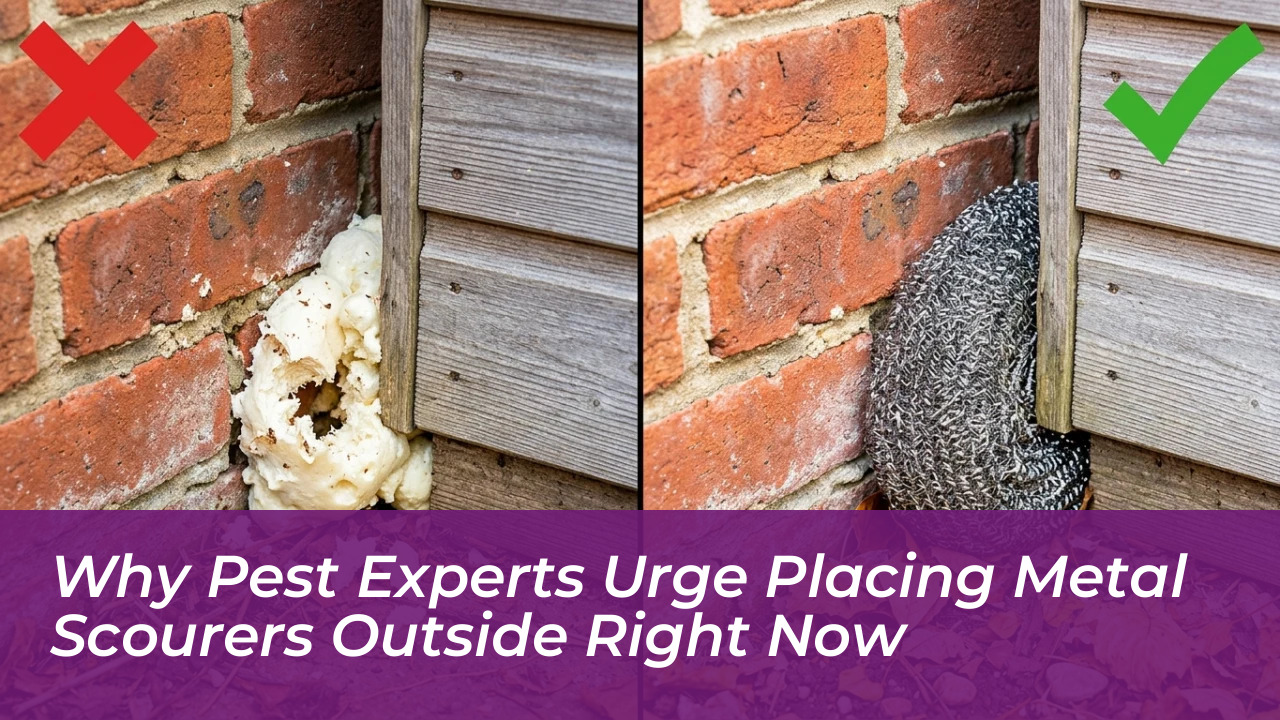

Placing ordinary metal scourers outside is one of the most effective, humane ways to stop wild rats from invading yards, sheds, and home foundations as temperatures drop. As autumn sets in and natural outdoor food supplies diminish, rodents aggressively colonize outdoor spaces before attempting to breach residential structures. Because wire kitchen scrubbers present a physical texture rodents cannot gnaw through, they create an immediate, inexpensive barrier at critical access gaps.
Late summer through early fall marks the peak season for rodent activity. Yards offer immediate access to shelter, water, and waste, making outdoor spaces prime staging grounds for an infestation that quickly moves toward heated indoor walls.
Why Wire Kitchen Scourers Stop Burrowing Rodents
Homeowners often turn to harsh chemical poisons or snap traps, but exclusion tactics provide far longer-lasting defense. While traditional pest exclusion frequently involves industrial rolls of steel wool, standard kitchen scouring pads provide the exact same mechanical resistance without requiring specialized hardware tools.
Specialists at Positive Pest Management confirm that placing coarse scouring pads directly into openings actively keeps rodents out by cutting off access lines entirely. Unlike wood, soft plastic, or drywall, tightly interwoven metal strands snag on rodent teeth, preventing them from chewing through the barrier.
“By filling the gaps and other rat entry points with scouring pads, rats will have a hard time chewing through the material. This is because the material gets stuck in their teeth, making it difficult for them to move or chew.”
Global pest control company Rentokil similarly endorses metal scourers as a proven deterrent, noting that rodents simply cannot break down the tough, interwoven fibers to establish clear passage.
Myth vs. Reality: Rodent Chewing Power
A widespread misconception is that adult rats can chew through virtually any household material if given enough time. While rodents can easily gnaw through wood siding, heavy plastic trash can lids, and even soft mortar, coarse metallic mesh poses an entirely different physical hazard to their oral anatomy. When confronted with wire scouring pads, rodents abandon the blocked path rather than risk dental injury.
Vulnerable Yard Features
- Shed bases and garden decking
- Smooth-edged ground burrows 2 to 4 inches (5 to 10 cm) wide
- Foundation gaps and fence lines
- Gnaw marks on wood, hoses, containers, or structural joints
- Sheltered lawn sections and brush piles
- Surface nests made of grass, leaves, cardboard, and paper
- Walkways and patio perimeters
- Clustered dark droppings measuring 0.4 to 0.8 inches (1 to 2 cm)
Identifying Infestation Signs Before Deploying Deterrents
Before sealing gaps, property owners must confirm whether rodents are actively nesting nearby. Ground burrows remain the most definitive early indicator. Look for distinct surface holes measuring 2 to 4 inches (5 to 10 cm) in diameter, characterized by smooth, compacted edges from repeated traffic. Burrows commonly appear beneath garden sheds, under low patio decking, or directly alongside exterior foundation slabs.
In addition to subterranean digging, rats assemble above-ground nests using loose yard debris such as dried leaves, twigs, and grass clippings, often combined with shredded paper or insulation when rearing litters. Fecal evidence offers another reliable confirmation. Rat droppings measure between 0.4 and 0.8 inches (1 to 2 cm) long, shaped like large grains of dark brown or black rice, appearing in distinct clusters. These droppings are noticeably larger than mouse droppings and darker than squirrel droppings, helping distinguish the exact intruder.
Step-by-Step Guide to Deploying Metal Scourers Outdoors
Sealing transit points should occur the moment rodent activity is verified. Following a systematic process ensures no access corridors remain available for winter shelter seeking.
- Locate structural voids: Inspect fence perimeters, the junction where the exterior siding meets the ground, and spaces behind air conditioning conduits.
- Target active holes: Identify outdoor burrows and check around storage sheds or deck supports for freshly disturbed, loose soil.
- Insert coarse pads: Firmly pack clean metal scourers deep into crevices, burrow openings, and construction gaps using a blunt hand tool.
- Inspect exterior items: Check nearby garden tools, trash bin lids, and garden hoses for fresh gnaw marks to confirm if alternate pathways are being attempted.
Taking defensive measures in early fall halts the reproductive cycle before cold conditions drive yard populations straight toward heated crawlspaces and wall cavities. Inspect your foundation lines and outbuildings for small crevices before the cold sets in.