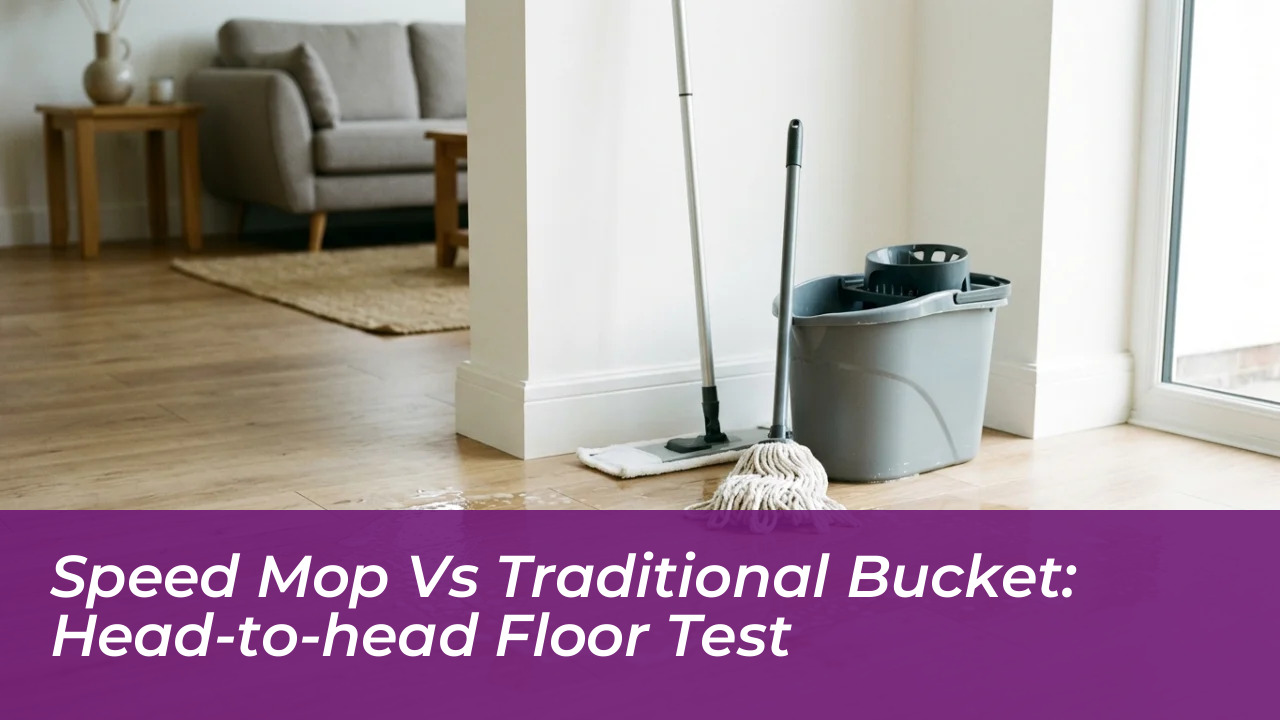

Hard floors accumulate grime, dust, and food spills faster than almost any other surface in a home. When tackling these high-traffic zones, homeowners generally choose between two primary tools: the agile, fast-drying speed mop and the classic, soapy mop and bucket. A head-to-head cleaning trial reveals distinct advantages for both approaches, proving that the ultimate winner depends entirely on your home’s square footage, budget, and cleaning frequency.
The Setup: Testing Flat Mops Against Soapy Buckets
To evaluate maneuverability, cleaning power, drying duration, and cost efficiency, the trial split an identical dirty living room floor into equal zones. The traditional method used a standard multipurpose liquid cleaner-specifically Flash Multipurpose Cleaner Liquid Lemon-diluted at two capfuls (roughly 60 ml) in approximately five liters of warm water. This solution created a rich lather that glided easily across the surface, providing ample moisture to lift settled grit and leaving enough product to tackle multiple rooms.
By contrast, the speed mop approach relied on a lightweight frame with a 360-degree rotating head. Pre-moistened disposable wet wipes stretched across the base plate and secured tightly into four grip-notch corners underneath. This modern system eliminated bucket filling, water lugging, and dirty wringing cycles entirely, streamlining the physical cleaning routine.
Head-to-Head Performance and Drying Dynamics
During the trial, the speed mop showed immediate agility around baseboards, corners, and low-clearance furniture. The swivel head guided the saturated wipe directly over surface stains, pulling up scuffs effortlessly while leaving behind a lemon aroma. Because the wipe released a thin layer of liquid rather than saturating the boards, the cleaned surface dried completely within just 15 minutes.
Conversely, the traditional wet mop deposited significantly more moisture onto the floor. While the soapy solution broke down sticky residues across a large area without needing fresh attachments, the extended drying process required roughly 40 minutes before normal foot traffic could resume safely without leaving footprints.
Comparison of Floor Cleaning Systems
| Feature | Speed Mop System | Traditional Mop & Bucket |
|---|---|---|
| Setup Process | Fasten pre-moistened wipe into four corner anchors | Dilute 60ml liquid cleaner in 5 liters of warm water |
| Water Required | Zero water or rinsing buckets needed | Five liters of warm water and detergent |
| Drying Time | Approximately 15 minutes to fully air dry | Roughly 40 minutes for complete air drying |
| Maneuverability | 360-degree swivel head for corners and baseboards | Standard pivot; bulkier around tight furniture |
| Coverage Limit | Single wipe depletes moisture after roughly two rooms | Extensive whole-house coverage from a single bucket |
| Primary Strength | Rapid spot-cleaning and zero preparation effort | Budget-friendly deep cleaning for large floor plans |
The Moisture Trap: Why Pad Longevity Dictates Value
Despite its swift drying time, the disposable system revealed a limitation during continuous use. After covering a living space and an adjoining bathroom, the pre-soaked pad began shedding its moisture. Once dry, the pad lost its smooth glide, collected dirt became visible across the underbelly, and the cloth required disposal.
Tackling an entire residence strictly with disposable floor wipes demands multiple sheet changes, driving up recurring costs compared to concentrated liquid detergents that yield multiple gallons of active washing solution from an inexpensive bottle. Additionally, saturated wipes tended to drip during initial attachment, requiring users to secure them away from area rugs or carpets.
Myth vs. Reality: The All-in-One Floor Tool
A common misconception assumes modern disposable wipe mops can entirely replace traditional floor-washing hardware. In practical execution, disposable systems function best as intermediate maintenance tools. They excel at erasing muddy paw prints, kitchen cooking splatters, and hallway smudges between deeper, dedicated washings where high water volume is needed to lift embedded soil.
Best Practices for Flawless Hard Floor Care
- Clear dry debris first: Vacuum or sweep loose dirt before applying wet solutions to prevent spreading abrasive grit across the finish.
- Protect moisture-sensitive textiles: Fasten pre-soaked disposable sheets over hard tiles rather than near expensive rugs to catch initial drips.
- Reserve the bucket for deep cleans: Deploy heavy soapy water for seasonal washing across entire floor plans, giving boards sufficient airflow to dry.
- Use flat heads for daily upkeep: Keep a pre-loaded dry or damp swivel tool ready in utility closets to instantly target daily spills.
Finding the right balance between rapid wipe tools and classic washing solutions keeps hard floors immaculate without driving up supply expenses. Assess your home’s square footage and layout before ditching the traditional bucket for quick-dry disposable alternatives.
Frequently Asked Questions
Which floor cleaning method dries faster?
The speed mop system dries significantly faster, leaving laminate and hard floors completely bone-dry in about 15 minutes. The traditional mop and bucket deposits more moisture, requiring roughly 40 minutes to dry.
Are speed mops cheaper than traditional buckets over time?
No. While initial starter kits are affordable, continuous replacement of disposable wet wipes makes speed mops more expensive for whole-house cleaning compared to a bottle of concentrated liquid cleaner.
Can a speed mop replace a traditional mop entirely?
For most households, no. Speed mops are ideal for quick maintenance, spot-cleaning, and small areas, but a traditional mop and bucket remains necessary for heavy-duty, whole-house deep cleans.
Do speed mop wipes drip when attached?
Yes, pre-moistened pads can drip excess liquid when being fitted onto the mop base. It is recommended to attach them away from carpets and area rugs to prevent staining.
What is the best way to prepare floors before mopping?
Always thoroughly sweep or vacuum loose dirt, dust, and crumbs before applying any wet cleaning solution to avoid creating a muddy abrasive paste on your floors.