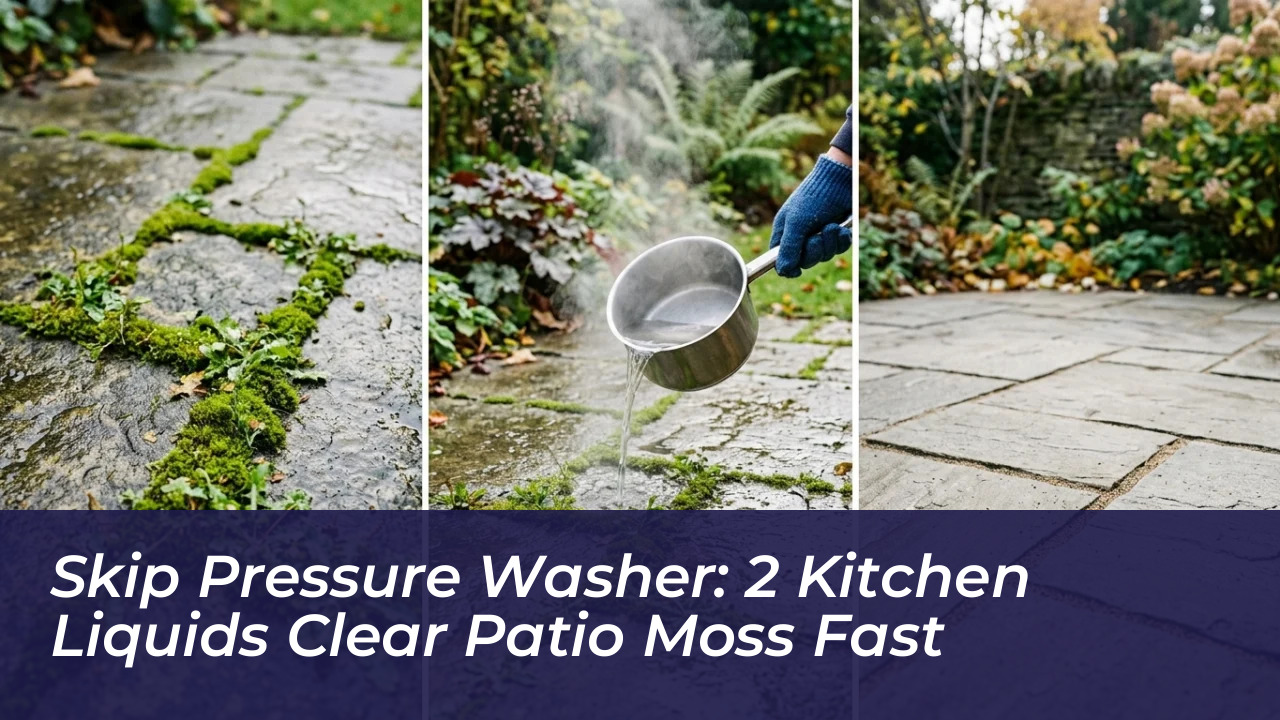

Undiluted cola and boiling starchy cooking water can completely clear stubborn green moss out of patio paver joints, removing the need for a noisy, messy pressure washer that blasts away your joint sand. Each liquid targets unwanted growth through a distinct physical mechanism: the acidic profile of the soda breaks down moss in precision spots, while thermal shock from leftover culinary water destroys broad-area plant cells instantly.
Homeowners often default to power washers or aggressive chemical sprays every autumn as persistent dampness sets in. Yet, pressure-washing frequently erodes the stabilizing base underneath stone walkways, forcing you to constantly sweep fresh sand back between the gaps. Taking advantage of these two common household liquids offers a controlled, affordable alternative for stone pathways and brick terraces.
The Science Behind Cola and Moss Elimination
Cola proves remarkably effective because of its phosphoric content. Moss species tolerate acidic environments very poorly, causing the plant structure to collapse when exposed to a concentrated source. When applied straight from the bottle, the liquid attacks the moss without eroding standard stone surfaces or mortar joints.
Leftover sugar turns sticky and attracts insects, making a thorough water rinse an essential final step. Because it must be used undiluted, cola acts as a targeted precision tool rather than a blanket wash for an entire outdoor space. It excels on stubborn corners, vertical paver edges, and heavily shaded spots.
Step-by-Step Guide to Using Cola on Pavers
- Test a hidden patch first on porous or pale decorative stone that could absorb darker pigments.
- Pour or spray the undiluted cola directly along the affected paver lines, working it in with a stiff-bristled brush to reach the root structure.
- Let the liquid sit on the surface for 10 to 30 minutes, ensuring it does not dry completely onto the stone.
- Rinse the area thoroughly with clean water to remove residue and prevent attracting outdoor pests.
- Brush out the loosened organic matter and top up the joint lines with fresh jointing sand.
Using Boiling Starchy Water for Broad Surfaces
For long runs of paving, the leftover water from boiling pasta, potatoes, or rice provides a wide-area solution. Instead of dumping this hot liquid down the sink, carefully carry the pot outside while it remains piping hot and pour it steadily along your stone lines. The extreme heat immediately bursts the cells of the moss on direct contact.
The Function of Dissolved Starch
The dissolved starch inside the cooking water coats the growth, trapping the residual heat against the vegetation for a longer duration than ordinary tap water. Within a few days, the treated greenery turns dry and brown, allowing you to sweep it out cleanly with a stiff garden broom.
Two essential safety rules apply to this thermal technique:
- Ensure the cooking liquid is entirely unsalted to avoid contaminating surrounding soil chemistry.
- Restrict the hot pour exclusively to hard surfaces, keeping it away from garden bed borders and lawn edges where the heat would instantly kill desirable grass roots.
Comparing Household Moss Treatments
Understanding when to deploy each kitchen remedy ensures effective results without wasting supplies or risking unwanted insect activity.
- Undiluted Cola: Best for targeted joints, edges, and corners; utilizes phosphoric to dissolve moss tissue.
- Boiling Starch Water: Best for long paver joints; delivers thermal shock while dissolved starches trap residual heat.
Why Autumn Is the Critical Window for Paver Maintenance
Targeting joint growth in October halts the expansion cycle before persistent winter dampness allows vegetation to thicken and spread. Moss cleared ahead of seasonal freezes leaves clean, properly drained spaces between stones, minimizing frost heave and water accumulation when temperatures drop.
A few routine outdoor habits will preserve the clean joints once the treatment is complete. Regularly sweeping debris prevents fallen leaves from trapping moisture against the hardscape, while trimming low-hanging shrubs reduces perpetual shade on persistent problem spots. If moss continues to return despite regular cleaning, excessive moisture in the sub-base indicates a structural drainage issue rather than a maintenance oversight.
Frequently Asked Questions
Will cola stain my stone patio?
Cola can leave dark pigments or sticky sugar residue on pale, porous, or natural stone surfaces. Always test a hidden area first and rinse the patio thoroughly with clean water after 10 to 30 minutes.
Is salted cooking water safe for patio weeds?
No, you should only use unsalted cooking water to kill moss. Salt can seep into adjacent garden beds and lawns, permanently damaging desirable grass, plants, and soil chemistry.
How long does it take for starchy water to kill moss?
The extreme thermal shock kills moss cells on contact, but the vegetation typically turns dry and brown within a few days, making it easy to sweep away with a stiff garden broom.
Does this method wash away joint sand like a pressure washer?
No. Pouring liquids or using a brush keeps joint sand largely undisturbed compared to the high-pressure streams of a power washer.
Can I use diet soda instead of regular cola?
Regular cola is preferred because its sugar content works alongside the phosphoric , though the primary moss-killing action comes from the and low pH levels.