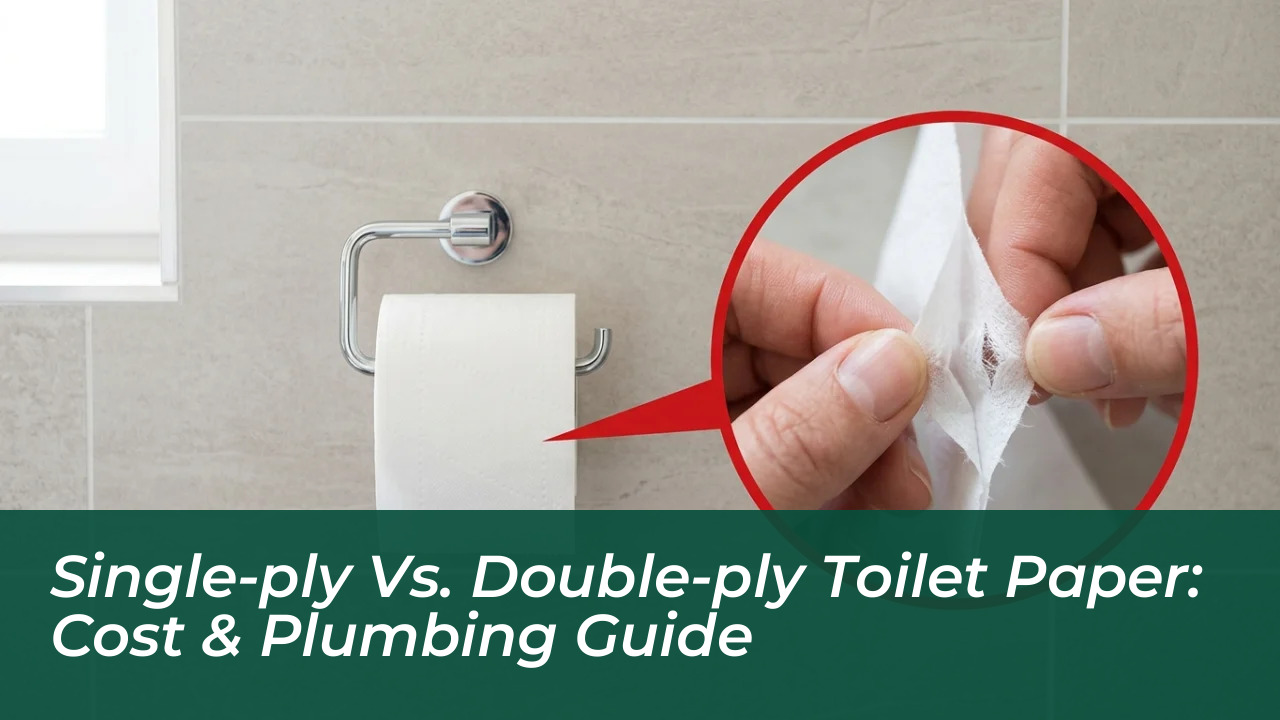

Choosing between single-ply and double-ply toilet paper directly impacts household expenses, daily comfort, and drainage health. While single-layer rolls offer rapid water disintegration, two-layer options deliver significantly higher absorbency and strength. Personal hygiene products represent a continuous household expense where everyday preferences frequently clash with plumbing realities. Navigating the store aisle requires balancing initial purchase savings against the durability and physical behavior of the tissue once it enters the home drainage system.
Structural Differences: Single-Ply vs. Double-Ply Bathroom Tissue
The primary technical distinction between these common options lies strictly in the physical layering of the manufactured paper sheets. This direct structural variation dictates the material’s overall thickness, tensile strength, liquid absorbency, and tactile softness during everyday use.
Single-Ply Tissue Characteristics
Single-ply rolls consist of a single individual layer of processed paper fibers, resulting in a noticeably thinner product with a lower upfront cost. The key mechanical advantage of this construction is that it disintegrates rapidly upon contact with standing water. The primary drawback emerges during regular use: individuals routinely pull a substantially larger quantity of sheets to achieve adequate barrier protection.
Double-Ply Tissue Characteristics
Double-ply paper incorporates two bonded sheets, providing substantially improved structural thickness and higher fluid retention. While these premium rolls carry a higher purchase price, their enhanced durability means users can consume far fewer sheets per visit. This structural density allows individual rolls to last considerably longer than single-ply alternatives despite higher shelf prices.
Evaluating Performance and Household Systems
The choice between single and double layering cannot rely solely on the sticker price on the shelf. The interaction between material breakdown speeds and pipe infrastructure dictates which variety best serves your residence. A common mistake in practice is assuming that lower shelf prices always equal real savings, as sheet consumption habits frequently cancel out the initial difference.
A widespread misconception is that single-ply is universally inferior simply because it feels thinner. In reality, properties operating on dedicated septic tanks or older residential lines benefit tremendously from tissue engineered to dissolve swiftly in water, drastically reducing the risk of line blockages.
| Factor | Single-Ply vs. Double-Ply Comparison |
|---|---|
| Sheet Structure | Single layer versus two bound layers of paper fibers |
| Disintegration Rate | Single-ply breaks down faster in water |
| Strength & Comfort | Double-ply provides superior softness and tear resistance |
| Usage Rate | Single-ply requires more sheets; double-ply requires fewer sheets |
How to Select the Right Option for Your Home
Determining which product fits your household depends on user traffic, budgetary limitations, and structural drainage properties. Assessing these variables prevents plumbing complications and unnecessary store runs.
- Budget Management: Single-ply reduces initial out-of-pocket spending, though overall savings depend heavily on the total sheet volume used per person.
- User Comfort: Double-ply provides a superior experience in softness, thickness, and fluid management.
- Septic Protection: Residences with septic systems should prioritize varieties that dissolve immediately when submerged.
- High-Traffic Restrooms: High-volume commercial or shared family bathrooms often benefit economically from single-ply inventory.
Choosing the ideal bathroom tissue comes down to matching comfort against your home’s unique plumbing demands. Taking time to assess your drainage setup and true household usage prevents both clogs and budget waste. Leave your thoughts in the comments below and tell us which paper type works best in your home.
Frequently Asked Questions
Is single-ply toilet paper actually cheaper in the long run?
Not always. While single-ply has a lower upfront sticker price and more sheets per roll, users tend to pull twice as many sheets per visit to achieve adequate coverage, which often narrows the real-world cost gap.
Why is single-ply better for septic systems?
Single-ply paper consists of only one thin layer of fibers, allowing it to dissolve much faster and more completely in standing water. This drastically reduces the risk of line blockages in older pipes and septic tanks.
Does double-ply toilet paper cause clogs?
In modern, well-maintained municipal plumbing systems, standard double-ply paper breaks down adequately and rarely causes issues. However, excessive use in older or sensitive septic systems can lead to buildup and clogs over time.
How do I test if toilet paper is septic safe?
You can perform a simple home dispersal test by placing a few sheets of toilet paper into a clear jar of water and shaking it. If the tissue quickly breaks apart and separates, it is generally safe for sensitive drainage systems.
Which toilet paper ply provides the best comfort?
Double-ply toilet paper provides superior thickness, cushioning, and fluid absorption compared to single-ply, making it the preferred choice for residential bathrooms focused on everyday comfort.