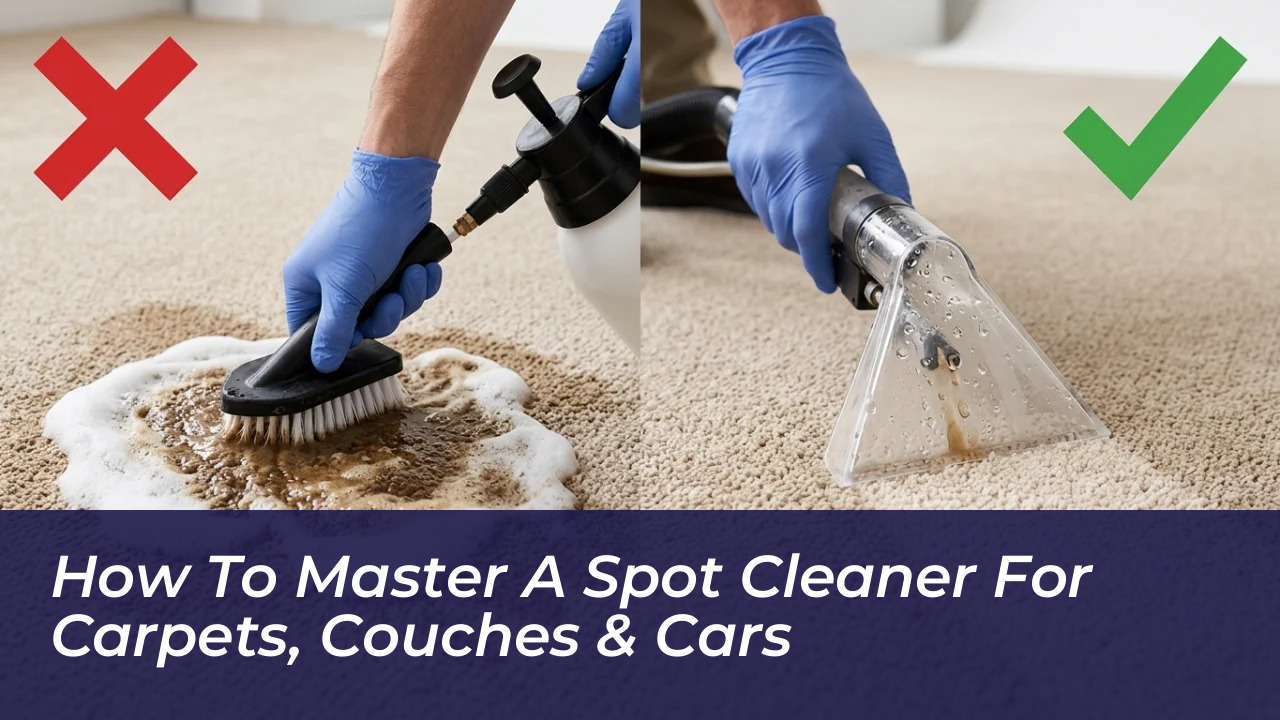

Dealing with an isolated spill, muddy paw prints, or sudden pet accidents does not require washing an entire carpet or stripping furniture upholstery. A dedicated portable spot cleaner uses a precise combination of targeted cleaning solution, mechanical agitation, and high-powered extraction suction to lift stubborn marks from rugs, stairs, car seats, and sofas without flooding surrounding areas. Operating a portable washer effectively requires preparation, proper fluid dilution, and moisture extraction. Skipping foundational steps, such as dry vacuuming or choosing the wrong chemical cleaner, can drive grime deeper into backing fibers or cause permanent mechanical foaming inside the recovery tank.
The Core Mechanics of Targeted Spot Washing
Portable extractors operate differently from conventional upright washers or wet-and-dry shop vacuums. Clean water mixed with a specialized surfactant is sprayed directly onto the stain. Specialized bristles loosen the bond between dirt and carpet pile before a motorized vacuum pulls the slurry into an isolated recovery tank. A dual-tank architecture ensures that extracted dirty fluid is completely sealed off from clean water. This separation prevents the re-deposition of extracted grime onto clean areas during subsequent passes. Applying excess fluid without extraction is the primary cause of prolonged drying times and lingering moisture inside carpet padding.
Understanding which formula to deploy is vital before running any liquid through the unit. Choosing the wrong cleaning agent can impair internal pump systems or ruin delicate upholstery weaves.
Step-by-Step Guide to Operating a Portable Spot Cleaner
Mastering your portable machine relies on following a strict operational workflow to protect your fabrics and guarantee complete stain removal:
- Remove surface debris first: Vacuum the target zone thoroughly with an upright or handheld vacuum to clear crumbs, pet hair, and loose dried dirt before introducing moisture.
- Fill the clean-water tank: Add water and machine-formulated cleaning solution to the indicated fill lines, adhering strictly to manufacturer-prescribed ratios rather than estimating.
- Select and mount the proper tool: Attach the specialized accessory engineered for the specific material, such as compact nozzles for tight stair treads or wide tools for deep cushions.
- Dispense the cleaning solution: Position the tool above the mark and squeeze the trigger to mist the area, taking care never to soak through the carpet backing.
- Agitate gently: Work the solution across the stain using moderate pressure, avoiding harsh scrubbing that can fray fibers or pill woven upholstery fabrics.
- Extract dirty water: Release the solution trigger and draw the suction nozzle slowly across the damp surface, watching the dirty liquid collect in the recovery tank.
- Perform dry extraction passes: Run the tool over the damp area several times without spraying liquid to draw out maximum residual moisture.
- Allow complete drying: Keep foot traffic, pets, and heavy furniture away from the treated fabric until it has fully air-dried in a well-ventilated space.
- Rinse tanks and accessories: Turn off the unit, empty the dirty-water tank immediately, and rinse all attachments and suction hoses before storage.
Matching the Chemical Formula to the Mess
Selecting an appropriate cleaning solution depends directly on the nature of the spill. Everyday beverage drips require different chemical actions than protein-heavy pet waste or ground-in grease marks.
- Standard Spot Solution: Ideal for everyday spills, fresh liquid splashes, and light surface marks on rugs or car seats.
- Oxy-Lift Boost Formula: Engineered for stubborn, embedded stains and discolored spots requiring deep lifting power.
- Pet Stain & Odor Pre-Treatment: Formulated specifically for protein messes, pet accidents, mud, and organic odor neutralization.
Applying the proper ratio ensures stains lift cleanly without damaging machine internal seals or invalidating equipment guidelines.
Busting Common Spot Cleaning Misconceptions
A widespread misconception is that household dish soap or regular laundry detergent can serve as a quick substitute for specialized machine fluid. Standard detergents create uncontrollable foaming inside recovery chambers. This foaming bypasses internal filters, reduces suction pressure, and leaves sticky residue on carpet yarn that rapidly attracts fresh soil.
Another common mistake involves aggressive back-and-forth scrubbing. Forcing brush heads hard against woven upholstery or looped pile causes fiber distortion and friction burns. Cleaning efficiency stems from solution chemistry and vacuum extraction, not abrasive physical force.
Maintenance and Post-Cleaning Care
Failing to rinse a spot extractor immediately after use leads to bacterial growth and persistent odor inside the waste collection chamber. Disconnect power, drain the dirty-water compartment, and flush the internal hose with clean tap water to dislodge trapped lint and pet hair. Leave tank caps open until all internal plastic chambers are dry to the touch before packing the machine away.
Proper drying prevents mildew and preserves motor performance for long-term household use. Quick action remains the most effective defense against permanent fabric discoloration from unexpected spills. Always test cleaning formulas on an incons**cuous patch of fabric to check for colorfastness before treating broad areas.