
Potted dipladenia plants will survive the winter and bloom year after year if you bring them indoors before nighttime temperatures drop below 54°F (12°C). While many people treat them as disposable annuals, these tropical climbers are true perennials. They only need a cool, bright resting spot, light pruning, and minimal watering to outlast the cold season. Leaving these tropical plants outside past the first cold snap is fatal because standard varieties cannot tolerate freezing conditions. Understanding the plant’s resting period makes the difference between a dead root ball and a flourishing climber come spring.
Temperature Limits: When to Bring Your Climber Indoors
Cold tolerance determines the exact survival window for the plant. The primary enemy is frost, which permanently destroys root systems in exposed containers. The main goal of overwintering dipladenia is not active growth, but inducing a controlled dormant state in a bright, unheated environment shielded from harsh drafts.
Most cultivars cannot endure temperatures below 46°F (8°C), and even a single freeze can kill the plant outright. A rare exception is Mandevilla laxa, which survives cold down to approximately 23°F (-5°C). For standard varieties, move containers indoors once evening readings dip under 54°F (12°C). Place them in an area maintained between 50°F and 59°F (10°C to 15°C), such as an unheated sunroom, enclosed porch, or bright stairwell.
Overheated living rooms cause severe stress to the dormant root system. Placing the vine near forced-air heat vents prompts weak, leggy growth that exhausts stored energy and reduces summer blooms. A common mistake is treating dormant vines like active houseplants. Excess heat and regular feeding deplete the plant’s reserves before spring arrives.
Pruning and Maintenance Before the Resting Phase
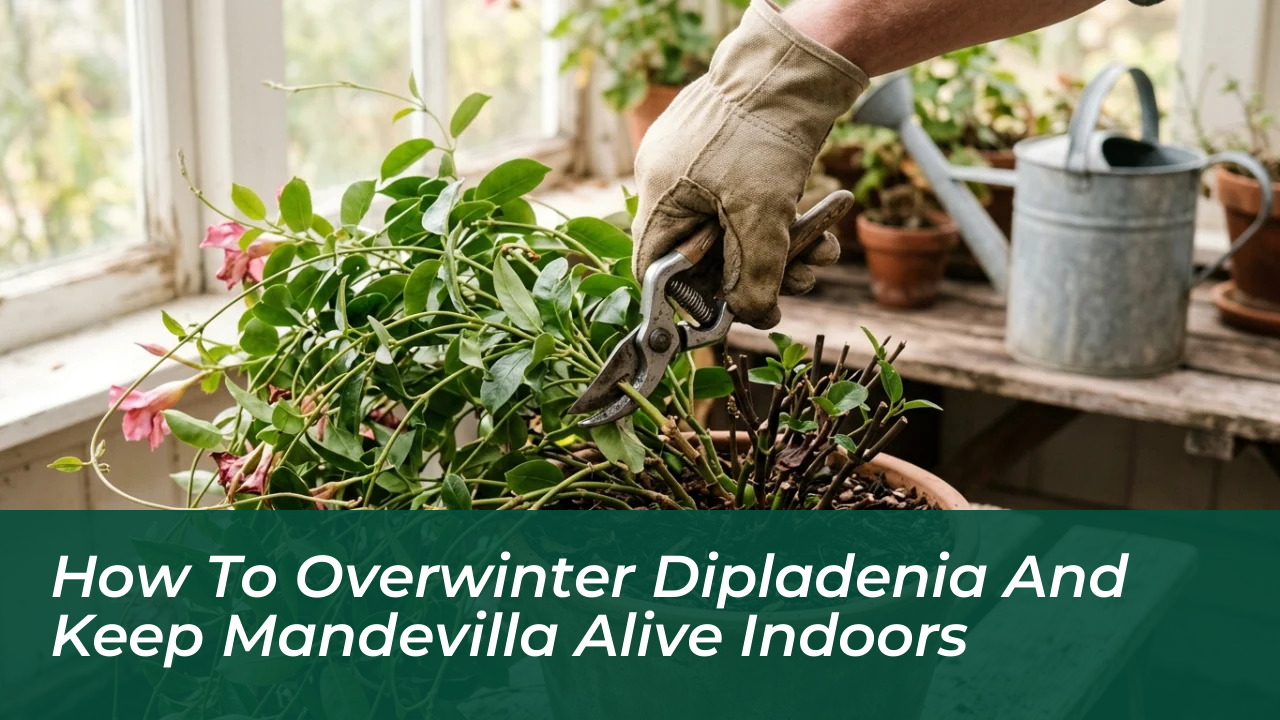
A structured cutback in autumn prepares the vine for indoor confinement. Cutting back both height and spread by about one-third works best for containers placed in high-light locations. If your indoor spot receives lower natural light, cut the stems back harder, leaving only a few inches of main growth above the soil line. Hard pruning keeps the plant compact, saves space, and reduces moisture loss.
Essential Pruning Best Practices
- Wear sturdy gardening gloves during pruning because the milky sap can irritate bare skin.
- Use clean, sharp bypass pruners to make crisp cuts that prevent fungal entry.
- Avoid repotting, disturbing root balls, or moving the container once it is settled in its winter site.
It is normal for the vine to shed some leaves during the initial indoor transition. As long as the primary stems remain firm and the crown does not turn soft, new shoots will grow once warm weather returns.
Watering Control and Spring Acclimation
Moisture restraint is essential throughout the dormant period. Potted soil must stay barely moist rather than wet, allowing the top several inches of soil to dry out between waterings. In a cool environment, this usually means watering only once every two or three weeks. Standing water in saucers suffocates root tissue and triggers root rot, which kills the plant faster than underwatering.
Withhold supplemental fertilizer completely through the winter months to avoid forcing unnatural growth. Watch for new shoots as daylight and indoor temperatures rise. Gradually increase watering and apply a diluted liquid fertilizer once steady growth appears.
Frequently Asked Questions About Overwintering Dipladenia
Can I overwinter mandevilla in complete darkness like a geranium?
No. Mandevillas lack underground storage organs that survive total darkness. They require ambient light during their indoor resting period to maintain basic functions and stem vitality.
My plant dropped all its leaves indoors. Is it dead?
Not necessarily. Scrape the outer bark of a main stem lightly with your fingernail. If the tissue underneath is green and the stems are firm, the plant is alive and resting. Reduce watering and wait for spring warmth to trigger new growth.
How often should I water my indoor dipladenia in winter?
Water only when the top few inches of soil are completely dry, which is usually every two to three weeks depending on indoor temperatures and humidity levels.
Should I fertilize my plant while it is resting indoors?
No. Withhold all fertilizer until late winter or early spring when you notice fresh new green shoots emerging, signaling that active growth has resumed.
What is the absolute minimum temperature a standard dipladenia can handle?
Standard varieties cannot tolerate temperatures below 46°F (8°C) for prolonged periods, and frost exposure will severely damage or kill the root system.