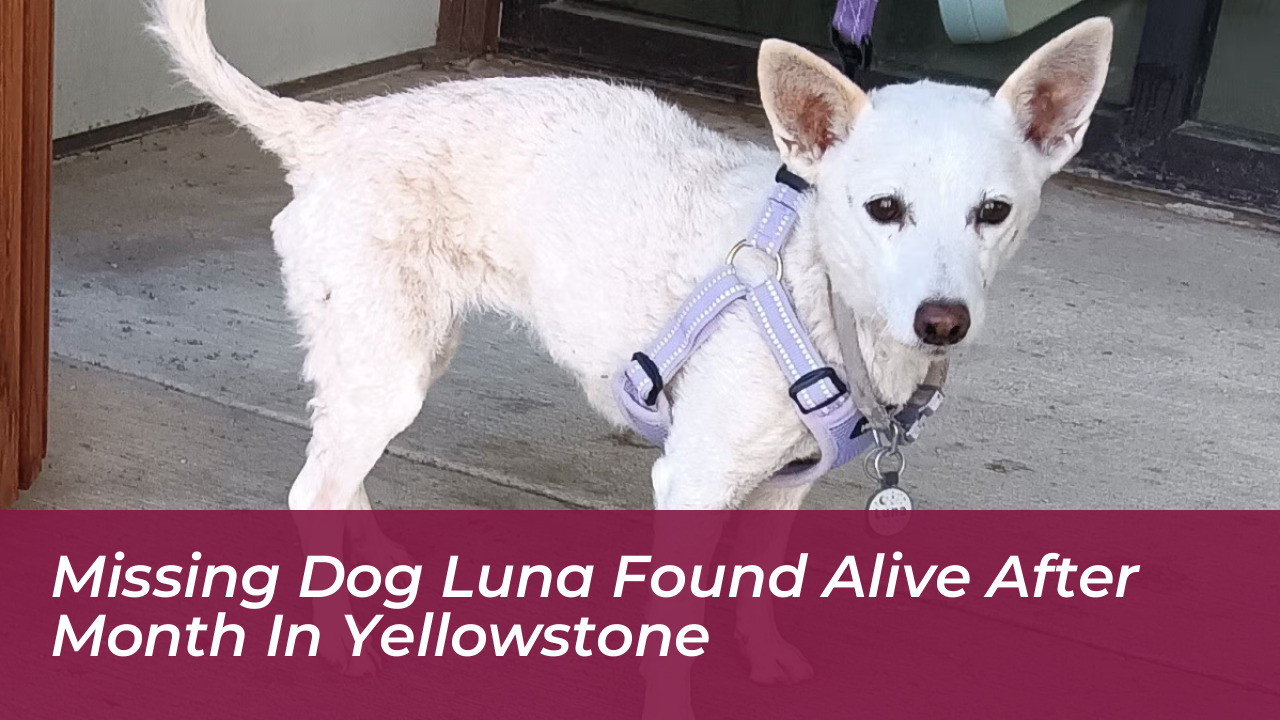

Luna, a 10-year-old Jack Russell Terrier and Chihuahua mix, was rescued alive in Yellowstone National Park on Oct. 14 after surviving more than a month alone in the wilderness. Her recovery concluded a tense search coordinated by the Norris Ark Training and Recovery Center. The mission was conducted with special permission from the National Park Service just as early winter weather began to move into the region.
The ordeal began on Sept. 10 when Luna escaped from a locked rental cabin in Yellowstone’s Canyon Village. Her owners, visiting from California, had left her in the cabin while they visited the nearby Norris Geyser Basin, where pets are prohibited. During their absence, housekeeping staff entered the cabin despite a “Do Not Disturb” sign hanging on the door. Startled by the sudden entry, Luna bolted from the campground and disappeared into the surrounding parkland.
A Difficult Search Under Strict Regulations
After a week of searching the park themselves, Luna’s owners returned to California. Park officials warned the family that the small dog’s chances of survival were very low due to freezing nighttime temperatures and predators such as wolves, bears, and coyotes. As sightings were reported by park visitors and employees, the family enlisted the help of the Norris Ark Training and Recovery Center.
The rescue team had to overcome several significant regulatory and logistical hurdles:
- No Food Bait: National Park Service rules prohibit using food in animal traps to avoid attracting dangerous wildlife like grizzly bears or mountain lions.
- No Aerial Tracking: Drones and other aerial equipment are strictly banned within the park to protect wildlife and visitor privacy.
- Tight Deadlines: A special permit required all rescue equipment and operations to be cleared by late October before winter weather closed the roads and campgrounds.
A Creative Trap and Emotional Reunion
Because they could not use food to lure the frightened dog, rescuers relied on familiar scents. They placed clothing and other items belonging to Luna’s family near a specialized live trap. To protect her from dropping temperatures, the trap was equipped with a small doghouse and straw-and-grass bedding.
On Oct. 13, a park construction crew working on a nearby road reported seeing Luna resting frequently near the trap site. Recognizing she was comfortable in the area, rescue coordinators knew a successful capture was imminent.
At approximately 9 a.m. on Oct. 14, Luna’s owner approached the trap on foot. Luna emerged directly from the doghouse to greet her owner, allowing rescuers to secure her safely. Yellowstone National Park officials confirmed that the dog was captured alive and well.
Recovery and Health Status
Following her rescue, Luna was immediately taken to a veterinarian for a medical evaluation. Before she went missing, Luna weighed approximately 18 pounds. After 34 days in the wild, she had lost significant weight, dropping to just over 10 pounds. Despite some minor bloodwork abnormalities, veterinarians expect her to make a full recovery.
In light of the rescue, park officials reiterated safety warnings for travelers visiting public lands with pets. Authorities remind visitors that pets are prohibited in thermal areas and should never be left unattended in hotel rooms or cabins. Additionally, officials advise that if a pet goes missing in a wilderness area, owners should seek professional rescue intervention rather than attempting to chase the animal themselves.