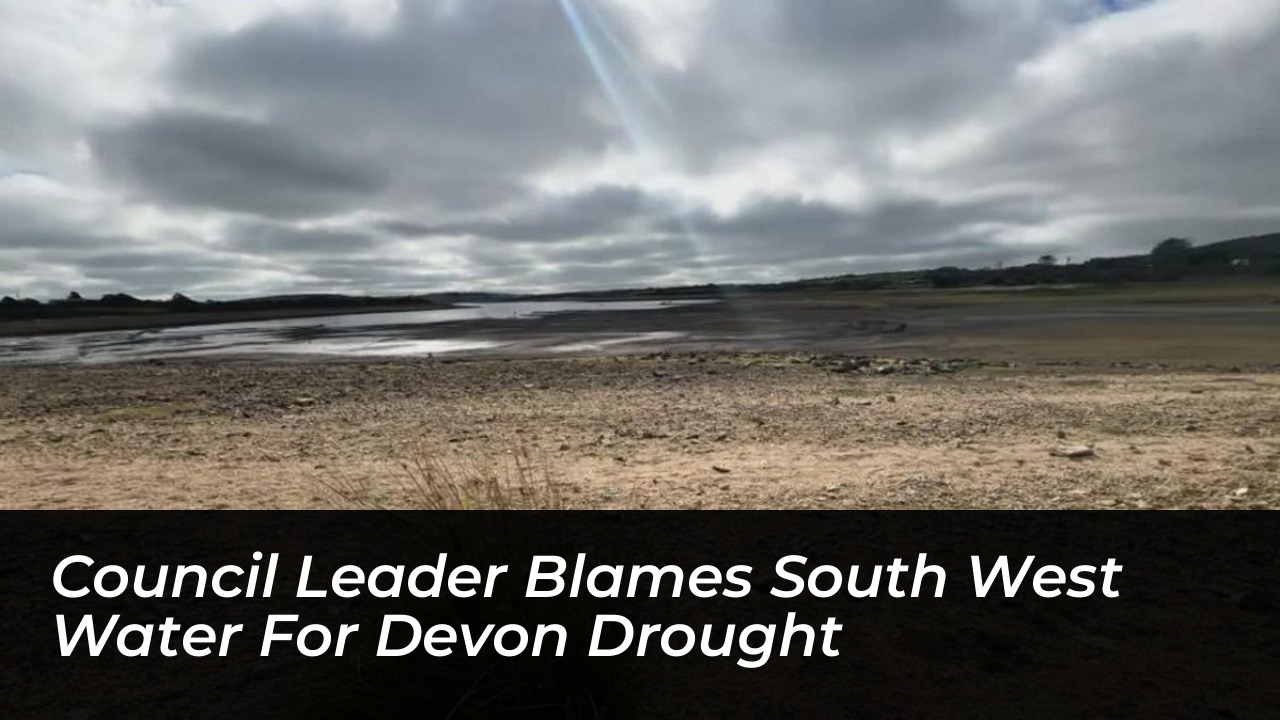

Parts of the South West entered severe drought conditions following a sharp fall in reservoir levels and mounting pressure on local farmers and businesses. The declaration prompted strong political criticism, with Devon County Council leader Julian Brazil directly blaming South West Water for infrastructure shortcomings and decades of neglect.
The Environment Agency confirmed the severe drought status after months of low rainfall and a review by the National Drought Group. The emergency measures cover parts of Cornwall, Devon, Dorset, Somerset, East Suss*x, and West Suss*x. Critical water sources, such as the Wimbleball Reservoir serving roughly 300,000 properties across east Devon, north Devon, Somerset, west Dorset, and West Somerset, plummeted to just 14.9% capacity. Meanwhile, Stithians Reservoir in Cornwall fell to 21.9%, far below the Environment Agency’s seasonal expectation of roughly 75%.
Cllr Julian Brazil launched a scathing attack on South West Water, asserting that customers in the region have long shouldered some of the highest bills in the nation while receiving inadequate infrastructure investment. He accused the utility provider of prioritizing shareholder dividend payouts over constructing necessary reservoirs.
This crisis has been decades in the making while we’ve been paying the highest bills in the nation. South West Water’s neglect has put us here, said Cllr Julian Brazil.
Among his demands, Cllr Brazil insisted that South West Water utilize its financial resources to fund a comprehensive public information campaign focused on water conservation, leak reduction, and accelerated planning for new reservoirs. He also raised the possibility of financial compensation for households and local businesses suffering losses, drawing comparisons to the company’s handling of the Brixham water contamination incident where compensation agreements exceeded standard minimum requirements.
In response to the mounting criticism, a South West Water spokesperson defended the utility provider’s actions, highlighting a planned £3.2 billion investment program scheduled over the next five years to bolster regional supply resilience. The company noted that its current measures include progressing plans for a new reservoir at Cheddar and managing an active network fix rate averaging 73 leaks per day.
South West Water reiterated that applying for drought orders remains a necessary, responsible step to safeguard the local environment and protect remaining supplies while regional rivers and reservoirs gradually recover. Despite ongoing friction between local authorities and utility management, officials continue to urge residents across Devon to adopt simple water-saving habits-such as using garden water butts and limiting tap run times-to avert harsher mandatory restrictions that could severely impact the local economy.
Frequently Asked Questions
Which areas are affected by the severe drought in the South West?
The severe drought declaration impacts parts of Cornwall, Devon, Dorset, Somerset, East Suss*x, and West Suss*x following months of exceptionally low rainfall and depleted reservoir storage.
What level were key reservoirs at during the drought?
Wimbleball Reservoir dropped to 14.9% capacity, and Stithians Reservoir in Cornwall fell to 21.9%, standing significantly below the Environment Agency’s expected 75% seasonal benchmark.
Why did Devon County Council leader Julian Brazil criticize South West Water?
Cllr Brazil accused the utility provider of decades of underinvestment, paying out shareholder dividends, and failing to build adequate reservoirs despite charging customers some of the highest water bills in the nation.
How is South West Water responding to the criticism and drought?
The company defended its record by pointing to a £3.2 billion investment program over the next five years, ongoing leak repairs averaging 73 fixes per day, and plans to construct a new reservoir at Cheddar.
What water conservation steps are authorities recommending to residents?
Authorities advise residents to take shorter showers, turn off taps while brushing teeth, check for leaky toilets, use garden water butts, and generally cut back on non-essential water usage.