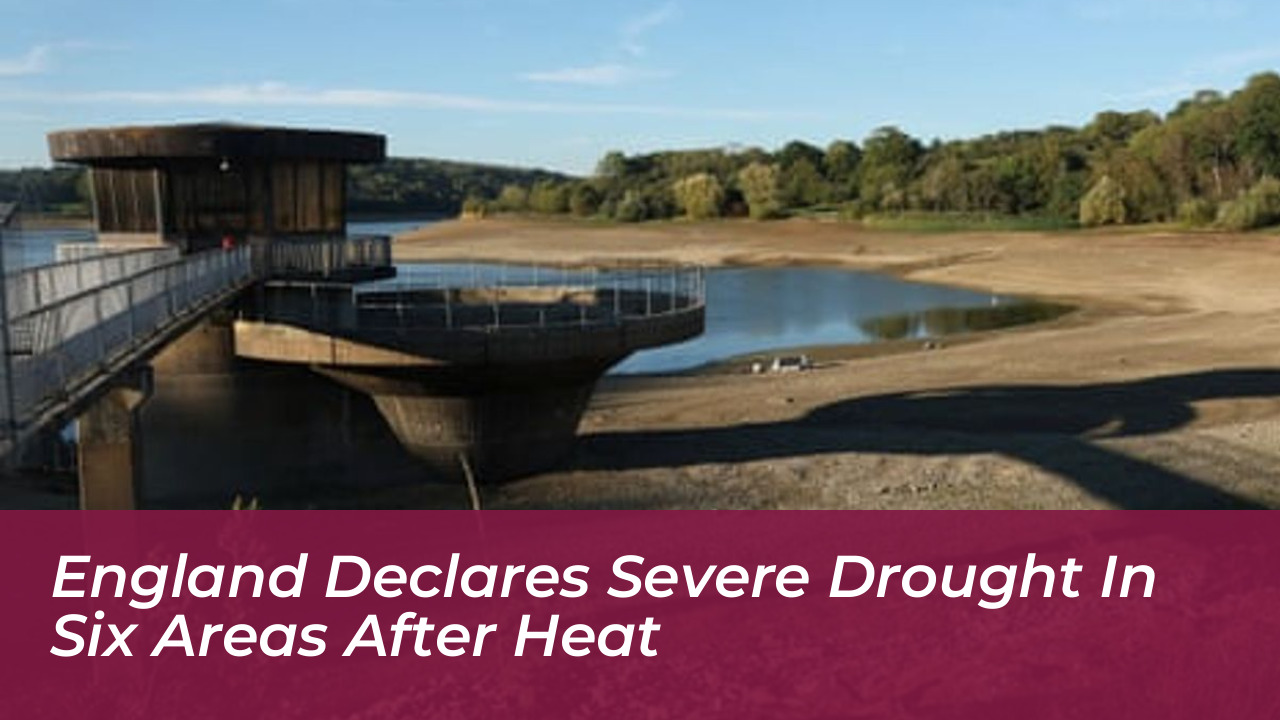

Six areas of southern England were officially declared to be in severe drought on Thursday, October 15, 2026, by the Environment Agency. Driven by record-breaking summer heat and exceptionally dry conditions, major water reservoirs across the region have been left dangerously depleted, threatening public water supplies and sparking urgent calls for conservation.
The emergency declaration affects parts of Cornwall, Devon, Dorset, Somerset, East Suss*x, and West Suss*x. According to the Environment Agency, this marks the first time since 1995 that Britain has experienced severe drought conditions on this scale. Officials noted it followed the driest April to September period in more than a century for the south-east and south-west.
Critically Low Reservoir Storage Levels
Under normal seasonal conditions, reservoir storage across Britain would sit at approximately 75% capacity at this time of year. However, current measurements at two major regional reservoirs have fallen far below those historic averages, putting immense strain on public utilities and local residents.
- Ardingly Reservoir (West Suss*x): Standing at only 19% capacity, this facility supplies approximately 95,000 properties around Haywards Heath and Uckfield.
- Wimbleball Reservoir (Devon and Somerset): Plunged down to 16% capacity, serving customers across parts of Devon and Somerset via South West Water and Wess*x Water.
Additional smaller reservoirs are also raising alarms among water authorities. In Cornwall, the Drift and Stithians reservoirs supplying 56,000 households are heavily depleted. The Tottiford and Venford group serving 47,000 homes in Devon faces similar shortages.
Government Response and Water Restrictions
Following a meeting of the National Drought Group, Environment Secretary Dame Angela Eagle addressed the crisis. She stated that the current level of drought is something the country has not experienced for decades. The government is stepping up operational support, daily monitoring of river and reservoir levels, and enhanced water quality checks due to reduced sewage dilution risks.
Water companies, including South East Water, South West Water, and Southern Water, have pressed for non-essential user bans on businesses. These bans affect golf clubs, private schools, and commercial car washes, though approvals from the Department for Environment, Food and Rural Affairs remain under active review.
“We cannot change the weather, but water companies can act now. We expect them to follow their drought plans and take the steps needed to secure public water supplies. We are also asking everyone to use less water.” – Philip Duffy, Chief Executive of the Environment Agency.
Impact on Agriculture and Wildlife
The persistent dry weather and extreme temperatures have created severe cascading impacts across the UK’s natural environment and agricultural sectors. Rivers are running exceptionally low, prompting over 1,500 abstraction licence restrictions. Farmers face early cereal harvesting, reduced crop yields, and shrinking farm storage reserves.
Wildlife and aquatic ecosystems are also bearing the brunt of the crisis. Conservation groups and fisheries agencies have conducted numerous fish rescues in dried riverbeds, moving vulnerable species like brown trout and juvenile salmon to safer waters. Officials continue to urge households and businesses across the affected regions to voluntarily reduce water usage to protect local ecosystems until sustained rainfall arrives.