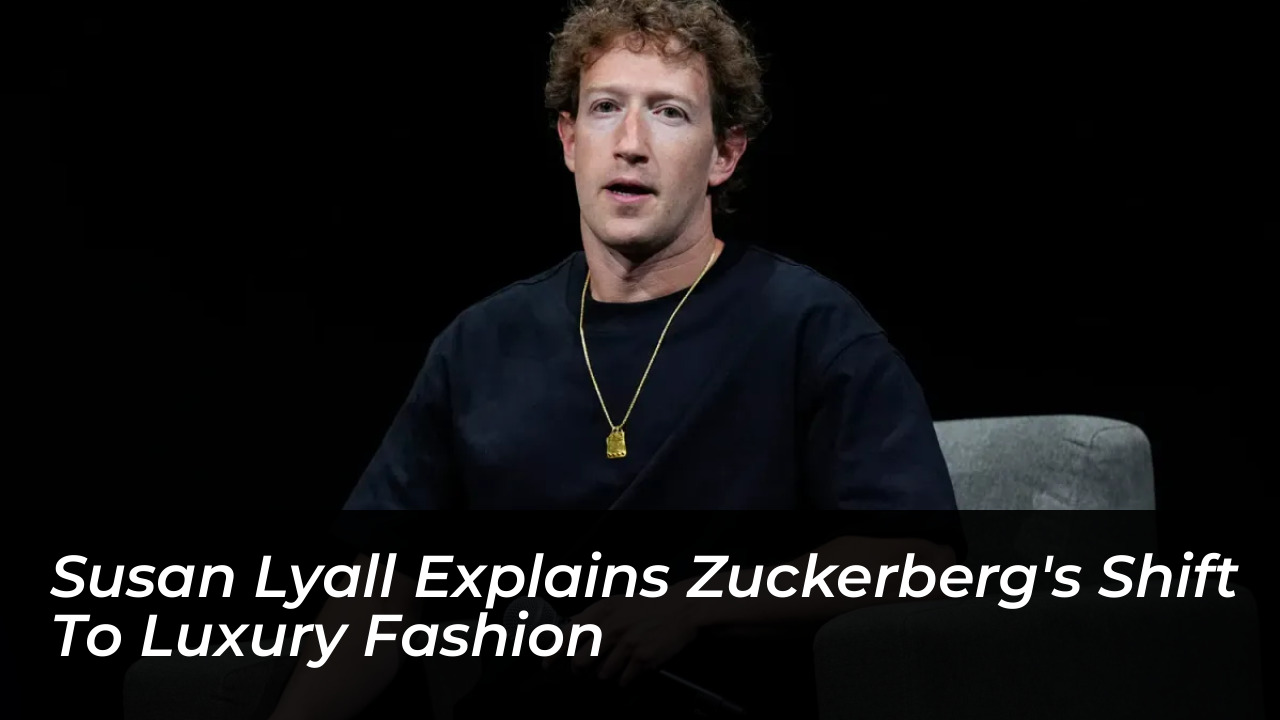

Mark Zuckerberg’s changing wardrobe reflects a broader shift in how technology billionaires present themselves publicly. Costume designer Susan Lyall studied the Meta CEO’s clothing to help actor Jeremy Strong portray him in the biographical film The Social Reckoning. The film covers the period from 2019 to 2021, when Zuckerberg’s understated appearance increasingly incorporated expensive clothing and carefully selected luxury pieces.
Lyall’s research, described in an interview with The Guardian published on October 16, 2026, focused on reproducing specific garments rather than simply approximating Zuckerberg’s appearance. Strong, who previously worked with Lyall on Molly’s Game and The Trial of the Chicago 7, helped identify the precise sneakers, shirts, and sweaters associated with the technology executive.
From Anti-Fashion Roots to the Post-Hoodie Era
The first Aaron Sorkin Facebook film, 2010’s The Social Network, helped cement the early aughts image of Mark Zuckerberg rebelling against corporate norms in rumpled hoodies and T-shirts. By contrast, The Social Reckoning is carbon-dated from 2019 to 2021, marking what Lyall describes as the “post-hoodie” era-a time when Zuckerberg stopped thumbing his nose at formal dress codes.
During this period, Zuckerberg’s reserved wardrobe of suits or interchangeable long-sleeved shirts echoed his chilling composure. Lyall and Strong collaborated extensively to ensure absolute historical and sartorial accuracy. “He would know exactly where [Zuckerberg] wore what. He wanted the exact Nike shoe-the footwear was very important to him-and the exact Brunello Cucinelli T-shirt and sweater, and so on,” Lyall noted.
The Mechanics of Luxury: Brunello Cucinelli as a Safety Net
Lyall tracked down the specific footwear-the 2018 Nike Flyknit trainer in black anthracite-via online resale platforms like Grailed. For the luxury sweaters, Strong personally navigated how to contact high-end Italian brand Brunello Cucinelli to procure items from five or six years prior rather than chasing the latest seasonal releases.
According to Lyall, labels like Brunello Cucinelli-which sells cashmere cardigans for upwards of $16,500 and ribbed sweaters for $4,600-serve as a psychological “safety net” for tech oligarchs. “If they’re not sure about what they’re wearing, if they pay a lot for it, they feel a little better about it. You know, if this little sweater is $2,000, it must be good. It’s kind of a security blanket, or just an affirmation of your own success,” Lyall explained.
The Evolution Into Loud Luxury and Peac**king
While the film captured Zuckerberg attempting to project an everyman relatability backed by an increasingly athletic physique, his real-world style has since evolved into outright peac**king. Around 2024, his public image shifted dramatically with the introduction of cons**cuous gold chains, Loewe shorts, and Alexander McQueen suits embellished with dragonflies.
Lyall suggests that this strategic transformation allows Zuckerberg to present a fresh narrative, distancing himself from sweaty, defensive congressional hearings. By leaning into fashion-such as purchasing his own wardrobe via Instagram, collaborating with contemporary designers like Mike Amiri, and attending high-profile events like the Met Gala-Zuckerberg has successfully reframed public discourse around softer, more harmless lifestyle topics.
Key Milestones in Zuckerberg’s Style Evolution
- Early 2000s: Rebellious anti-fashion stance defined by rumpled hoodies and cotton T-shirts.
- 2014: Declared he wore identical grey T-shirts to minimize daily decision-making fatigue.
- 2019-2021: The “post-hoodie” era featuring tailored suits and luxury Brunello Cucinelli knitwear, portrayed in The Social Reckoning.
- 2024-Present: Transition into loud luxury, featuring statement jewelry, custom designer pieces, and active engagement with the fashion industry.
Ultimately, while Zuckerberg’s vibrant new clothing line and approachable aesthetic-mirroring even the adorable design of Meta’s personal AI assistant, Muse-suggest a desire to appear more human, Lyall’s insights remind observers that high-stakes strategic positioning remains firmly beneath the surface.