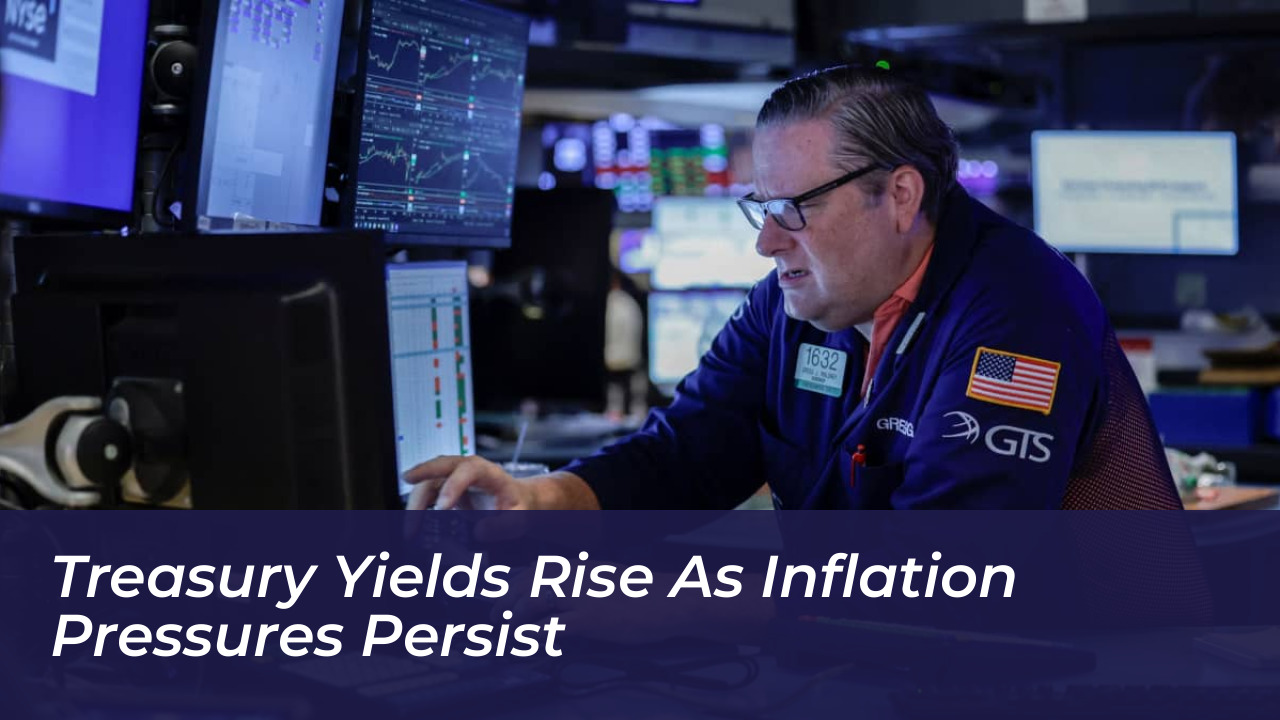

Rising inflation pressures and uncertainty over the Federal Reserve’s next interest rate decisions pushed U.S. Treasury yields higher on Friday, October 16. Investors assessed stronger-than-expected price data and comments from Federal Reserve Chair Kevin Warsh. These increases followed a week of economic reports that exceeded economists’ expectations, intensifying focus on the central bank’s upcoming policy path.
The benchmark 10-year Treasury yield gained more than 1 basis point to 5.106%. The 30-year Treasury bond yield also advanced more than 1 basis point to 5.439%. Meanwhile, the 2-year Treasury note yield rose less than 1 basis point to 4.759%. One basis point equals 0.01 percentage point, and Treasury yields move inversely to bond prices.
According to the U.S. Bureau of Labor Statistics, producer prices climbed 6.3% year over year in September, marking their largest annual increase since 2022. This figure exceeded the 5.5% increase forecast by economists surveyed by Dow Jones. This highlights the persistent nature of price growth across the broader economy.
Key Drivers Behind the Treasury Yield Surge
The upward movement in Treasury yields reflects a combination of macroeconomic factors. These include sticky inflation, robust nominal growth, and a more hawkish stance from the Federal Reserve. Analysts note that the broader economic environment remains resilient, reducing the immediate need for central bank easing.
- Hawkish Federal Reserve Posture: Fed Chair Kevin Warsh and other central bank officials have emphasized that underlying inflation must clearly move toward the 2% objective before policy adjustments can be considered.
- Persistent Inflation Pressures: Higher producer prices and volatile commodity markets continue to sustain inflation risk premiums across government debt instruments.
- Artificial Intelligence Infrastructure Spending: Massive corporate borrowing to fund AI data centers and technology infrastructure has increased competition for capital in fixed-income markets.
- Fiscal Deficits and National Debt: Substantial government borrowing and large federal deficits have kept upward pressure on the term premium required by investors holding long-term debt.
Policy Tension Between the Fed and the Treasury Department
The rising yield environment has created a notable dynamic between Federal Reserve leadership and the U.S. Treasury Department. Fed Chair Warsh views the 10-year Treasury yield as a critical, unfiltered source of economic information. He notes that market pricing reflects the realities of a strong economy and ongoing fiscal demands.
Meanwhile, Treasury Secretary Scott Bessent has demonstrated a willingness to utilize policy tools. These tools include expanding buybacks of long-term government debt to address market disequilibrium. However, market analysts caution that intervention programs remain relatively small compared to the scale of the multitrillion-dollar Treasury market, which limits their ability to fundamentally alter structural yield trends.
Implications for Investors and Borrowing Costs
Higher Treasury yields translate directly into elevated borrowing costs for consumers, corporations, and the federal government. Mortgage rates, corporate loans, and government financing expenses all face upward pressure in this elevated rate environment.
For equity investors, higher yields create headwinds by competing with stocks for capital and weighing on corporate valuations. Fixed-income investors face a complex landscape. While yields offer attractive nominal returns, the ongoing risk of further yield increases means long-duration bonds carry substantial interest rate risk.
As policymakers navigate hot economic data, persistent inflation, and heavy debt issuance, financial markets will continue to reprice expectations for monetary policy and the long-term cost of capital.