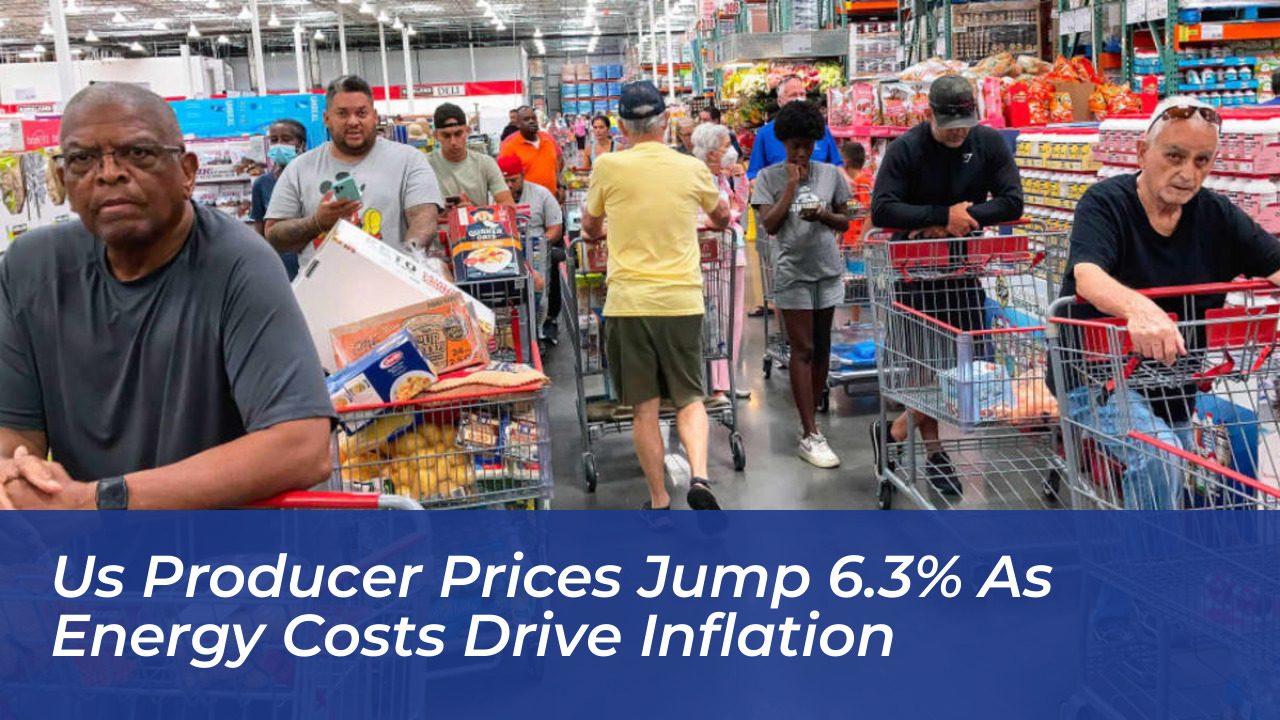

Wholesale inflation in the United States accelerated sharply in September, driven largely by soaring energy costs linked to the ongoing US conflict with Iran. According to data released on Thursday by the Bureau of Labor Statistics, producer prices jumped 6.3% from a year earlier and advanced 1.3% from the previous month.
The annual increase marked the largest gain since December 2022. The sharp 1.3% monthly jump represented the biggest single-month advance since March 2022. These numbers significantly outpaced expectations. Economists polled by Dow Jones had anticipated a more modest monthly increase of 0.6% and an annual rise of 5.5%.
Energy expenses acted as the primary catalyst for widespread business cost pressures. These costs rippled across various sectors of the economy, affecting production, manufacturing, and distribution supply chains.
Core Producer Prices Also Climb Higher
Underlying inflationary pressures extended beyond volatile energy and food components. Core producer prices, which filter out those volatile categories, also registered substantial gains during the month.
According to the Bureau of Labor Statistics, core PPI climbed 0.7% in September alone. Over the trailing 12-month period, the core index advanced by 5.0%. This indicates that pricing pressures remain broad-based across the commercial landscape rather than confined strictly to energy markets.
Broader Economic Implications of Rising Wholesale Costs
Economists closely monitor the Producer Price Index (PPI) because wholesale inflation often signals consumer price trends. As businesses face higher expenses for raw materials, transportation, and energy, they frequently pass those costs along to end consumers. This dynamic potentially complicates the inflation outlook for households.
- Annual producer prices rose 6.3%, the highest rate since December 2022.
- Monthly producer prices increased 1.3%, beating Dow Jones estimates of 0.6%.
- Core PPI advanced 0.7% on the month and 5.0% over the past year.
- Energy costs tied to the US war with Iran fueled the broader business expense surge.
Federal Reserve policymakers will likely scrutinize these stronger-than-expected inflation metrics. They will evaluate these figures when making future monetary policy decisions and assessing the economic fallout from ongoing geopolitical disruptions in the Middle East.